Reaction equation

[CH:1]1([NH2:8])[CH2:7][CH2:6][CH2:5][CH2:4][CH2:3][CH2:2]1.C(N(C(C)C)CC)(C)C.[Br:18][CH2:19][C:20](Br)=[O:21]>C(Cl)Cl.O>[Br:18][CH2:19][C:20]([NH:8][CH:1]1[CH2:7][CH2:6][CH2:5][CH2:4][CH2:3][CH2:2]1)=[O:21]Participants
Reactant 3

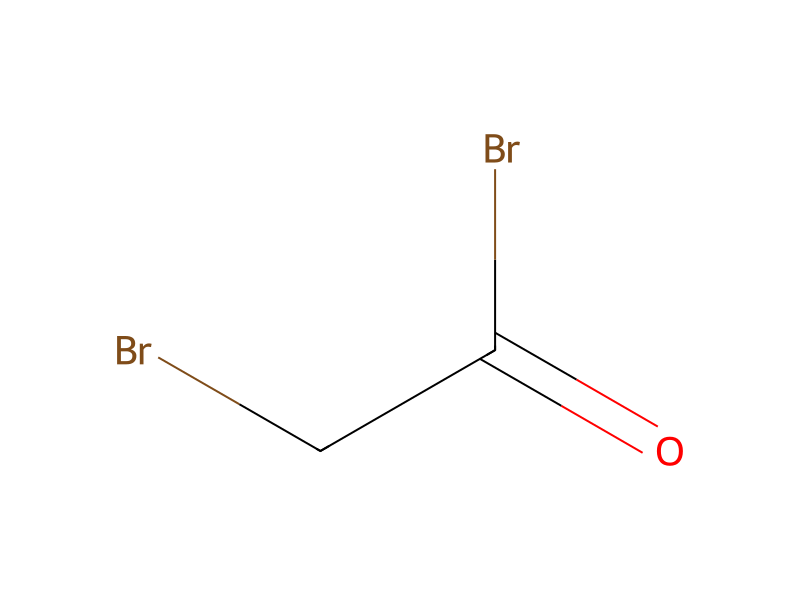

Product 1

Reagents, catalysts & solvents 2


Procedure
To a -20° C. solution of cycloheptylamine (6.37 mL, 50.0 mmol) and diisopropylethylamine (9.58 mL, 55.0 mmol) in methylene chloride (250 mL) was slowly added bromoacetyl bromide (4.78 mL, 55.0 mmol). The reaction mixture was warmed to room temperature over 20 minutes and stirred for an addition 30 minutes. The reaction mixture was diluted with water (100 mL) and stirred for an additional 30 minutes. The organic layer was separated, washed with water (3×100 mL), dried over magnesium sulfate and concentrated in vacuo to afford a beige solid (10.5 g). The crude material was further purified by silica gel flash column chromatography using hexane-ethyl acetate (1:1) as the eluent to give the purified title compound as a white solid (9.77 g, 83%).
Workup
- customTo a -20° C.
- stirringstirred for an additional 30 minutes
- customThe organic layer was separated
- washwashed with water (3×100 mL)
- dry with materialdried over magnesium sulfate
- concentrationconcentrated in vacuo
Sources & evidence
- ORD record
- ord-336a2508512f4012bfb7216b54d52b88
- Source dataset
- uspto-grants-1999_12
- Patent number
- US05998419
Linked notes
Loading…