HomeMCPWorkbenchSkills
HomeWorkbenchNotificationsMe
llms.txt · MCP GuidePrivacy Policy · Terms of Service · Supportv1.8.3
  1. Home
  2. /Reaction

Boron trifluoride etherate → Tert-butyl 3-allyl-4-oxocyclopentylcarbamate

HRID 61412
Print

Reaction equation

HRID 61412 reaction equation
[CH2:1]([CH:4]1[C:8](=[O:9])[CH:7]=[CH:6][CH2:5]1)[CH:2]=[CH2:3].[C:10](=[O:17])([O:12][C:13]([CH3:16])([CH3:15])[CH3:14])[NH2:11].B(F)(F)F.CCOCC.C(=O)(O)[O-].[Na+]>[Br-].C([N+](CCCC)(CCCC)CCCC)CCC.ClCCl.CCCCCCC>[CH2:1]([CH:4]1[C:8](=[O:9])[CH2:7][CH:6]([NH:11][C:10](=[O:17])[O:12][C:13]([CH3:16])([CH3:15])[CH3:14])[CH2:5]1)[CH:2]=[CH2:3]
ParticipantsProcedureWorkupSources & evidenceReaction notes

Participants

8

Reactant 4

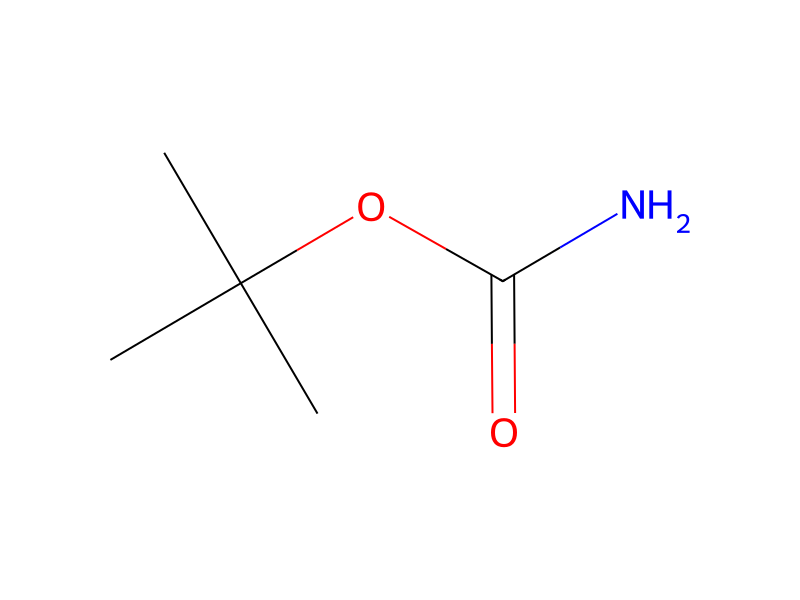
HCID 8000Boron trifluoride etherateHCID 77922tert-Butyl carbamate2×HCID 516892Sodium BicarbonateHCID 134445455-(Prop-2-en-1-yl)cyclopent-2-en-1-one

Product 1

HCID 67513641Tert-butyl 3-allyl-4-oxocyclopentylcarbamateYield 27.2%

Reagents, catalysts & solvents 3

HCID 74236
Tetrabutylammonium Bromide
Catalyst
HCID 6344DichloromethaneSolvent
HCID 8900HeptaneSolvent

Procedure

A stirred solution of 5-allylcyclopent-2-enone (2.20 g, 18 mmol), t-butyl carbamate (4.70 g, 40 mmol), and tetra-n-butylammonium bromide (6.45 g, 20 mmol) in anhydrous dichloromethane (40 mL) under nitrogen was cooled in an ice bath (3° C.) and treated dropwise with boron trifluoride etherate (2.22 mL, 18 mmol). The reaction mixture was allowed to warm to room temperature and stirred for 18 h. Saturated aqueous sodium bicarbonate (40 mL) was added and then mixture stirred for 15 min and separated. The aqueous solution was extracted with dichloromethane (2×20 mL) and the combined organic solution was washed with water and saturated aqueous sodium chloride (20 mL each), dried (Na2SO4), and concentrated in vacuo. The residue was dissolved in minimum dichloromethane and added to a column of silica gel (˜300 cc) and eluted first with 85:15 heptane/ethyl acetate to afford recovered starting material (0.3 5 g), then with 4:1 heptane/ethyl acetate to afford a mixture of t-butyl carbamate and subject compound. This mixture was warmed in heptane and filtered to remove most of the t-butyl carbamate, then the filtrate was added to a column of silica gel (˜300 cc) and eluted with 6:3:1 heptane/dichloromethane/ethyl acetate to afford tert-butyl 3-allyl-4-oxocyclopentylcarbamate 1.17 g (27%) as a pale amber solid. NMR (CDCl3): δ 5.60-5.75 (m, 1 H), 4.90-5.05 (m, 2 H), 4.50 (br s, 1 H), 4.00-4.25 (m, 1 H), 2.30-2.80 (m, 3 H), 2.20-2.30 (m, 1 H), 1.85-2.15 (m, 3 H), 1.38 (s, 9 H). MS (M+1): 240.1.


Workup

  1. stirringmixture stirred for 15 min
  2. customseparated
  3. extractionThe aqueous solution was extracted with dichloromethane (2×20 mL)
  4. washthe combined organic solution was washed with water and saturated aqueous sodium chloride (20 mL each)
  5. dry with materialdried (Na2SO4)
  6. concentrationconcentrated in vacuo
  7. dissolutionThe residue was dissolved in minimum dichloromethane
  8. additionadded to a column of silica gel (˜300 cc)
  9. washeluted first with 85:15 heptane/ethyl acetate
  10. customto afford
  11. customrecovered
  12. customwith 4:1 heptane/ethyl acetate to afford
  13. filtrationfiltered
  14. customto remove most of the t-butyl carbamate
  15. additionthe filtrate was added to a column of silica gel (˜300 cc)
  16. washeluted with 6:3:1 heptane/dichloromethane/ethyl acetate

Sources & evidence

ORD record
ord-9d05093b703e42daa9854ec59df6448c
Source dataset
uspto-grants-2016_09
DOI
10.6084/m9.figshare.5104873.v1
Patent number
US09440995B2

Reaction notes

On this pageParticipantsProcedureWorkupSources & evidenceReaction notes