HomeMCPWorkbenchSkills
HomeWorkbenchNotificationsMe
llms.txt · MCP GuidePrivacy Policy · Terms of Service · Supportv1.8.3
  1. Home
  2. /Reaction

Mesityl oxide → Diethyl (1,1-dimethyl-2-(4-methyl-2,5-dioxoimidazolidin-4-yl)ethyl)phosphonate

HRID 614669
Print

Reaction equation

HRID 614669 reaction equation
[P:1]([O-:8])([O:5][CH2:6][CH3:7])[O:2][CH2:3][CH3:4].O=[C:10]([CH:12]=[C:13]([CH3:15])[CH3:14])[CH3:11].[O-:16][CH2:17]C.[Na+].[C:20](=[O:23])([O-])[O-].[NH4+:24].[NH4+:25].[C-]#N.[K+]>C(O)C.C(Cl)(Cl)Cl.O>[CH3:11][C:10]1([CH2:12][C:13]([P:1]([O:5][CH2:6][CH3:7])([O:2][CH2:3][CH3:4])=[O:8])([CH3:15])[CH3:14])[NH:25][C:20](=[O:23])[NH:24][C:17]1=[O:16]
ParticipantsConditionsProcedureWorkupSources & evidenceReaction notes

Participants

9

Reactant 5

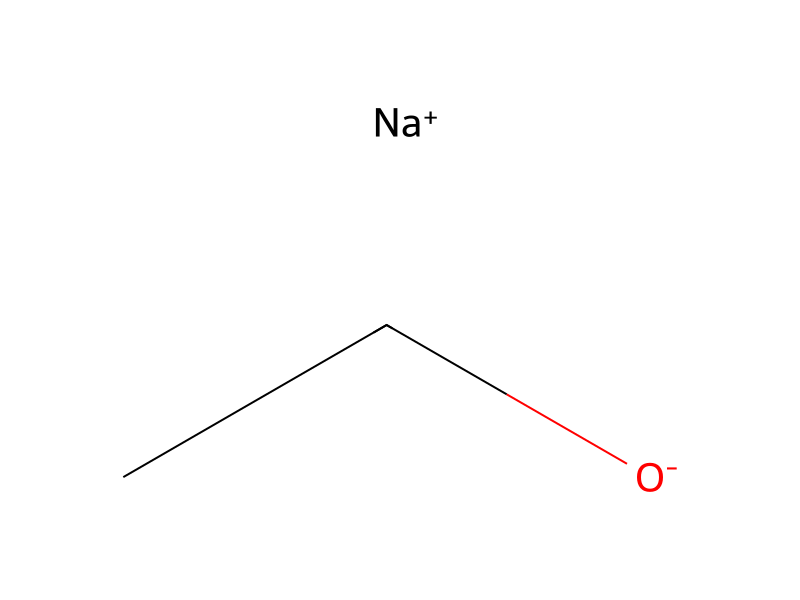
HCID 8858Mesityl oxideHCID 9032Potassium CyanideHCID 517111Ammonium CarbonateHCID 2723922Sodium ethoxideHCID 3780918Di-ethylphosphite

Product 1

HCID 6455210Diethyl (1,1-dimethyl-2-(4-methyl-2,5-dioxoimidazolidin-4-yl)ethyl)phosphonate
Yield 420.3%

Reagents, catalysts & solvents 3

HCID 702EthanolSolvent2×HCID 962WaterSolventHCID 6212ChloroformSolvent

Conditions

Temperature
30 °C

Procedure

To a mixture of 829 grams (6 moles) of diethyl phosphite and 589 grams (6 moles) of mesityl oxide contained in a 12 liter three-necked flask fitted with stirrer, thermometer and powder funnel was gradually added a solution of 81.6 grams (1.2 moles) of sodium ethoxide in 400 grams of ethanol with water bath cooling, over a period of 8 minutes. The addition reaction was strongly exothermic and the reaction mixture reached a peak temperature of 130° C. during the period. The reaction mixture was cooled to 30° C., then the following reagents were added: 1730 grams (18 moles) of powdered ammonium carbonate, 2000 ml of ethanol, 469 grams (7.2 moles) of potassium cyanide and 2400 ml of distilled water. The resulting suspension as heated to 56° C. over a period of 90 minutes and at 56° C. for an additional 7 hours. After cooling to room temperature, the reaction mixture consisting of two liquid phases was diluted with 2000 ml of chloroform, stirred and allowed to settle. The top organic phase was separated and concentrated by distillation at reduced pressure, finally at 115° C. at 30 mm Hg, leaving 1545 grams (84%) of the desired hydantoin phosphonate as a clear orange syrup. The hot syrup was dissolved in 2800 ml of ethyl acetate. After crystallization overnight at 0° C., the crystalline product was filtered, washed with 2500 ml of cold ethyl acetate and dried, yielding 990 grams (54%) of pure 5-methyl-5-(2-diethylphosphono-2-methylpropyl)hydantoin, m.p. 147.5°-148° C.

Workup

  1. customcontained in a 12 liter three-necked flask
  2. customfitted with stirrer
  3. temperaturecooling, over a period of 8 minutes
  4. additionThe addition reaction
  5. customa peak temperature of 130° C.
  6. additionthe following reagents were added
  7. temperatureThe resulting suspension as heated to 56° C. over a period of 90 minutes and at 56° C. for an additional 7 hours
  8. temperatureAfter cooling to room temperature
  9. customThe top organic phase was separated
  10. concentrationconcentrated by distillation at reduced pressure, finally at 115° C. at 30 mm Hg

Sources & evidence

ORD record
ord-ba228d567b5e4603b63329ca2663015e
Source dataset
uspto-grants-1979_03
DOI
10.6084/m9.figshare.5104873.v1
Patent number
US04145510

Reaction notes

On this pageParticipantsConditionsProcedureWorkupSources & evidenceReaction notes