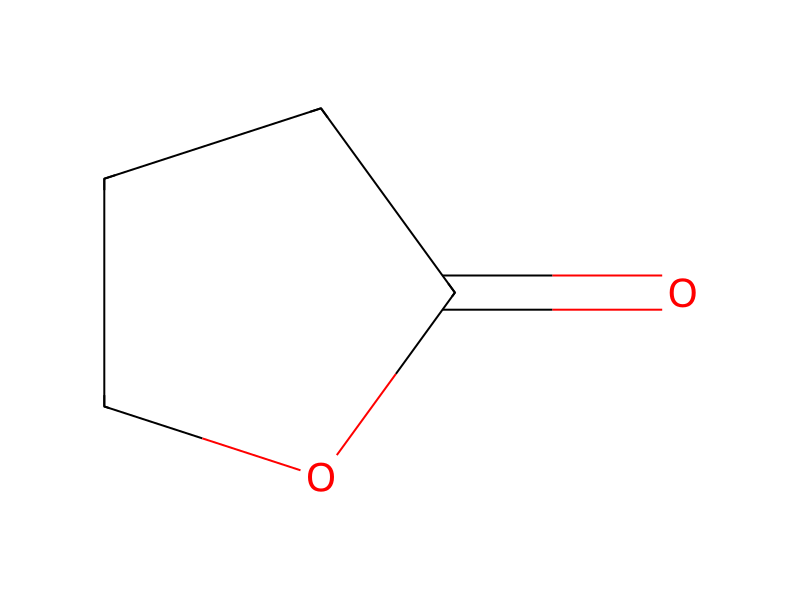
Gamma-Butyrolactone → Lactic acid hydroxybutyric acid
Reaction equation

[C:1]([OH:6])(=[O:5])[C@H:2]([CH3:4])[OH:3].[C:7]1(=[O:12])[O:11][CH2:10][CH2:9][CH2:8]1>>[C:1]([OH:6])(=[O:5])[CH:2]([CH3:4])[OH:3].[OH:3][CH:8]([CH2:9][CH3:10])[C:7]([OH:11])=[O:12]Participants
3


Conditions
- Temperature
- 200 °C
Procedure
A 90% aqueous solution of L-lactic acid (32.4 g) and 3.75 g of γ-butyrolactone were put in a reaction vessel equipped with a stirrer and a nitrogen-introducing tube. After substitution of nitrogen gas was carried out three times, the temperature was raised by 10° C. per minute to 120° C. in a stream of nitrogen, and the mixture was concentrated at 120° C. for 5 hours with stirring. To the resulting concentrate was added 2.2 g of commercially available synthetic aluminum silicate containing 17% aluminum oxide. Then the temperature was raised to 200° C. and the pressure was reduced gradually to 20 mmHg over 30 minutes, followed by stirring at 220±15° C. for 3 hours. After the pressure was reduced gradually to 1 mmHg over 30 minutes, the mixture was stirred at 210±10° C. for 18 hours to give copolymer in the molten state. The product was cooled to room temperature to give 21.2 g of lactic acid-hydroxybutyric acid copolymer as a dark brown solid. The weight-average molecular weight of this copolymer was 65,000.