HomeMCPSkillsWorkbenchOpenChem
HomeWorkbenchNotificationsMe
llms.txt · skill.md · MCP GuidePrivacy Policy · Terms of Service · Supportv1.8.5
  1. Home
  2. /Reaction

Triethylamine → HCID 178471557, compound

HRID 620102
Print

Reaction equation

Br[C:2]1[CH:19]=[N:18][C:5]2[N:6]=[C:7]([NH:11][C:12](=[O:17])[C:13]([CH3:16])([CH3:15])[CH3:14])[N:8]=[C:9]([OH:10])[C:4]=2[CH:3]=1.[C:20]([C:22]1[CH:43]=[CH:42][C:25]([C:26]([NH:28][C@H:29]([C:37]([O:39][CH2:40][CH3:41])=[O:38])[CH2:30][CH2:31][C:32]([O:34][CH2:35][CH3:36])=[O:33])=[O:27])=[CH:24][CH:23]=1)#[CH:21].C(N(CC)CC)C.C1(P(C2C=CC=CC=2)C2C=CC=CC=2)C=CC=CC=1>C(#N)C.[Pd](Cl)Cl>[C:12]([NH:11][C:7]1[N:8]=[C:9]([OH:10])[C:4]2[CH:3]=[C:2]([C:21]#[C:20][C:22]3[CH:23]=[CH:24][C:25]([C:26]([NH:28][C@H:29]([C:37]([O:39][CH2:40][CH3:41])=[O:38])[CH2:30][CH2:31][C:32]([O:34][CH2:35][CH3:36])=[O:33])=[O:27])=[CH:42][CH:43]=3)[CH:19]=[N:18][C:5]=2[N:6]=1)(=[O:17])[C:13]([CH3:16])([CH3:15])[CH3:14]
ParticipantsProcedureWorkupSources & evidenceReaction notes

Participants

7

Reactant 4

HCID 8471TriethylamineHCID 11776TriphenylphosphineHCID 10936456Diethyl N-(4-ethynylbenzoyl)-L-glutamateHCID 178447249HCID 178447249, compound

Product 1

HCID 178471557HCID 178471557, compoundYield 53.9%

Reagents, catalysts & solvents 2

HCID 24290
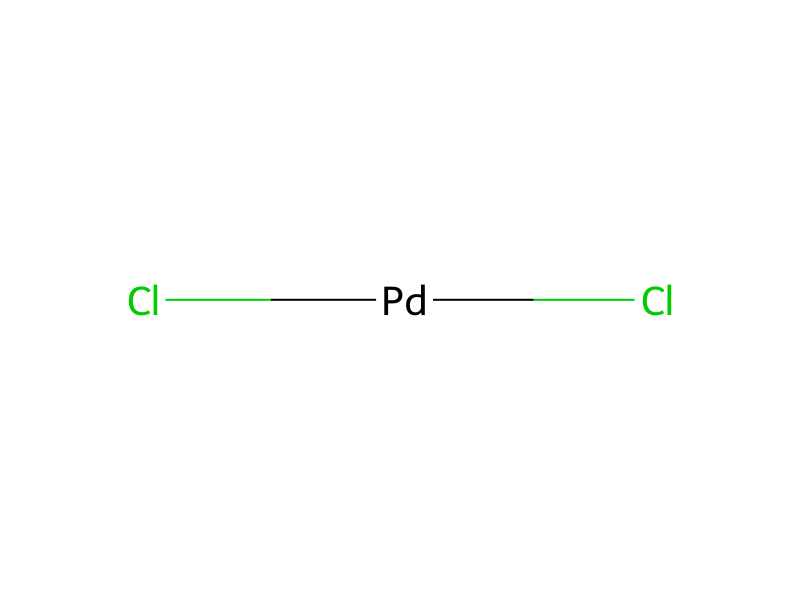
Palladium Chloride
Catalyst
HCID 6342AcetonitrileSolvent

Procedure

A mixture of 2.0 g of 6-bromo-2-pivaloylamino-4-hydroxypyrido[2,3-d]pyrimidine, 2.1 g of diethyl N-(4-ethynylbenzoyl)-L-glutamate, 2.57 ml of triethylamine, 0.11 g of palladium chloride, 0.32 g of triphenylphosphine, and 0.05 g of cuprous chloride in 150 ml of acetonitrile is heated at reflux under nitrogen for 2.5 hours. The solid which forms upon first cooling to room temperature is collected by filtration, and washed with cold acetonitrile to yield 1.91 g of diethyl N-[4-(2-pivaloylamino-4-hydroxypyrido[2,3-d]pyrimidin-6-ylethynyl)benzoyl]-L-glutamate which is sufficiently pure for further processing. Chromatography on silica gel with 5% methanol:methylene chloride showing the following physical properties. m.p. >250° C.; NMR (CDCl3, 300 MHz) delta 1.25 (t, 3H, J=7.20 Hz), 1.33 (t, 3H, J=7.20 Hz), 1.36 (s, 9H), 2.14-2.62 (m, 4H), 4.14 (q, 2H, J= 7.20 Hz), 4.27 (q, 2H, J=7.20 Hz) 4.79-4.86 (m, 1H), 7.30 (d, 1H, J=8.40 Hz), 7.63 (d, 2H, J=8.25 Hz), 7.86 (d, 2H, J=8.25 Hz), 8.51 (brs, 1H), 8.64 (d, 1H, J=2.40 Hz), 8.97 (d, 1H, J=2.40 Hz), 12.2 (brs, 1H); IR (KBr) 3330, 3290, 2970, 1730, 1655, 1590, 1530, 1440, 1370, 1260, 1140, 1020, 965, 925, 850, 810, and 760 cm-1 ; 13C-NMR (CDCl3, 75 MHz) delta 14.3, 27.1, 27.2, 30.7, 40.6, 52.7, 61.1, 62.0, 87.61, 92.71, 115.1, 117.3, 125.9, 127.4, 127.5, 132.0, 133.9, 138.7, 149.6, 157.8, 158.6, 160.5, 166.4 172.1, 173.5, 180.8.

Workup

  1. temperatureis heated
  2. temperatureat reflux under nitrogen for 2.5 hours
  3. filtrationis collected by filtration
  4. washwashed with cold acetonitrile

Sources & evidence

ORD record
ord-b5e5003d498241d8a254e4205dac60e3
Source dataset
uspto-grants-1989_04
DOI
10.6084/m9.figshare.5104873.v1
Patent number
US04818819

Reaction notes

On this pageParticipantsProcedureWorkupSources & evidenceReaction notes