Reaction equation

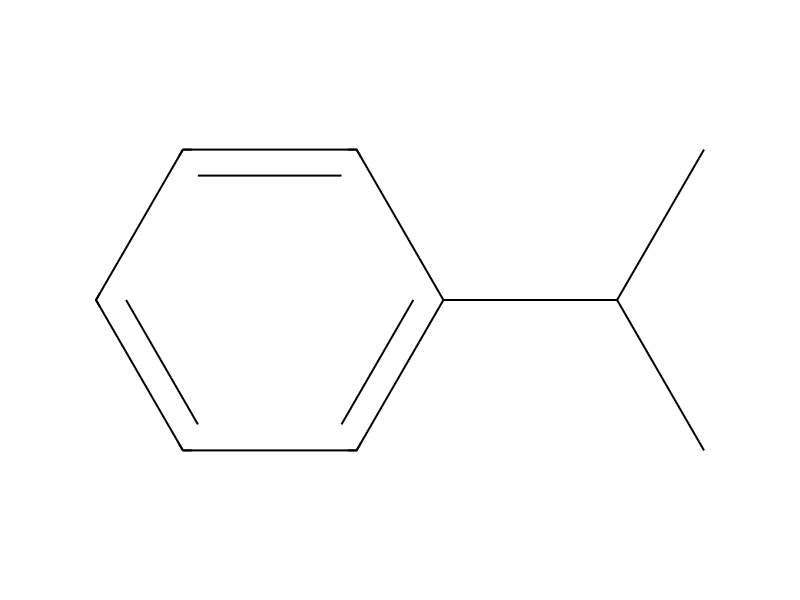
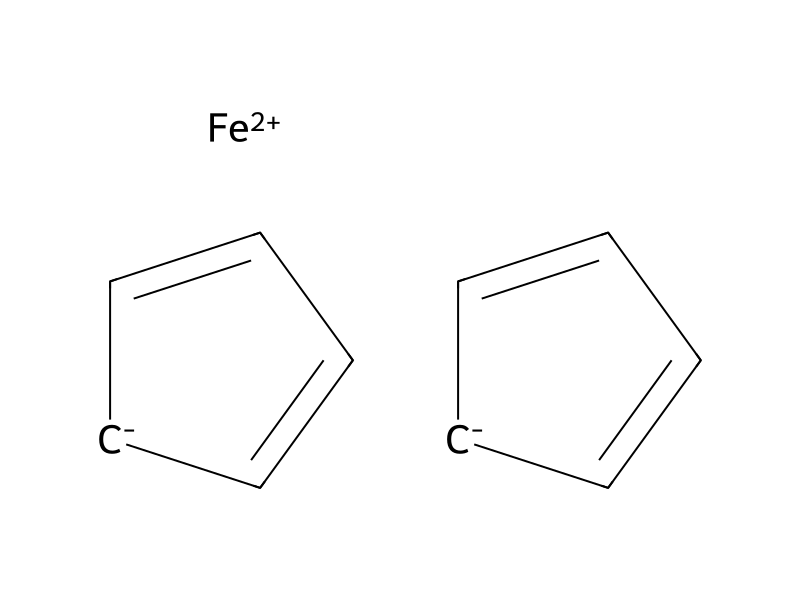
[Cl-:1].[Cl-].[Cl-].[Cl-].[Zr+4:5].[C:6]1([CH:12]([CH3:14])C)[CH:11]=[CH:10]C=CC=1.[Cl-].[Al+3].[Cl-].[Cl-].[Al]>Cl.[CH-]1C=CC=C1.[CH-]1C=CC=C1.[Fe+2].ClCCl>[Cl-:1].[Cl-:1].[CH-:10]1[CH:11]=[CH:6][CH:12]=[CH:14]1.[CH-:10]1[CH:11]=[CH:6][CH:12]=[CH:14]1.[Zr+2:5]Participants
Reactant 4



Product 1

Reagents, catalysts & solvents 3


Conditions
- Temperature
- 110 °C
Procedure
17.5 g (0.075 mol) of zirconium tetrachloride are added at 60° C. under nitrogen over 30 minutes to a stirred mixture of 129.7 g (1.265 mol) of cumene, 27.9 g (0.15 mol) of ferrocene, 26.6 g (0.199 mol) of aluminium chloride and 0.7 g (0.025 mol) of aluminium powder. The reaction mixture is heated and then stirred for 1.5 hours at 110° C., cooled to 25° C., and then slowly poured into a cold mixture of -10° C. of 200 ml of dichloromethane and 50 ml of 32% hydrochloric acid. The mixture is then diluted with a further 200 ml of 5% hydrochloric acid under nitrogen and the two phases are separated. The lower dichloromethane phase containing zirconocene dichloride is concentrated by rotary evaporation and the residual solid is dried under a high vacuum, affording 13 g of zirconocene dichloride [59.4% of theory, sublimed 50.5%, m.p. 195° C. (dec.)].
Workup
- temperatureThe reaction mixture is heated
- temperaturecooled to 25° C.
- customthe two phases are separated
- additionThe lower dichloromethane phase containing zirconocene dichloride
- concentrationis concentrated by rotary evaporation
- customthe residual solid is dried under a high vacuum
Sources & evidence
- ORD record
- ord-5286c593126f48fab83604898c4bbbb3
- Source dataset
- uspto-grants-1993_09
- Patent number
- US05247107
Linked notes
Loading…