HomeMCPWorkbenchSkills
HomeWorkbenchNotificationsMe
llms.txt · MCP GuidePrivacy Policy · Terms of Service · Supportv1.8.3
  1. Home
  2. /Reaction

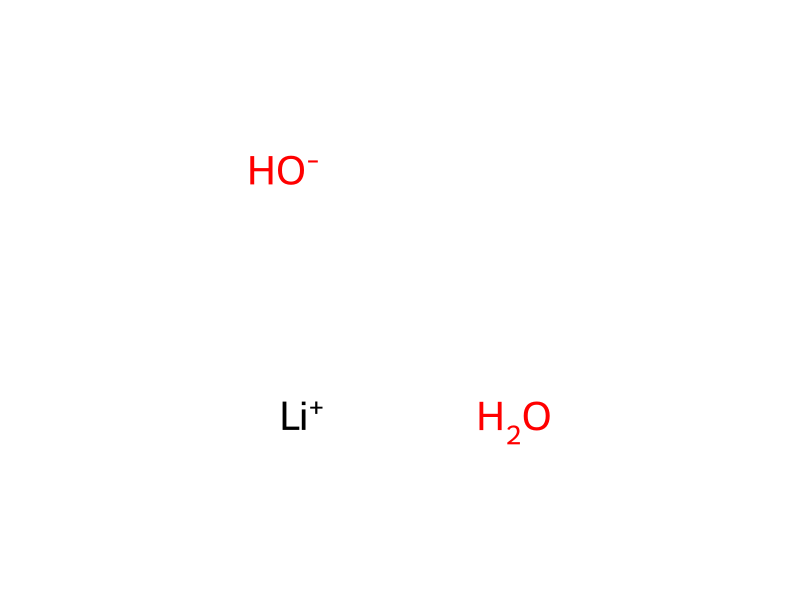
Lithium hydroxide, monohydrate → 3-(3-((2-(4-(3,4-Dimethylphenylamino)pyridin-2-yl)-4-(piperidin-1-yl)-phenyl)carbamoyl)benzylthio)propanoic acid

HRID 625397
Print

Reaction equation

HRID 625397 reaction equation
[CH3:1][C:2]1[CH:3]=[C:4]([NH:9][C:10]2[CH:15]=[CH:14][N:13]=[C:12]([C:16]3[CH:21]=[C:20]([N:22]4[CH2:27][CH2:26][CH2:25][CH2:24][CH2:23]4)[CH:19]=[CH:18][C:17]=3[NH:28][C:29]([C:31]3[CH:32]=[C:33]([CH:42]=[CH:43][CH:44]=3)[CH2:34][S:35][CH2:36][CH2:37][C:38]([O:40]C)=[O:39])=[O:30])[CH:11]=2)[CH:5]=[CH:6][C:7]=1[CH3:8].O[Li].O>O1CCCC1.O>[CH3:1][C:2]1[CH:3]=[C:4]([NH:9][C:10]2[CH:15]=[CH:14][N:13]=[C:12]([C:16]3[CH:21]=[C:20]([N:22]4[CH2:27][CH2:26][CH2:25][CH2:24][CH2:23]4)[CH:19]=[CH:18][C:17]=3[NH:28][C:29]([C:31]3[CH:32]=[C:33]([CH:42]=[CH:43][CH:44]=3)[CH2:34][S:35][CH2:36][CH2:37][C:38]([OH:40])=[O:39])=[O:30])[CH:11]=2)[CH:5]=[CH:6][C:7]=1[CH3:8]
ParticipantsProcedureWorkupSources & evidenceReaction notes

Participants

5

Reactant 2

HCID 168937Lithium hydroxide, monohydrateHCID 66586906Methyl 3-(3-((2-(4-(3,4-dimethylphenylamino)pyridin-2-yl)-4-(piperidin-1-yl)phenyl)carbamoyl)benzylthio)propanoate

Product 1

HCID 665880963-(3-((2-(4-(3,4-Dimethylphenylamino)pyridin-2-yl)-4-(piperidin-1-yl)-phenyl)carbamoyl)benzylthio)propanoic acid

Reagents, catalysts & solvents 2

HCID 962WaterSolvent
HCID 8028
Tetrahydrofuran
Solvent

Procedure

Into a 50-mL 3-necked round bottom flask, was placed a solution of methyl 3-(3-((2-(4-(3,4-dimethylphenylamino)pyridin-2-yl)-4-(piperidin-1-yl)phenyl)carbamoyl)benzylthio)propanoate (440 mg, 0.72 mmol, 1.00 equiv) in tetrahydrofuran (10 mL), and a solution of LiOH H2O (300 mg, 7.14 mmol, 9.89 equiv) in water (2 mL). The resulting solution was stirred for 18 h at room temperature. The reaction was then quenched with 30 mL of water. The solution was adjusted to pH 6-7 with hydrochloric acid (1 N). The resulting solution was extracted with 3×30 mL of ethyl acetate and the organic layers combined. The resulting mixture was washed with 1×30 mL of brine. The mixture was dried over anhydrous sodium sulfate and concentrated under vacuum. The crude product (250 mg) was purified by reverse phase HPLC eluting with a water/CH3CN gradient containing 0.05% TFA. The product was obtained as 237.2 mg (55%) of as a yellow solid. 1H-NMR (300 MHz, DMSO-d6, ppm): δ 13.76 (s, 1H), 10.22 (s, 1H), 10.11 (s, 1H), 8.21 (d, J=6 Hz, 1H), 7.71 (s, 1H), 7.61 (d, J=6.6 Hz, 1H), 7.51 (d, J=7.5 Hz, 1H), 7.42 (m, 1H), 7.32 (d, J=8.1 Hz, 1H), 7.16 (d, J=9 Hz, 1H), 7.08 (s, 2H), 6.94 (m, 3H), 6.81 (s, 1H), 3.80 (s, 2H), 3.24 (s, 4H), 2.55 (m, 3H), 2.17 (d, 6H), 1.63 (s, 6H). MS (ES, m/z): 595 [M+H]+.

Workup

  1. customInto a 50-mL 3-necked round bottom flask, was placed
  2. customThe reaction was then quenched with 30 mL of water
  3. extractionThe resulting solution was extracted with 3×30 mL of ethyl acetate
  4. washThe resulting mixture was washed with 1×30 mL of brine
  5. dry with materialThe mixture was dried over anhydrous sodium sulfate
  6. concentrationconcentrated under vacuum
  7. customThe crude product (250 mg) was purified by reverse phase HPLC
  8. washeluting with a water/CH3CN gradient
  9. additioncontaining 0.05% TFA
  10. customThe product was obtained as 237.2 mg (55%) of as a yellow solid

Sources & evidence

ORD record
ord-011b9c8ab8a14b26b7771245fa341be0
Source dataset
uspto-grants-2016_04
DOI
10.6084/m9.figshare.5104873.v1
Patent number
US09301951B2

Reaction notes

On this pageParticipantsProcedureWorkupSources & evidenceReaction notes