4-(N-Boc-amino)piperidine → HCID 178418218, compound
Reaction equation
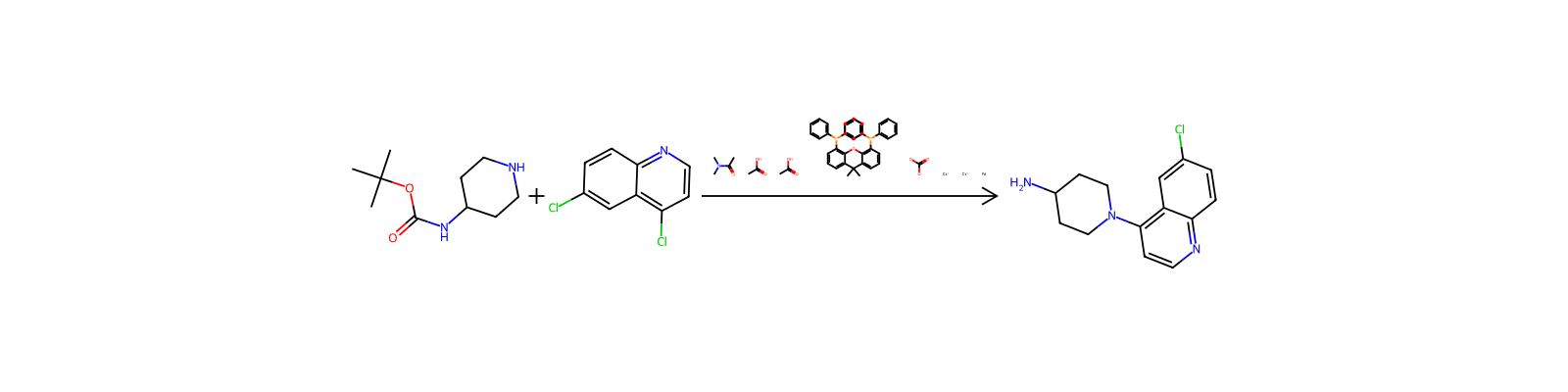
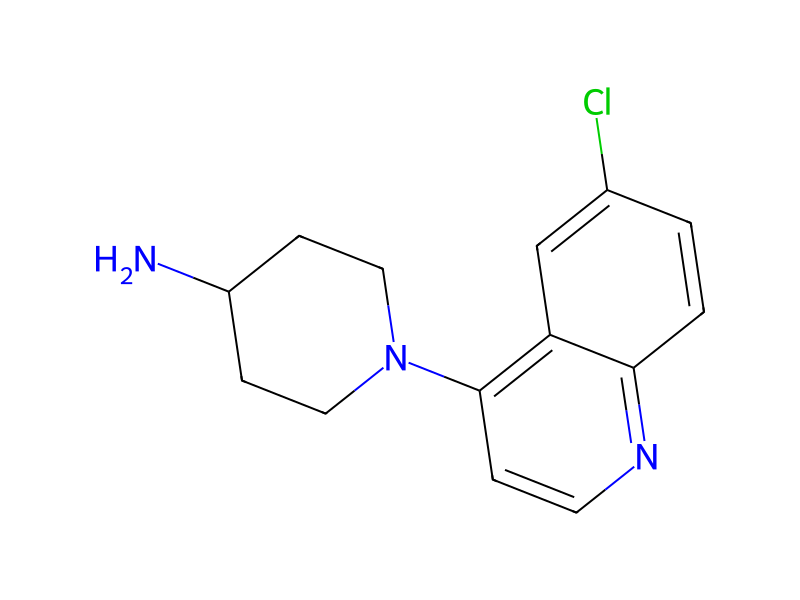
CC(C)(C)OC(=O)NC1CCNCC1.Clc1ccc2nccc(Cl)c2c1>CC(=O)N(C)C.CC(=O)O.CC(=O)O.CC1(C)c2cccc(P(c3ccccc3)c3ccccc3)c2Oc2c(P(c3ccccc3)c3ccccc3)cccc21.O=C([O-])[O-].[Cs+].[Cs+].[Pd]>NC1CCN(c2ccnc3ccc(Cl)cc23)CC1Participants
7




Conditions
- Temperature
- 150 °C
Procedure
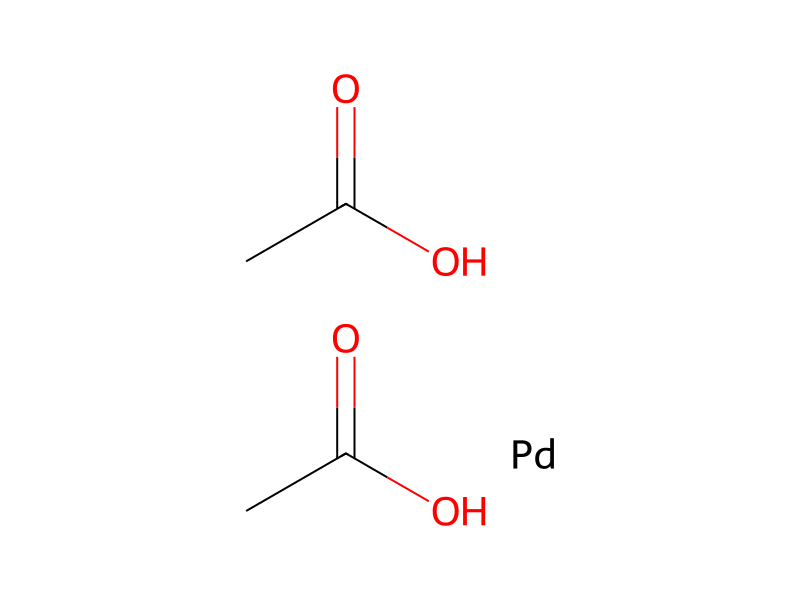
diacetoxypalladium (5.60 mg, 0.02 mmol) was added in one portion to tert-butyl piperidin-4-ylcarbamate (100 mg, 0.50 mmol), 4,6-dichloroquinoline (89 mg, 0.45 mmol), (9,9-dimethyl-9H-xanthene-4,5-diyl)bis(diphenylphosphine) (28.9 mg, 0.05 mmol) and cesium carbonate (488 mg, 1.50 mmol) in DMA (5 mL). The resulting mixture was stirred at 150 °C for 1 hour. LCMS analysis showed formation of a small amount of the desired product. The mixture was heated for a further 2 hours, after which time LCMS analysis showed loss of this small peak. Abandoned.
Sources & evidence
- ORD record
- ord-af3871564adb47f28d81d03aed7b6196
- Source dataset
- 750 AstraZeneca ELN dataset
- Original link
- View source
Reaction notes
Loading…