HomeMCPWorkbenchSkills
HomeWorkbenchNotificationsMe
llms.txt · MCP GuidePrivacy Policy · Terms of Service · Supportv1.8.3
  1. Home
  2. /Reaction

4-Methylmorpholine → N-hydroxy-2-[(1-methyl-1H-pyrrol-2-yl)carbonyl]isoindoline-5-carboxamide

HRID 631848
Print

Reaction equation

HRID 631848 reaction equation
[CH3:1][N:2]1[CH:6]=[CH:5][CH:4]=[C:3]1[C:7]([OH:9])=O.Cl.[CH2:11]1[C:19]2[C:14](=[CH:15][C:16]([C:20]([O:22]C)=O)=[CH:17][CH:18]=2)[CH2:13][NH:12]1.CN(C([O:31][N:32]1N=NC2C=CC=NC1=2)=[N+](C)C)C.F[P-](F)(F)(F)(F)F.CN1CCOCC1.Cl.NO.[OH-].[K+]>C(Cl)Cl.CO>[OH:31][NH:32][C:20]([C:16]1[CH:15]=[C:14]2[C:19](=[CH:18][CH:17]=1)[CH2:11][N:12]([C:7]([C:3]1[N:2]([CH3:1])[CH:6]=[CH:5][CH:4]=1)=[O:9])[CH2:13]2)=[O:22]
ParticipantsProcedureWorkupSources & evidenceReaction notes

Participants

9

Reactant 6

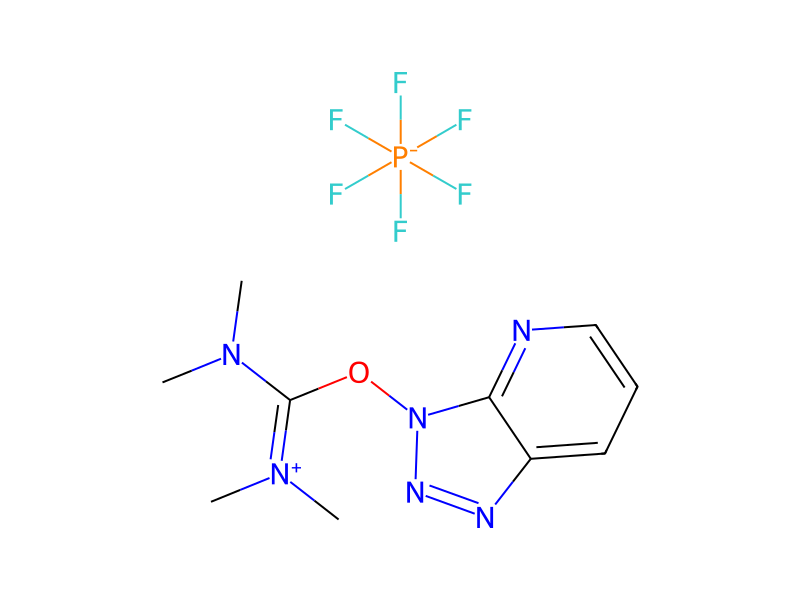
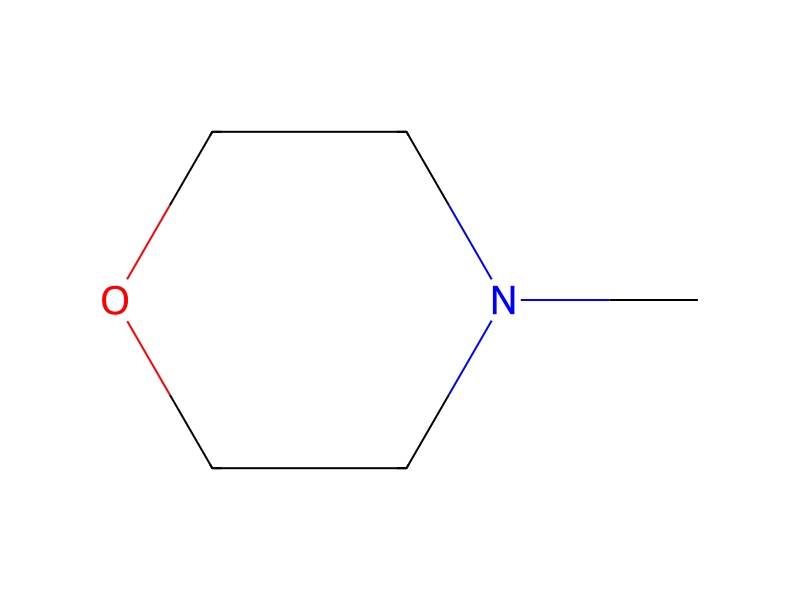
HCID 79724-MethylmorpholineHCID 14797Potassium HydroxideHCID 814531-Methyl-2-pyrrolecarboxylic acidHCID 443297Hydroxyamine hydrochlorideHCID 9886157Methanaminium, N-((dimethylamino)(3H-1,2,3-triazolo(4,5-b)pyridin-3-yloxy)methylene)-N-methyl-, hexafluorophosphate(1-) (1:1)
HCID 19828495
methyl 2,3-dihydro-1H-isoindole-5-carboxylate hydrochloride

Product 1

HCID 58147189N-hydroxy-2-[(1-methyl-1H-pyrrol-2-yl)carbonyl]isoindoline-5-carboxamideYield 50%

Reagents, catalysts & solvents 2

HCID 887MethanolSolventHCID 6344DichloromethaneSolvent

Procedure

To a mixture of N-methylpyrrole-2-carboxylic acid (25.7 mg, 0.21 mmol) and methyl 2,3-dihydro-1H-isoindole-5-carboxylate hydrochloride (40 mg, 0.19 mmol) in DCM was added HATU (78.2 mg, 0.21 mmol) and N-methylmorpholine (0.1 mL, 0.91 mmol). The heterogenous mixture was stirred overnight at room temperature during which time the mixture became a homogenous solution. The reaction solution was washed with saturated aqueous NaHCO3 (2 mL) and the layers separated. The aqueous layer was washed with additional methylene chloride (3 mL) and the combined organic layers were concentrated. The residue obtained was dissolved in methanol (3 mL), and to the solution was added hydroxylamine hydrochloride (39 mg, 0.56 mmol) and potassium hydroxide (0.1 g, 1.8 mmol). The resulting mixture was heated to 80° C. for 30 minutes. Upon cooling to room temperature, the solvent was removed in vacuo. The residue was dissolved in DMSO (1 mL), the insolubles removed via filtration and purified by reverse phase prep-HPLC to afford the title compound as a white solid (27.1mg, 50%). LCMS: (FA) ES+286; 1H NMR (d6-DMSO, 400 MHz) δ 7.80-7.71 (m, 1H), 7.84 (s, 1H), 7.62 (d, J=7.7 Hz, 1H), 7.43 (br d, J=10.2 Hz, 1H), 6.95 (t, J=2.1 Hz, 1H), 6.76 (dd, J=3.8, 1.6Hz, 1H), 6.10 (dd, J=3.8, 2.5 Hz, 1H), 5.05 (br s, 2H), 4.87 (br s, 2H), 3.77 (s, 3H).

Workup

  1. washThe reaction solution was washed with saturated aqueous NaHCO3 (2 mL)
  2. customthe layers separated
  3. washThe aqueous layer was washed with additional methylene chloride (3 mL)
  4. concentrationthe combined organic layers were concentrated
  5. customThe residue obtained
  6. temperatureThe resulting mixture was heated to 80° C. for 30 minutes
  7. temperatureUpon cooling to room temperature
  8. customthe solvent was removed in vacuo
  9. dissolutionThe residue was dissolved in DMSO (1 mL)
  10. customthe insolubles removed via filtration
  11. custompurified by reverse phase prep-HPLC

Sources & evidence

ORD record
ord-05548f0e85094d8a881835ae5c7fdf33
Source dataset
uspto-grants-2016_04
DOI
10.6084/m9.figshare.5104873.v1
Patent number
US09321731B2

Reaction notes

On this pageParticipantsProcedureWorkupSources & evidenceReaction notes