HomeMCPWorkbenchSkills
HomeWorkbenchNotificationsMe
llms.txt · MCP GuidePrivacy Policy · Terms of Service · Supportv1.8.3
  1. Home
  2. /Reaction

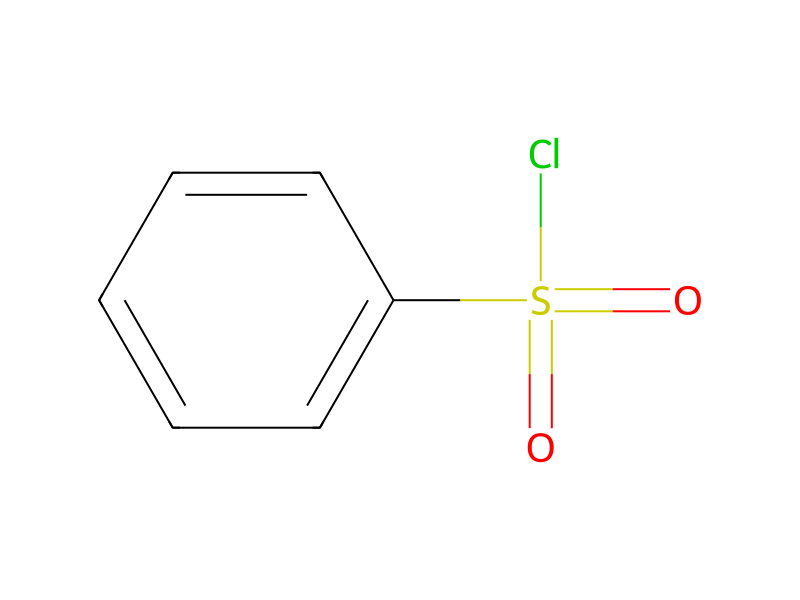
Benzenesulfonyl chloride → 1-(Phenylsulfonyl)-1H-pyrrolo[2,3-b]pyridine-3-carbaldehyde

HRID 641893
Print

Reaction equation

HRID 641893 reaction equation
[H-].[Na+].[NH:3]1[C:7]2=[N:8][CH:9]=[CH:10][CH:11]=[C:6]2[C:5]([CH:12]=[O:13])=[CH:4]1.[C:14]1([S:20](Cl)(=[O:22])=[O:21])[CH:19]=[CH:18][CH:17]=[CH:16][CH:15]=1>O1CCCC1>[C:14]1([S:20]([N:3]2[C:7]3=[N:8][CH:9]=[CH:10][CH:11]=[C:6]3[C:5]([CH:12]=[O:13])=[CH:4]2)(=[O:22])=[O:21])[CH:19]=[CH:18][CH:17]=[CH:16][CH:15]=1
ParticipantsConditionsProcedureWorkupSources & evidenceReaction notes

Participants

5

Reactant 3

HCID 7369Benzenesulfonyl chlorideHCID 24758Sodium hydrideHCID 53728121H-Pyrrolo[2,3-b]pyridine-3-carbaldehyde

Product 1

HCID 103566461-(Phenylsulfonyl)-1H-pyrrolo[2,3-b]pyridine-3-carbaldehyde

Reagents, catalysts & solvents 1

HCID 8028TetrahydrofuranSolvent3×

Conditions

Temperature
0 °C

Procedure

Into a 100 ni 3-necked round bottom flask was placed tetrahydrofuran (50 mL). To the above was added NaH (2.19 g, 54.75 mmol) in several batches, while cooling to a temperature of 0° C. This was followed by the addition of a solution of 1H-pyrrolo[2,3-b]pyridine-3-carbaldehyde (2 g, 13.70 mmol) in tetrahydrofuran (400 mL), which was added dropwise with stirring, while cooling to a temperature of 0° C. The resulting solution was allowed to react, with stirring, for 30 minutes while the temperature was maintained at room temperature. This was followed by the addition of a solution of benzenesulfonyl chloride (3.63 g, 20.55 mmol) in tetrahydrofuran (50 mL), which was added dropwise with stirring, while cooling to a temperature of 0° C. The resulting solution was allowed to react, with stirring, for 3 hours while the temperature was maintained at room temperature. The reaction mixture was then quenched by the adding of H2O. The mixture was concentrated by evaporation under vacuum using a rotary evaporator. The residue was dissolved in 300 mL of ethyl acetate. The resulting mixture was washed two times with 200 mL of brine and the organic layers combined. The mixture was dried over Na2SO4 and concentrated by evaporation under vacuum using a rotary evaporator. The resulting mixture was washed with ethyl acetate/petroleum ether=1:40. This resulted in 3.4 g (82%) of 1-(phenylsulfonyl)-1H-pyrrolo[2,3-b]pyridine-3-carbaldehyde as a light yellow solid.

Workup

  1. additionwas added dropwise
  2. temperaturewhile cooling to a temperature of 0° C
  3. customto react
  4. stirringwith stirring, for 30 minutes while the temperature
  5. temperaturewas maintained at room temperature
  6. additionwas added dropwise
  7. stirringwith stirring
  8. temperaturewhile cooling to a temperature of 0° C
  9. customto react
  10. stirringwith stirring, for 3 hours while the temperature
  11. temperaturewas maintained at room temperature
  12. customThe reaction mixture was then quenched by the
  13. additionadding of H2O
  14. concentrationThe mixture was concentrated by evaporation under vacuum
  15. customa rotary evaporator
  16. dissolutionThe residue was dissolved in 300 mL of ethyl acetate
  17. washThe resulting mixture was washed two times with 200 mL of brine
  18. dry with materialThe mixture was dried over Na2SO4
  19. concentrationconcentrated by evaporation under vacuum
  20. customa rotary evaporator
  21. washThe resulting mixture was washed with ethyl acetate/petroleum ether=1:40
  22. customThis resulted in 3.4 g (82%) of 1-(phenylsulfonyl)-1H-pyrrolo[2,3-b]pyridine-3-carbaldehyde as a light yellow solid

Sources & evidence

ORD record
ord-45756ab196024f729fe5fb373b96b535
Source dataset
uspto-grants-2010_04
DOI
10.6084/m9.figshare.5104873.v1
Patent number
US07696229B2

Reaction notes

On this pageParticipantsConditionsProcedureWorkupSources & evidenceReaction notes

