Reaction equation

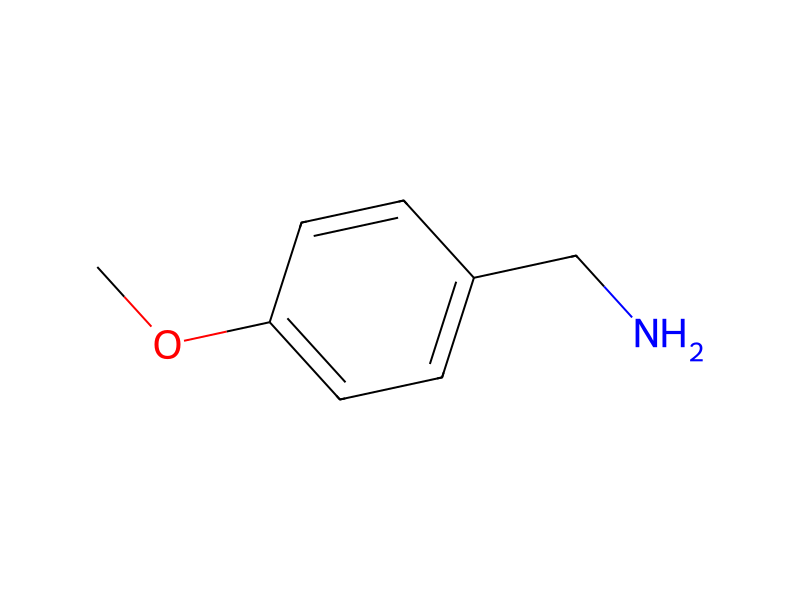
[NH2:1][C:2]1[C:7]([C:8](O)=O)=[CH:6][N:5]=[C:4]([S:11][CH3:12])[N:3]=1.[CH3:13][O:14][C:15]1[CH:22]=[CH:21][C:18]([CH2:19][NH2:20])=[CH:17][CH:16]=1.ON1C2C=CC=CC=2N=N1.CN(C)[CH:35]=[O:36]>>[CH3:13][O:14][C:15]1[CH:22]=[CH:21][C:18]([CH2:19][NH:20][C:35]([CH2:8][C:7]2[C:2]([NH2:1])=[N:3][C:4]([S:11][CH3:12])=[N:5][CH:6]=2)=[O:36])=[CH:17][CH:16]=1Participants
5




Procedure
To a solution of 4-amino-2-methylmercaptopyrimidine-5-carboxylic acid (185 mg, 1 mmol) and p-methoxybenzyl amine (164 mg, 1.2 mmol) in N,N-dimethylformamide was added 1-hydroxybenzotriazole (92 mg, 92 mmol) and 1-(3-dimethylaminopropyl)-3-ethylcarboiimide hydrochloride (229 mg, 1.2 mmol). The reaction mixture was stirred at room temperature over night. The solvent was removed under reduce pressure. The residue was dissolved in ethyl acetate (30 mL) and washed by water (30 mL) and brine (30 mL), dried over sodium sulfate, and the solvent was ecaporated. The residue was purified by column chromatography (hexanes:ethyl acetate=1:1) to give the desired product as a white powder (245 mg, 81%).
Workup
- customThe solvent was removed
- dissolutionThe residue was dissolved in ethyl acetate (30 mL)
- washwashed by water (30 mL) and brine (30 mL)
- dry with materialdried over sodium sulfate
- customThe residue was purified by column chromatography (hexanes:ethyl acetate=1:1)
Sources & evidence
- ORD record
- ord-598e6ff58c9f4a9f9c8143bed7451642
- Source dataset
- uspto-grants-2010_04
- Patent number
- US07700622B2
Linked notes
Loading…