Reaction equation

[CH3:1][C:2]1[CH:8]=[CH:7][CH:6]=[C:4]([OH:5])[C:3]=1[OH:9].C1(C)C=CC=CC=1>C1C=CC=CC=1>[CH3:1][C:2]1[CH:8]=[CH:7][CH:6]=[C:4]([OH:5])[C:3]=1[OH:9].[C:4]1([C:3](=[CH:2][CH:8]=[CH:7][CH:6]=1)[OH:9])[OH:5].[C:2]1([CH3:1])[C:3]([OH:9])=[CH:4][CH:6]=[CH:7][CH:8]=1.[C:4]1([OH:5])[CH:6]=[CH:7][CH:8]=[CH:2][CH:3]=1Participants
Reactant 2


Product 4

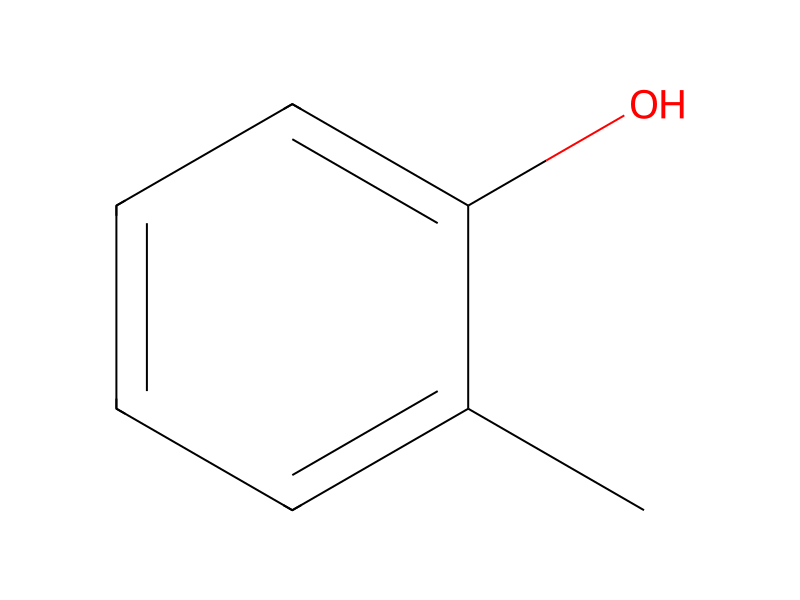

Reagents, catalysts & solvents 1

Conditions
- Temperature
- 1600 fahrenheit
Procedure
The effluent crackate vapor is separated from particulate solids in a cyclone separator, and the solids containing coke deposits are passed into the upper end of an ordinary or slow fluidized bed combustion zone maintained at about 1600° F. temperature for combustion of coke. Heated air and superheated steam are introduced into the lower end of the slow fluidized bed combustion zone. The hot decoked solids are recycled to the lower end of the fast fluidized bed, and flue gas is withdrawn from the top of the slow bed. The typical product slate that is obtained if secondary reactions are minimized is given in Table 1, with methyl catechol being the principal product. Increased process severity produces more secondary conversion of methyl catechol to catechol, cresol, phenol, toluene, and benzene. In addition, some tar is formed.
Workup
- customThe effluent crackate vapor is separated from particulate solids in a cyclone separator
- additionthe solids containing coke deposits
- temperatureHeated air and superheated steam
- additionare introduced into the lower end of the
- customis withdrawn from the top of the slow bed
- customThe typical product slate that is obtained if secondary reactions
- temperatureIncreased process severity
Sources & evidence
- ORD record
- ord-d8d7b7e410d84b4eb69ff00655c41ef3
- Source dataset
- uspto-grants-1983_10
- Patent number
- US04409416
Linked notes
Loading…