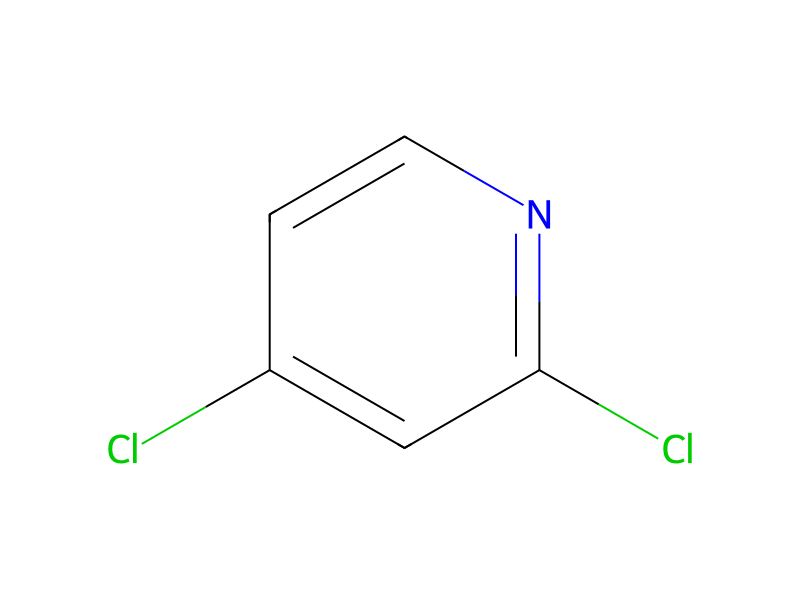
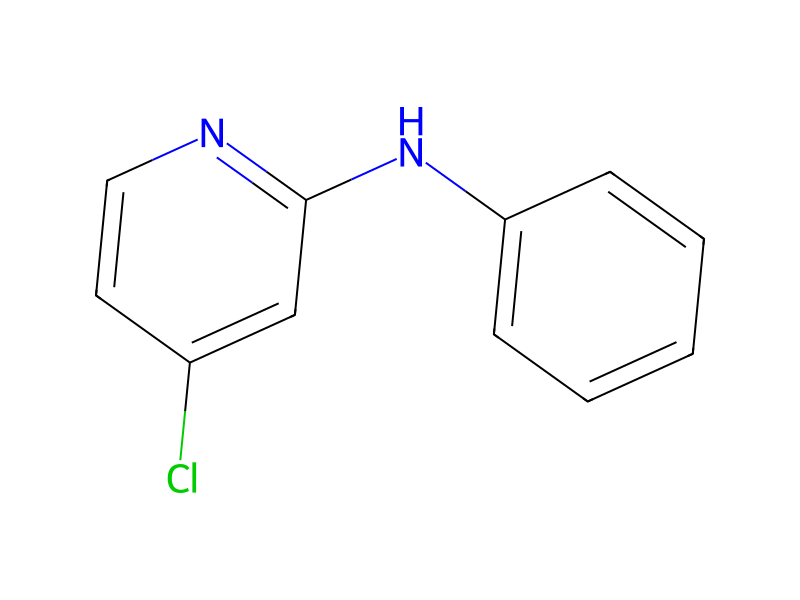
Aniline → 4-chloro-N-phenylpyridin-2-amine
Reaction equation
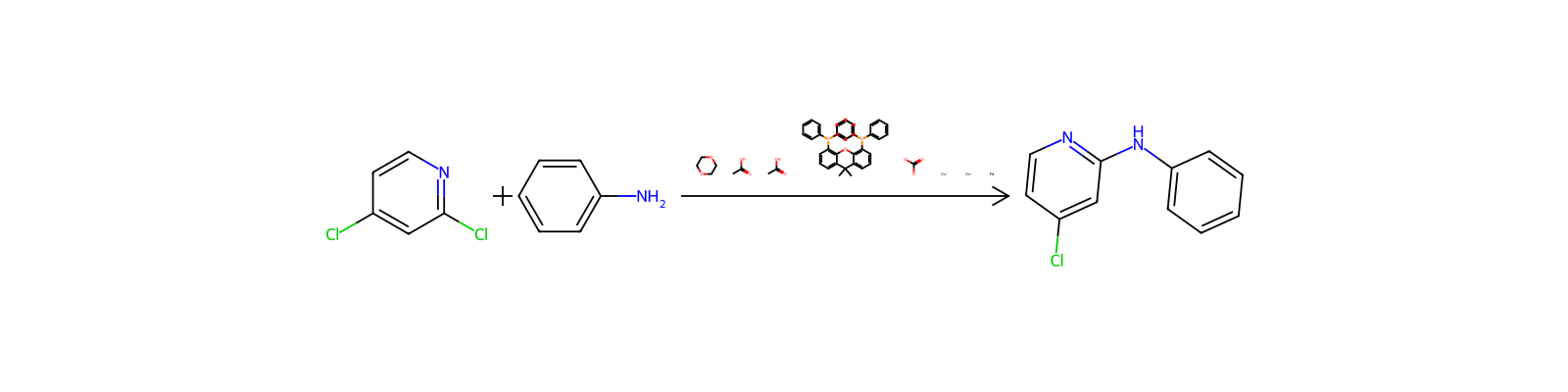
Clc1ccnc(Cl)c1.Nc1ccccc1>C1COCCO1.CC(=O)O.CC(=O)O.CC1(C)c2cccc(P(c3ccccc3)c3ccccc3)c2Oc2c(P(c3ccccc3)c3ccccc3)cccc21.O=C([O-])[O-].[Cs+].[Cs+].[Pd]>Clc1ccnc(Nc2ccccc2)c1Participants
7
Clc1ccnc(Cl)c1.Nc1ccccc1>C1COCCO1.CC(=O)O.CC(=O)O.CC1(C)c2cccc(P(c3ccccc3)c3ccccc3)c2Oc2c(P(c3ccccc3)c3ccccc3)cccc21.O=C([O-])[O-].[Cs+].[Cs+].[Pd]>Clc1ccnc(Nc2ccccc2)c1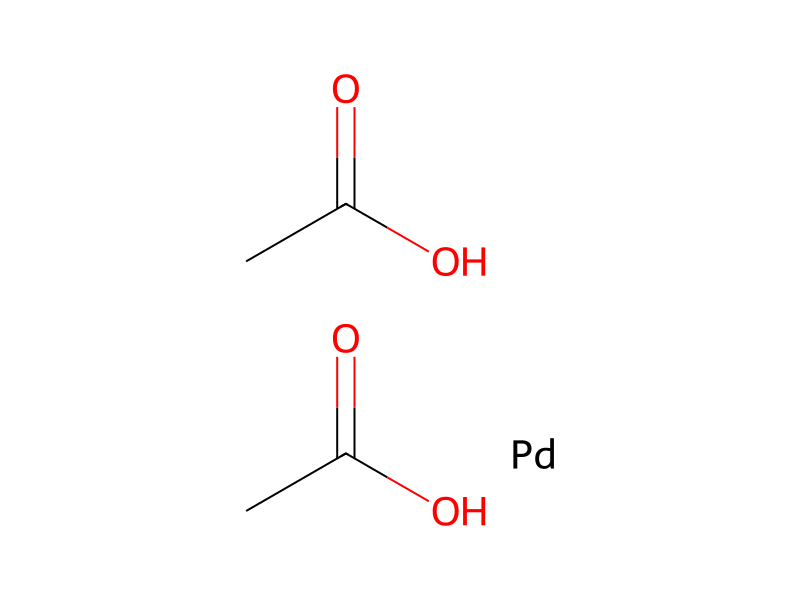
diacetoxypalladium (0.303 g, 1.35 mmol) was added in one portion to a degassed mixture of 2,4-dichloropyridine (10 g, 67.57 mmol), aniline (6.29 g, 67.57 mmol), (9,9-dimethyl-9H-xanthene-4,5-diyl)bis(diphenylphosphine) (1.173 g, 2.03 mmol) and cesium carbonate (44.0 g, 135.14 mmol) in dioxane (250 mL) under argon. The resulting mixture was stirred at 100 °C for 24 hours. The mixture was then cooled to room temperature, filtered and concentrated to dryness to give the crude product. The crude product was purified by flash silica chromatography, elution gradient 0 to 5% MeOH in DCM. Pure fractions were evaporated to dryness to afford 4-chloro-N-phenylpyridin-2-amine (7.72 g, 55.8 %) as a pale orange solid.
Loading…