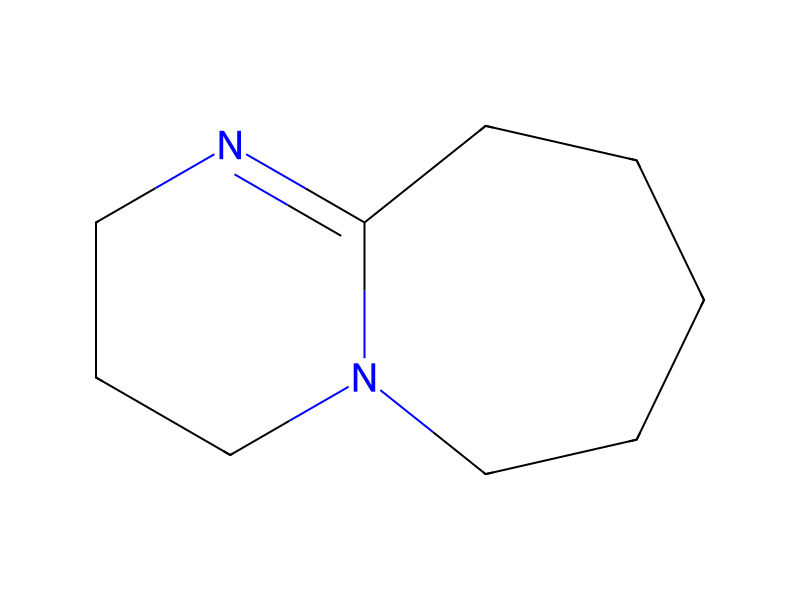
N12CCCN=C1CCCCC2.[CH3:12][O:13][C:14]1[CH:15]=[C:16]([CH:22]=[CH:23][C:24]=1[O:25][CH3:26])/[CH:17]=[CH:18]/[C:19]([OH:21])=[O:20].Cl[CH2:28][CH2:29][CH2:30][CH2:31][CH2:32][CH2:33][OH:34]>CN(C)C=O.[I-].C([N+](CCCC)(CCCC)CCCC)CCC>[CH3:12][O:13][C:14]1[CH:15]=[C:16]([CH:22]=[CH:23][C:24]=1[O:25][CH3:26])/[CH:17]=[CH:18]/[C:19]([O:21][CH2:28][CH2:29][CH2:30][CH2:31][CH2:32][CH2:33][OH:34])=[O:20]A solution consisting of 0.72 ml of 1,8-diazabicyclo[5.4.0]undec-7-ene (1.5-5) and 5 ml of dimethylformamide was added dropwise to a solution of 1.0 g of (E)-3,4-dimethoxycinnamic acid in 10 ml of dimethylformamide in the course of 10 minutes at room temperature. The reaction mixture was then heated to 80° C., 0.18 g of tetrabutylammonium iodide and 0.71 ml of 6-chlorohexanol were then added in succession and the reaction was then allowed to continue for 19 hours. Thereafter, the reaction mixture was cooled to room temperature and was partitioned between diethyl ether and 1 N hydrochloric acid and the organic phase was washed several times with saturated sodium chloride solution. The organic phase was then dried over magnesium sulfate, filtered and evaporated down. Chromatography of the residue over 150 g of silica gel using 3:2 toluene/ethyl acetate gave 1.35 g of 6-hydroxyhexyl (E)-3,4-dimethoxycinnamate.