HomeMCPWorkbenchSkills
HomeWorkbenchNotificationsMe
llms.txt · MCP GuidePrivacy Policy · Terms of Service · Supportv1.8.3
  1. Home
  2. /Reaction

Hydrochloric Acid → 1,2,3,4-Tetrahydrobenzo[c]-1,5-naphthyridine

HRID 652246
Print

Reaction equation

HRID 652246 reaction equation
[NH:1]1[C:10](=O)[CH2:9][CH2:8][C:7]2[N:6]=[CH:5][C:4]3[CH:12]=[CH:13][CH:14]=[CH:15][C:3]=3[C:2]1=2.B.[OH-].[Na+].Cl>O1CCCC1.C(O)(=O)C.O>[NH:1]1[CH2:10][CH2:9][CH2:8][C:7]2[N:6]=[CH:5][C:4]3[CH:12]=[CH:13][CH:14]=[CH:15][C:3]=3[C:2]1=2
ParticipantsProcedureWorkupSources & evidenceReaction notes

Participants

8

Reactant 4

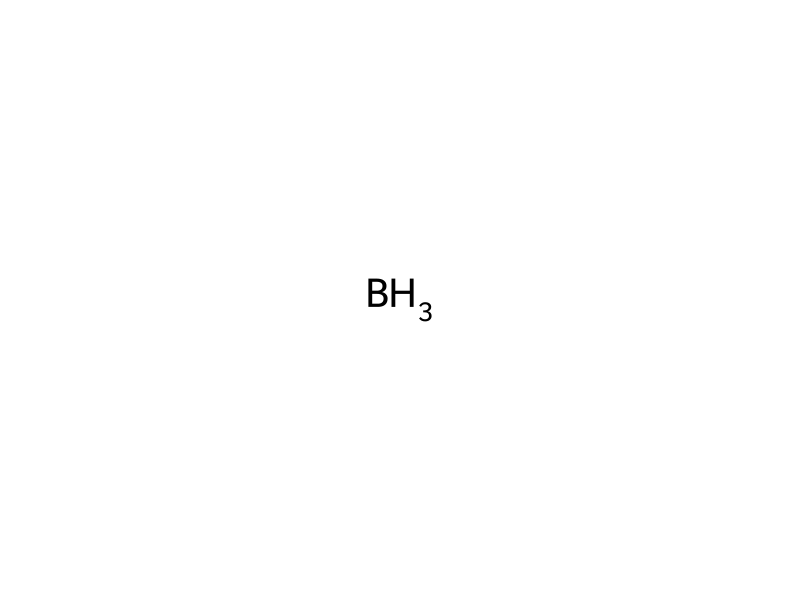
HCID 313Hydrochloric AcidHCID 6331BoraneHCID 14798Sodium Hydroxide2×HCID 136625093,4-Dihydrobenzo[c][1,5]naphthyridin-2(1H)-one

Product 1

HCID 138234741,2,3,4-Tetrahydrobenzo[c]-1,5-naphthyridineYield 53%

Reagents, catalysts & solvents 3

HCID 176
Acetic Acid
Solvent
2×
HCID 962WaterSolvent
HCID 8028TetrahydrofuranSolvent2×

Procedure

A stirred solution of 1,4-dihydrobenzo[c]-1,5-naphthyridin-2(3H)-one (4.0 g) in sieve dried tetrahydrofuran (400 ml) was treated over a few minutes with 0.98M borane in tetrahydrofuran (62 ml) under a dry nitrogen atmosphere. The resultant suspension was stirred for 5 hours at ambient temperature during which time a solution formed. After standing overnight at ambient temperature the solution was treated with glacial acetic acid (16 ml) followed by stirring for several minutes. The solution was then treated with 10% sodium hydroxide solution (180 ml) to give a biphasic system. Concentration on a rotary evaporator to remove the tetrahydrofuran gave a suspension of a solid which was extracted with CH2Cl2 (2×800 ml). The combined, dried (Na2SO4) organic phase was concentrated to afford a solid (5.18 g, tentatively identified as a borane complex). A suspension of the solid in glacial acetic acid (15 ml) was treated gradually with concentrated HCl (50 ml). When the gas evolution ceased, the mixture was warmed for a few minutes and then stirred for 0.5 hour at ambient temperature. The solution was strained through glass wool, and the filtrate was diluted with ice (300 ml) and water (100 ml) and then made alkaline with 50% sodium hydroxide solution. The mixture was extracted with CH2Cl2, dried (Na2SO4), filtered and concentrated to dryness (3.7 g). Recrystallization from acetonitrile (20 ml) gave 1.97 g of a crystalline material which was combined with 2.01 g of a similarly prepared product. The material was purified by HPLC (silica gel, eluted with 5% methanol in ethyl acetate) to give 3.72 g of a solid. Recrystallization from acetonitrile (20 ml) afforded 3.01 g of crystals, m.p. 124.5°-127.5° C.


Workup

  1. customformed
  2. customto give a biphasic system
  3. concentrationConcentration
  4. customon a rotary evaporator
  5. customto remove the tetrahydrofuran
  6. customgave
  7. additiona suspension of a solid which
  8. extractionwas extracted with CH2Cl2 (2×800 ml)
  9. dry with materialdried (Na2SO4) organic phase
  10. concentrationwas concentrated
  11. customto afford a solid (5.18 g
  12. temperaturethe mixture was warmed for a few minutes
  13. stirringstirred for 0.5 hour at ambient temperature
  14. extractionThe mixture was extracted with CH2Cl2
  15. dry with materialdried (Na2SO4)
  16. filtrationfiltered
  17. concentrationconcentrated to dryness (3.7 g)
  18. customRecrystallization from acetonitrile (20 ml)

Sources & evidence

ORD record
ord-f6f61c32376f4bb7828dadeffce8185d
Source dataset
uspto-grants-1987_06
DOI
10.6084/m9.figshare.5104873.v1
Patent number
US04670562

Reaction notes

On this pageParticipantsProcedureWorkupSources & evidenceReaction notes