HomeMCPWorkbenchSkills
HomeWorkbenchNotificationsMe
llms.txt · MCP GuidePrivacy Policy · Terms of Service · Supportv1.8.0
  1. Home
  2. /Reaction

Triethylamine → HCID 178418609, compound

HRID 6527
Notes
Print preview

Reaction equation

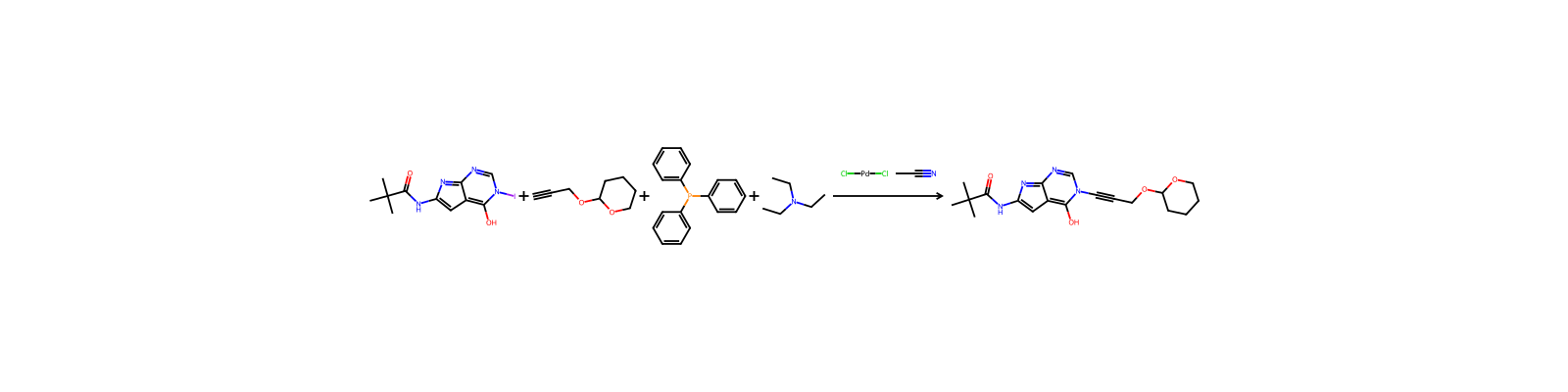
HRID 6527 reaction equation
I[N:2]1[C:7]([OH:8])=[C:6]2[CH:9]=[C:10]([NH:12][C:13](=[O:18])[C:14]([CH3:17])([CH3:16])[CH3:15])[N:11]=[C:5]2[N:4]=[CH:3]1.[CH2:19]([O:22][CH:23]1[CH2:28][CH2:27][CH2:26][CH2:25][O:24]1)[C:20]#[CH:21].C1(P(C2C=CC=CC=2)C2C=CC=CC=2)C=CC=CC=1.C(N(CC)CC)C>[Pd](Cl)Cl.C(#N)C>[O:24]1[CH2:25][CH2:26][CH2:27][CH2:28][CH:23]1[O:22][CH2:19][C:20]#[C:21][N:2]1[C:7]([OH:8])=[C:6]2[CH:9]=[C:10]([NH:12][C:13](=[O:18])[C:14]([CH3:17])([CH3:16])[CH3:15])[N:11]=[C:5]2[N:4]=[CH:3]1
ParticipantsProcedureWorkupSources & evidenceReaction notes

Participants

7

Reactant 4

HCID 8471TriethylamineHCID 11776TriphenylphosphineHCID 98609Tetrahydro-2-(2-propynyloxy)-2H-pyran2×HCID 178418587HCID 178418587, compound

Product 1

HCID 178418609HCID 178418609, compound

Reagents, catalysts & solvents 2

HCID 24290
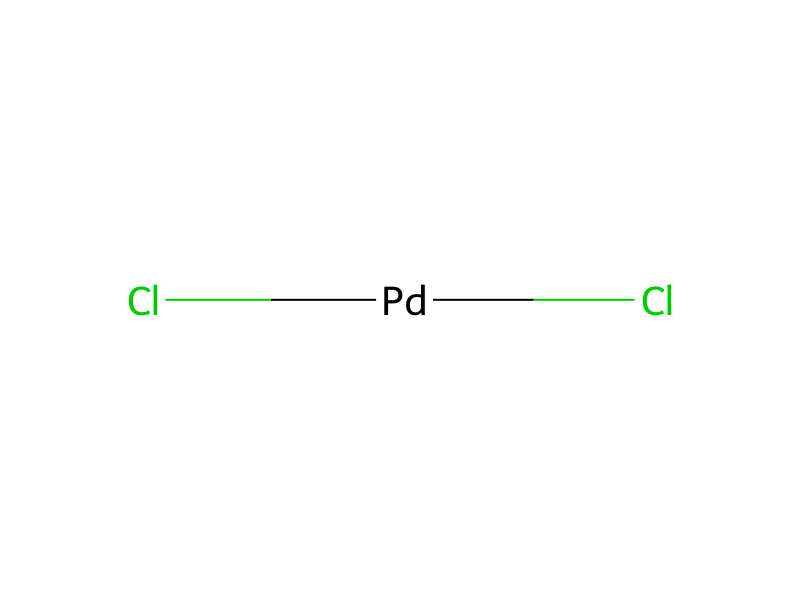
Palladium Chloride
Catalyst
HCID 6342AcetonitrileSolvent

Procedure

A mixture of 14.6 g of 3-iodo-4-hydroxy-6-pivaloylaminopyrrolo[2,3-d]pyrimidine, 7.6 g of 2-(2-propynyloxy)-tetrahydropyran, 798 mg (10%) of palladium chloride, 2.36 g (20%) of triphenyl phosphine, 428 mg (5%) of cuprous iodide, 45 ml of triethyl amine and 700 ml of acetonitrile is heated at reflux under nitrogen for 12 hours. There then are added to the hot reaction mixture 3.2 g of 2-(2-propynyloxy)-tetrahydropyran and reflux is continued for an additional 12 hours. After heating for a total of 24 hours under reflux, the solvent is removed under reduced pressure, and the residue filtered through silica gel using 2% methanol in methylene chloride. This filtrate is concentrated and chromatographed on silica gel eluting with 20:1 ethyl acetate:hexane mixture to give 3-(3-tetrahydropyr-2-yloxyprop-1-yn-1-yl)-4-hydroxy-6-pivaloylaminopyrrolo[2,3-d]pyrimidine which is further purified by recrystallization with ethyl acetate.

Workup

  1. temperatureis heated
  2. temperatureat reflux under nitrogen for 12 hours
  3. temperaturereflux
  4. temperatureAfter heating for a total of 24 hours
  5. temperatureunder reflux
  6. customthe solvent is removed under reduced pressure
  7. filtrationthe residue filtered through silica gel using 2% methanol in methylene chloride
  8. concentrationThis filtrate is concentrated
  9. customchromatographed on silica gel eluting with 20:1 ethyl acetate

Sources & evidence

ORD record
ord-e88b6018253240189f556b5baaee75e8
Source dataset
uspto-grants-1993_09
DOI
10.6084/m9.figshare.5104873.v1
Patent number
US05248775

Reaction notes

Loading…

On this pageParticipantsProcedureWorkupSources & evidenceReaction notes