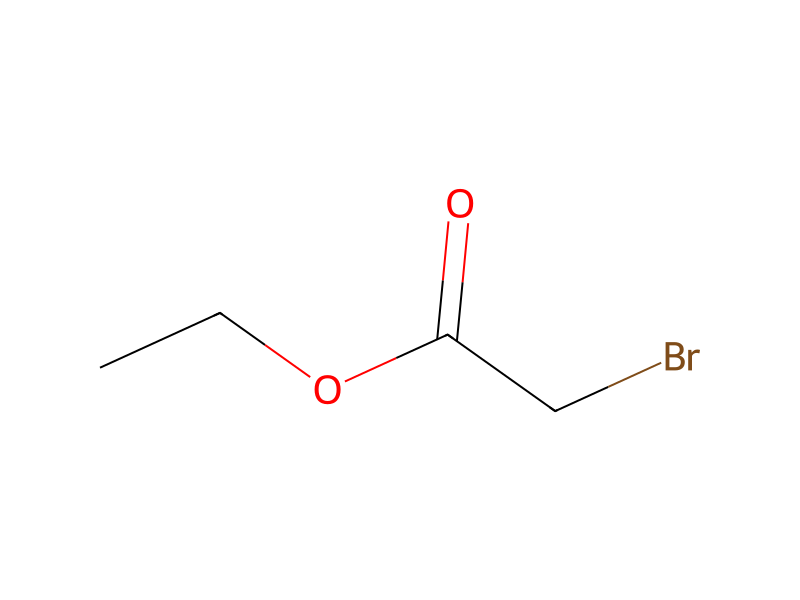
To a stirred, 0° C. solution of (S)-4-phenyloxazoldin-2-one (1.07 g, 6.54 mmol) in 15 mL of THF was added sodium hydride (0.32 g of a 60% oil dispersion, 8.0 mmol). When gas evolution had ceased (ca. 10 minutes), ethyl bromoacetate (0.87 mL, 7.8 mmol) was added. After 2 hours at 0° C., the mixture was treated with 50 mL of 2N aqueous NaOH, stirred rapidly for 1 hour at room temperature, and then partitioned between hexane (50 mL) and water (50 mL). The aqueous layer was separated, acidified with 6M aqueous H2SO4, and extracted with dichloromethane (2'200 mL). The combined organic phases were dried (Na2SO4) and concentrated to a thick oil, which was dissolved in 4 mL of warm toluene, seeded, and allowed to crystallize overnight; filtration gave 1.33 g (92%) of (S)-4-phenyloxazolidin-2-one-3-ylacetic acid; mp 106°-108° C.; [α]D22 +173° (c=2.0, CHCl3); IR (CHCl3) 3500-2500 (v. br), 1760 (br), 1480, 1460, 1430, 1230 cm-1 ; 1H NMR δ11.2 (br s, 1, COOH), 7.47-7.25 (m, 5, ArH), 5.05 (t, 1, J=8.4 Hz, OCH2CH), 4.72 (t, 1, J=8.8 Hz, one of OCH2CH), 4.32 (d 1, J=18.4 Hz, one of NCH2), 4.17 (t, 1, J=8.4 Hz, one of OCH2CH), 3.41 (d, 1, J=18.4 Hz, one of NCH2).