Reaction equation

[CH3:1][O:2][C:3]1[CH:4]=[C:5]([CH2:11][C:12]#[N:13])[CH:6]=[CH:7][C:8]=1[O:9][CH3:10].[H-].[Na+].[CH2:16]([O:18][CH:19]([O:23][CH2:24][CH3:25])[CH2:20][CH2:21]Cl)[CH3:17]>CN(C)C=O>[CH2:16]([O:18][CH:19]([O:23][CH2:24][CH3:25])[CH2:20][CH2:21][CH:11]([C:5]1[CH:6]=[CH:7][C:8]([O:9][CH3:10])=[C:3]([O:2][CH3:1])[CH:4]=1)[C:12]#[N:13])[CH3:17]Participants

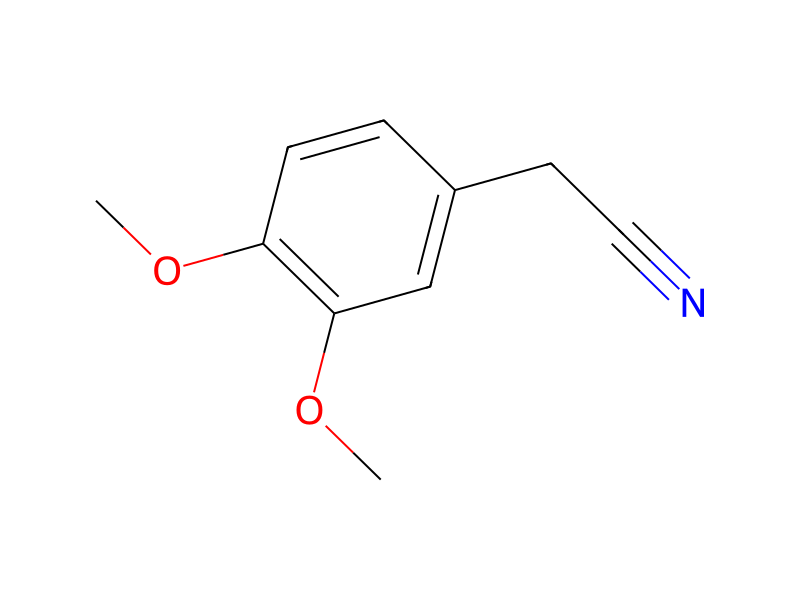



Procedure
An optionally substituted phenylacetonitrile is then alkylated with an ω-halopropionaldehyde acetal using a strong metallic base, in a polar, aprotic solvent. The desired phenylacetonitrile derivative is first deprotonated by adding about 1 eq of a strong metallic base, e.g., NaH, in a polar aprotic solvent at 15°-21° C. over 25-50 minutes. The resulting mixture is then stirred for 1-3 hours, and about 1 eq of 3-chloropropionaldehyde diethylacetal is added to yield a derivative of formula 5 (step 3). For example, 2-(3,4-dimethoxyphenyl)-acetonitrile in dimethyl formamide (DMF) is added to NaH at 18°-20° C. over a 30 minute period, stirred for one hour, and then treated with 3-chloropropionaldehyde diethylacetal in DMF to yield 2-(3,3-diethoxypropyl)-2-(3,4-dimethoxyphenyl)acetonitrile (5).
Sources & evidence
- ORD record
- ord-bda60665f50846349ca9e9e1951b5ec0
- Source dataset
- uspto-grants-1986_09
- Patent number
- US04613606
Linked notes
Loading…