Reaction equation

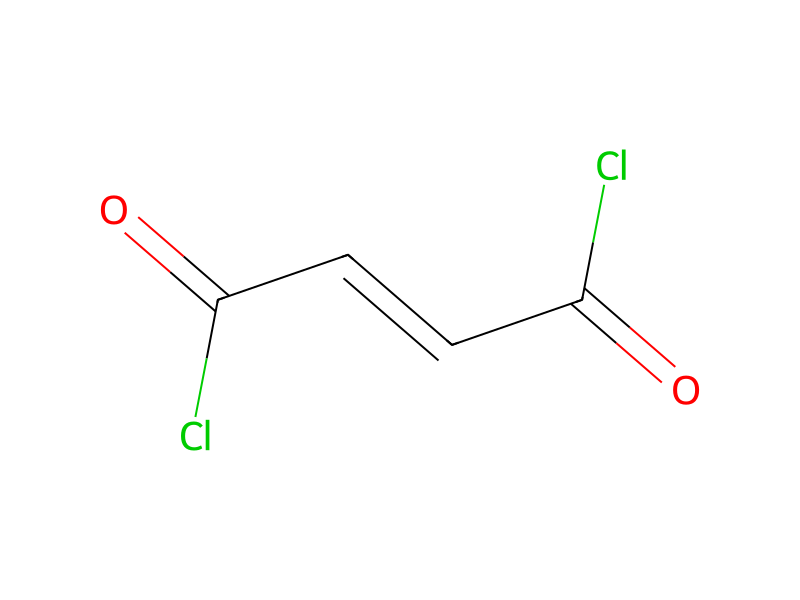
[Cl:1][C:2]1[CH:7]=[CH:6][CH:5]=[CH:4][CH:3]=1.[Cl-:8].[Al+3].[Cl-].[Cl-].[C:12](Cl)(=[O:18])/[CH:13]=[CH:14]/[C:15](Cl)=[O:16].Cl>C(=S)=S>[Cl:1][C:2]1[CH:7]=[CH:6][C:5]([C:12]([CH:13]=[CH:14][C:15](=[O:16])[C:2]2[CH:7]=[CH:6][C:5]([Cl:8])=[CH:4][CH:3]=2)=[O:18])=[CH:4][CH:3]=1Participants
6
Reactant 4



Product 1

Reagents, catalysts & solvents 1

Procedure
Chlorobenzene (0.4 mol) and aluminium chloride (0.5 mol) in carbon disulphide (30 ml) were stirred at 50°-60°. Fumaryl chloride (0.2 mol) was added dropwise at a brisk rate over 30 minutes and refluxing was continued for a further 15 minutes. The residue was poured into crushed ice (1 kg) and concentrated hydrochloric acid (15.0 ml). The semi-solid was filtered off, washed with ether and ethanol, and recrystallised from ethyl acetate/ethanol to give pale yellow needles of di-(p-chlorobenzoyl) ethylene m.p. 175°-176°. Analysis:
Workup
- temperaturerefluxing
- additionThe residue was poured
- filtrationThe semi-solid was filtered off
- washwashed with ether and ethanol
- customrecrystallised from ethyl acetate/ethanol
Sources & evidence
- ORD record
- ord-7268eb315e164f72ba51cc9181c1bd1a
- Source dataset
- uspto-grants-1978_12
- Patent number
- US04130409
Linked notes
Loading…