Reaction equation

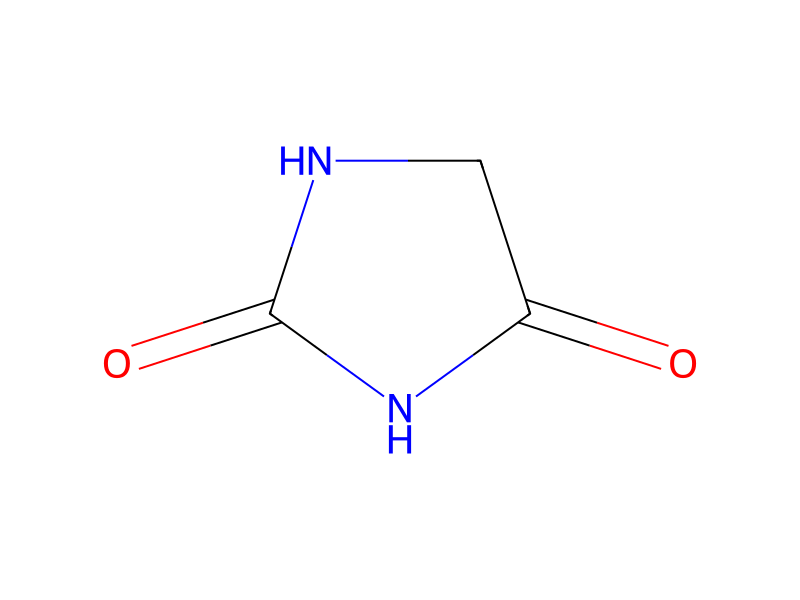
[NH:1]1[CH2:7][C:5](=[O:6])[NH:4][C:2]1=[O:3].[N+:8]([C:11]1[CH:18]=[CH:17][C:14]([CH:15]=O)=[CH:13][CH:12]=1)([O-:10])=[O:9].C([O-])(=O)C.[NH4+].C(O)(=O)C>C(O)CCC>[N+:8]([C:11]1[CH:18]=[CH:17][C:14]([CH:15]=[C:7]2[NH:1][C:2](=[O:3])[NH:4][C:5]2=[O:6])=[CH:13][CH:12]=1)([O-:10])=[O:9]Participants
6
Reactant 4



Product 1

Reagents, catalysts & solvents 1

Procedure
A mixture of 100 grams (1.0 mole) of hydantoin, 151 grams (1.0 mole) of 4-nitrobenzaldehyde, 77 grams (1.0 mole) of ammonium acetate, 120 grams (2.0 moles) of acetic acid, and 200 ml of n-butanol were held for 3 hours at reflux temperature. After the cooling, there were obtained 219 grams of 5-(4'-nitrobenzylidene)-hydantoin, corresponding to 94% of the theory based on hydantoin. The product had a melting point of 253°-254° C. and homogeneous by thin layer chromatography.
Workup
- temperatureat reflux temperature
Sources & evidence
- ORD record
- ord-7fefe04751574bbd82fd98bf15e2f617
- Source dataset
- uspto-grants-1982_08
- Patent number
- US04345072
Linked notes
Loading…