Reaction equation

[CH3:1][O:2][CH2:3][CH2:4][O:5][CH2:6][CH2:7][O:8][CH2:9][CH2:10][OH:11].C(N(CC)CC)C.[CH:19]1([C:22](Cl)=[O:23])[CH2:21][CH2:20]1>ClCCl>[CH:19]1([C:22]([O:11][CH2:10][CH2:9][O:8][CH2:7][CH2:6][O:5][CH2:4][CH2:3][O:2][CH3:1])=[O:23])[CH2:21][CH2:20]1Participants


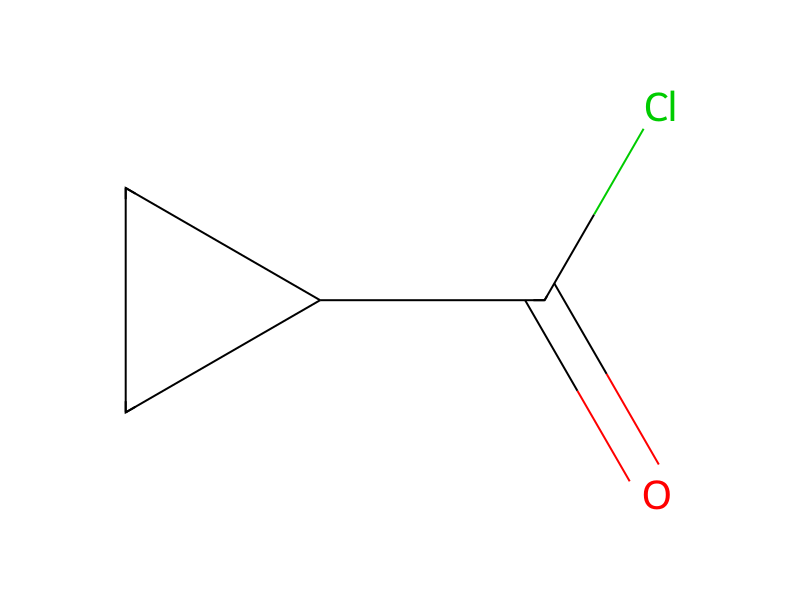


Conditions
- Temperature
- 0 °C
Procedure
Triethylene glycol monomethyl ether (1.1 eq, 5.26 mmol, 0.84 ml), triethylamine (1.1 eq, 5.26 mmol, 0.73 ml) was taken in a 10 ml round bottom flask and dichloromethane (3 ml) was added. This mixture was cooled to 0° C. and then cyclopropanecarbonyl chloride (4.78 mmol, 0.5 g, 0.43 ml) was added in a dropwise fashion maintaining the temperature at 0° C. with constant stirring. A yellowish-orange solid was observed after some time. Stirring was continued for 1 hr at 0° C. The reaction was monitored by thin layer chromatography, and then quenched with saturated ammonium chloride solution. It was then transferred to a separatory funnel, washed with 5% sodium bicarbonate (2×5 ml), 1:1 hydrochloric acid (2×5 ml) and then with brine (5 ml). The dichloromethane layer was separated from the aqueous layer, dried over anhydrous sodium sulphate, filtered, and evaporated in vacuo to give the title product as a pale yellow liquid. Purification was attempted by flash chromatography and vacuum distillation (b.p.=144° C., 3.0 mm of Hg) which afforded the pure product as a colorless liquid (527.0 mg, 48%).
Workup
- temperaturemaintaining the temperature at 0° C. with constant stirring
- customquenched with saturated ammonium chloride solution
- customIt was then transferred to a separatory funnel
- washwashed with 5% sodium bicarbonate (2×5 ml), 1:1 hydrochloric acid (2×5 ml)
- customThe dichloromethane layer was separated from the aqueous layer
- dry with materialdried over anhydrous sodium sulphate
- filtrationfiltered
- customevaporated in vacuo
Sources & evidence
- ORD record
- ord-9cde62dad74542a8b096bc1839d1215f
- Source dataset
- uspto-grants-2006_08
- Patent number
- US07084173B2
Linked notes
Loading…