HomeMCPWorkbenchSkills
HomeWorkbenchNotificationsMe
llms.txt · MCP GuidePrivacy Policy · Terms of Service · Supportv1.8.3
  1. Home
  2. /Reaction

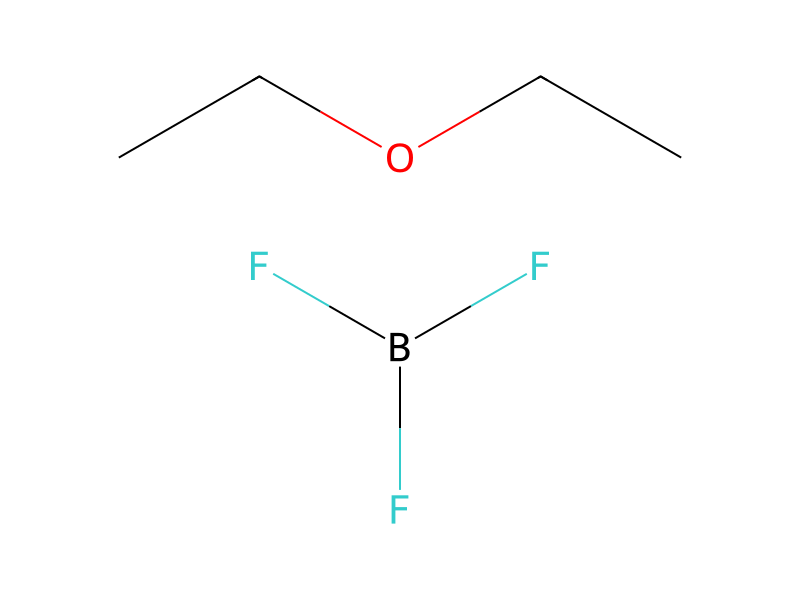
Boron trifluoride etherate → Methyl 7-(1-benzyloxy-2-naphthyl)-5-heptynoate

HRID 703897
Print

Reaction equation

HRID 703897 reaction equation
B(F)(F)F.CCOCC.C([SiH](CC)CC)C.[CH2:17]([O:24][C:25]1[C:34]2[C:29](=[CH:30][CH:31]=[CH:32][CH:33]=2)[CH:28]=[CH:27][C:26]=1[CH:35](O)[C:36]#[C:37][CH2:38][CH2:39][CH2:40][C:41]([O:43][CH3:44])=[O:42])[C:18]1[CH:23]=[CH:22][CH:21]=[CH:20][CH:19]=1.C(=O)([O-])[O-].[K+].[K+]>C(Cl)Cl.CCOCC>[CH2:17]([O:24][C:25]1[C:34]2[C:29](=[CH:30][CH:31]=[CH:32][CH:33]=2)[CH:28]=[CH:27][C:26]=1[CH2:35][C:36]#[C:37][CH2:38][CH2:39][CH2:40][C:41]([O:43][CH3:44])=[O:42])[C:18]1[CH:19]=[CH:20][CH:21]=[CH:22][CH:23]=1
ParticipantsProcedureWorkupSources & evidenceReaction notes

Participants

7

Reactant 4

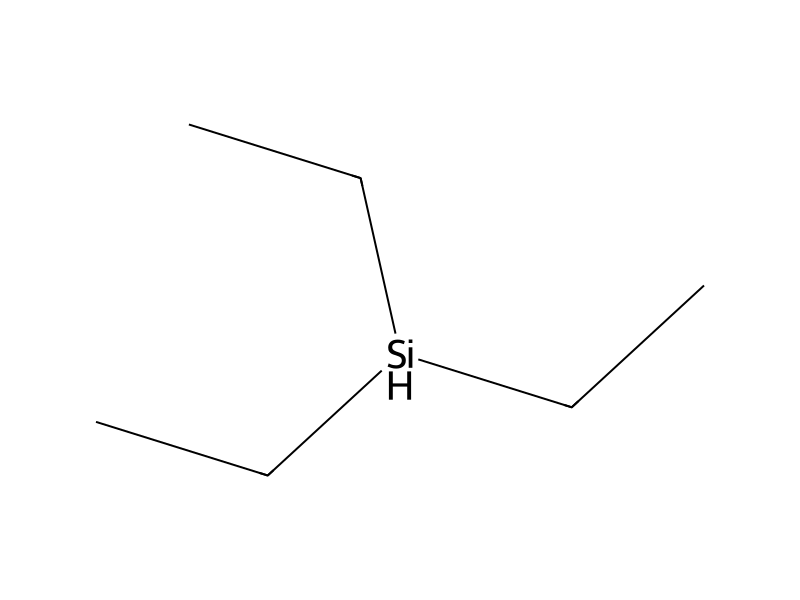
HCID 8000Boron trifluoride etherateHCID 11430Potassium CarbonateHCID 12052TriethylsilaneHCID 15617823Methyl 7-(1-benzyloxy-2-naphthyl)-7-hydroxy-5-heptynoate

Product 1

HCID 15617824Methyl 7-(1-benzyloxy-2-naphthyl)-5-heptynoateYield 50%

Reagents, catalysts & solvents 2

HCID 3283
Diethyl Ether
Solvent
HCID 6344DichloromethaneSolvent2×

Procedure

To a solution of boron trifluoride etherate (5.0 mL, 0.041 mole) in methylene chloride (150 mL) at 0°, triethylsilane (20 mL, 0.126 mole) was added, followed by a solution of methyl 7-(1-benzyloxy-2-naphthyl)-7-hydroxy-5-heptynoate (5.00 g, 0.013 mole) in methylene chloride (20 mL). The mixture was stirred for 30 minutes, then poured into saturated aqueous potassium carbonate. The crude product was isolated by extraction with ether, and chromatographed with 1:1 ether/hexane. This provided the title compound (2.42 g, 50%) as an oil.

Workup

  1. customchromatographed with 1:1 ether/hexane

Sources & evidence

ORD record
ord-3fe16b35eb8e4e02b75d94db49b22cd9
Source dataset
uspto-grants-1991_01
DOI
10.6084/m9.figshare.5104873.v1
Patent number
US04985435

Reaction notes

On this pageParticipantsProcedureWorkupSources & evidenceReaction notes