Reaction equation
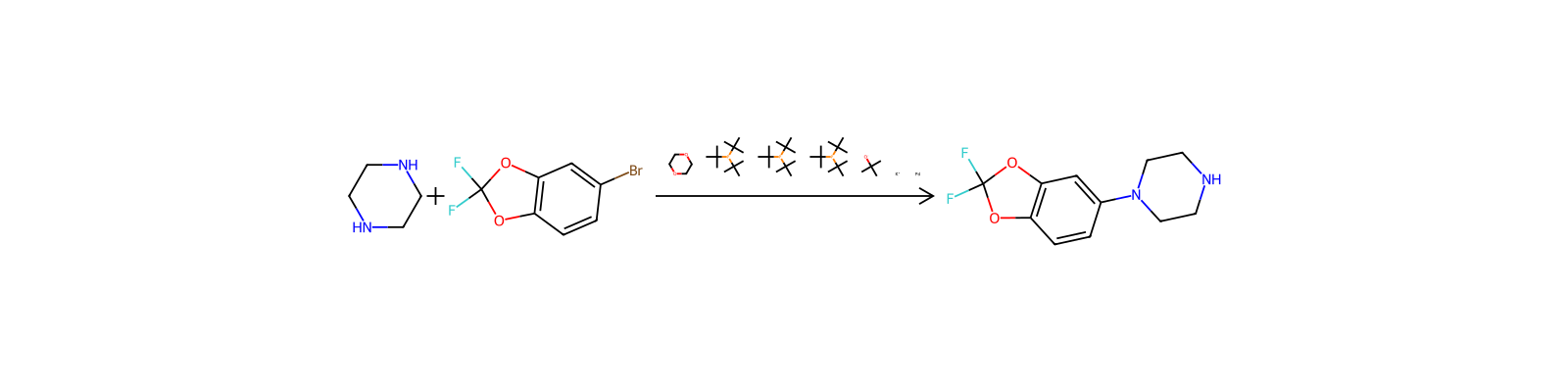
C1CNCCN1.FC1(F)Oc2ccc(Br)cc2O1>C1COCCO1.CC(C)(C)P(C(C)(C)C)C(C)(C)C.CC(C)(C)P(C(C)(C)C)C(C)(C)C.CC(C)(C)P(C(C)(C)C)C(C)(C)C.CC(C)(C)[O-].[K+].[Pd]>FC1(F)Oc2ccc(N3CCNCC3)cc2O1Participants
7
Reactant 2


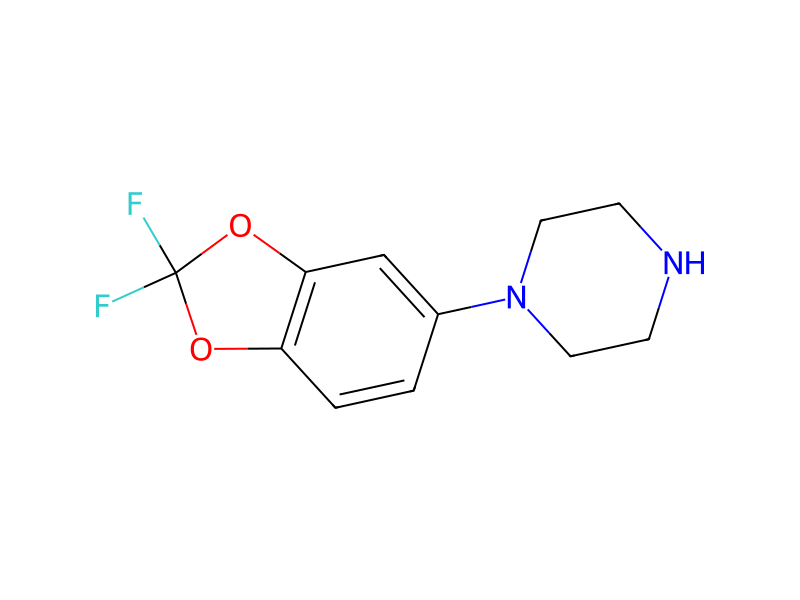
Product 1
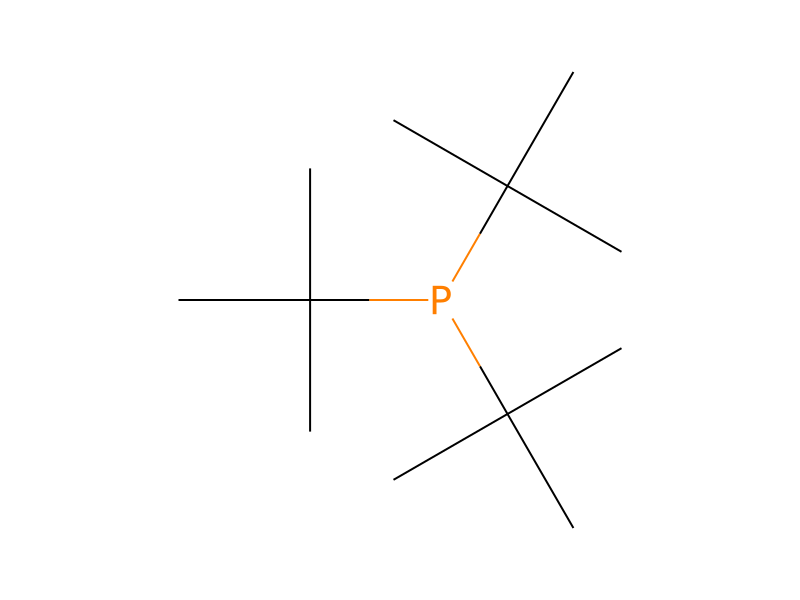
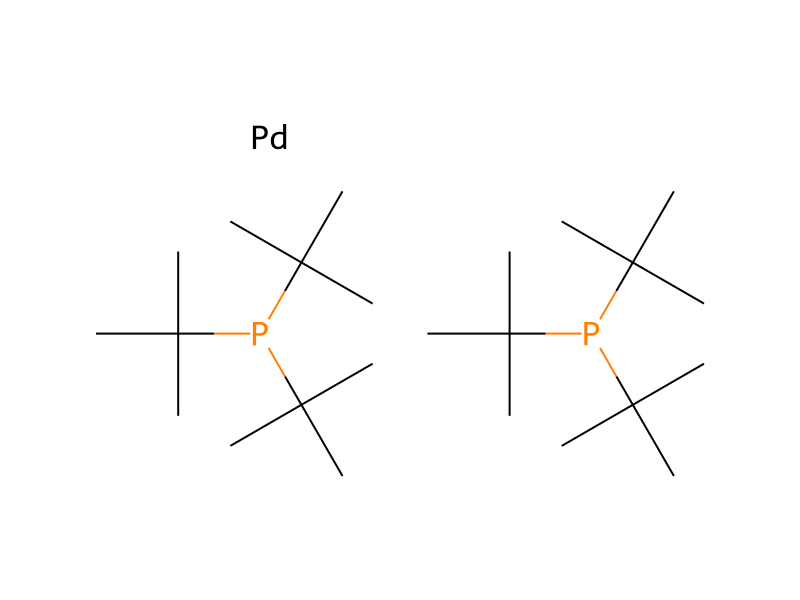
Reagents, catalysts & solvents 4


Conditions
- Temperature
- 90 °C
Procedure
13-May-09 10:32:07 +0100 5-bromo-2,2-difluorobenzo[d][1,3]dioxole (0.500 g, 2.11 mmol), piperazine (0.182 g, 2.11 mmol) and BIS(TRI-T-BUTYLPHOSPHINE)PALLADIUM(0) (0.054 g, 0.11 mmol) and potassium 2-methylpropan-2-olate (0.349 g, 2.95 mmol) were suspended in dioxane (10vol) (10 mL) and heated to 90°C for 1 hour. LC-MS shows no starting material 52% product and 41% dimer. The reaction mixture was combined with EN02263-54 filtered and the crude product was purified by flash silica chromatography, elution gradient 0 to 10% MeOH in DCM. Pure fractions were evaporated to dryness to afford 1-(2,2-difluorobenzo[d][1,3]dioxol-5-yl)piperazine (0.259 g, 50.7 %) as a yellow oil.
Sources & evidence
- ORD record
- ord-a6f7db18dd5949e09df857ba4df0f8b1
- Source dataset
- 750 AstraZeneca ELN dataset
- Original link
- View source
Linked notes
Loading…