HomeMCPSkillsWorkbenchOpenChem
HomeWorkbenchNotificationsMe
llms.txt · skill.md · MCP GuidePrivacy Policy · Terms of Service · Supportv1.8.5
  1. Home
  2. /Reaction

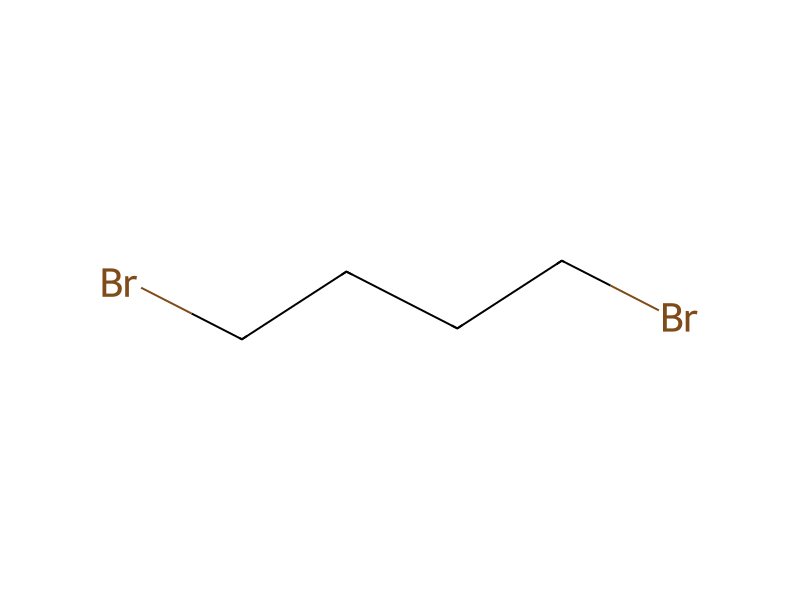
1,4-Dibromobutane → HCID 136262717, compound

HRID 706796
Print

Reaction equation

[Mg].[Cl-].[Ce+3].[Cl-].[Cl-].Br[CH2:7][CH2:8][CH2:9][CH2:10]Br.CO[C:14](=[O:31])[C:15]1[CH:20]=[CH:19][C:18]([C:21]2[NH:26][C:25](=[O:27])[C:24]3=[CH:28][CH:29]=[CH:30][N:23]3[N:22]=2)=[CH:17][CH:16]=1>C1COCC1>[OH:31][C:14]1([C:15]2[CH:16]=[CH:17][C:18]([C:21]3[NH:26][C:25](=[O:27])[C:24]4=[CH:28][CH:29]=[CH:30][N:23]4[N:22]=3)=[CH:19][CH:20]=2)[CH2:10][CH2:9][CH2:8][CH2:7]1
ParticipantsConditionsProcedureWorkupSources & evidenceReaction notes

Participants

6

Reactant 4

HCID 80561,4-DibromobutaneHCID 24636Cerium(III) chlorideHCID 5462224MagnesiumHCID 1362503314-(4-Oxo-3,4-dihydro-pyrrolo[2,1-f][1,2,4]triazin-2-yl)-benzoic acid methyl ester

Product 1

HCID 136262717HCID 136262717, compound

Reagents, catalysts & solvents 1

HCID 8028
Tetrahydrofuran
Solvent
2×

Conditions

Temperature
0 °C

Procedure

A 15 ml reaction vial is flushed with nitrogen and charged with dry THF (2.5 ml), magnesium turnings (55.5 mg, 2.28 mmol) and cerium(III) chloride (20.5 mg, 0.084 mmol). The suspension is cooled to 0° C., 1,4-dibromobutane (157 μl, 1.33 mmol) is added. The suspension is allowed to reach room temperature, stirred for 30 minutes at this temperature and again cooled to 0° C. Then, a solution of 4-(4-oxo-3,4-dihydro-pyrrolo[2,1-f][1,2,4]triazin-2-yl)-benzoic acid methyl ester (113 mg, 0.42 mmol) in THF (1 ml) is added dropwise. The reaction mixture is stirred for 30 minutes at room temperature. The reaction mixture is quenched with saturated ammonium chloride solution and partitioned between ethyl acetate and water. The organic phase is dried over sodium sulfate and evaporated. The residue is chromatographed on a silica gel column with cyclohexane/ethyl acetate as eluent to afford 2-[4-(1-hydroxy-cyclopentyl)-phenyl]-3H-pyrrolo[2,1-f][1,2,4]triazin-4-one as white solid; HPLC/MS 1.75 (C), [M+H] 296; 1H NMR (400 MHz, DMSO-d6) δ [ppm] 11.92 (s, 1H), 7.98-7.89 (m, 2H), 7.67 (dd, J=2.7, 1.7 Hz, 1H), 7.65-7.59 (m, 2H), 6.94 (dd, J=4.3, 1.7 Hz, 1H), 6.60 (dd, J=4.3, 2.6 Hz, 1H), 4.94 (s, 1H), 1.95-1.85 (m, 6H), 1.83-1.74 (m, 2H).

Workup

  1. customA 15 ml reaction
  2. customvial is flushed with nitrogen
  3. customto reach room temperature
  4. temperatureagain cooled to 0° C
  5. stirringThe reaction mixture is stirred for 30 minutes at room temperature
  6. customThe reaction mixture is quenched with saturated ammonium chloride solution
  7. custompartitioned between ethyl acetate and water
  8. dry with materialThe organic phase is dried over sodium sulfate
  9. customevaporated
  10. customThe residue is chromatographed on a silica gel column with cyclohexane/ethyl acetate as eluent

Sources & evidence

ORD record
ord-56de2ff698854bcd8667d92b381e05e1
Source dataset
uspto-grants-2015_11
DOI
10.6084/m9.figshare.5104873.v1
Patent number
US09174995B2

Reaction notes

On this pageParticipantsConditionsProcedureWorkupSources & evidenceReaction notes

