Reaction equation

[N+]([C:4]1[CH:9]=[CH:8][C:7]([C:10]2[N:14]=[CH:13][NH:12][N:11]=2)=[CH:6][CH:5]=1)([O-])=O.[C:15](C1C=CC(C(N)=O)=CC=1)#[N:16].O.NN.CCOCC>CN(C(OC)OC)C>[NH:12]1[CH:13]=[N:14][C:10]([C:7]2[CH:8]=[CH:9][C:4]([C:15]#[N:16])=[CH:5][CH:6]=2)=[N:11]1Participants
6




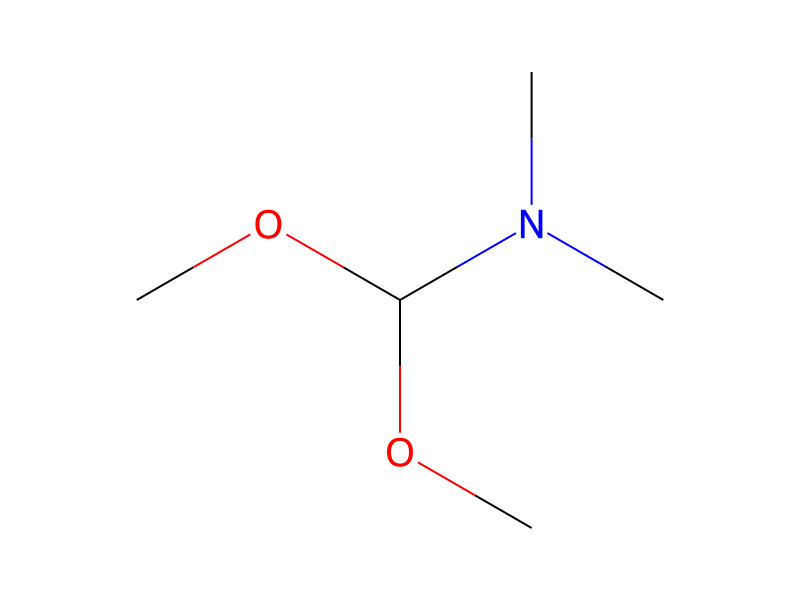
Procedure
The general procedure outlined by Lin et al. (J. Org. Chem. 1979, 44, 4163) for preparation of 3-(4-nitrophenyl)-1H-[1,2,4]triazole was used. 4-Cyanobenzamide (21.63 g, 0.148 mol) was dissolved in DMF-DMA (100 mL) and was stirred at reflux under N2 for 8 h. The mixture was concentrated to dryness and suspended in AcOH (50 mL). The vessel was then charged with hydrazine monohydrate (7.18 mL, 0.148 mmol) and stirred at reflux for 1 h before concentration. The desired 4-(1H-[1,2,4]triazol-3-yl)-benzonitrile was obtained in 98% purity by trituration with Et2O followed by filtration (12.17 g, 0.072 mol, 48%).
Workup
- temperatureat reflux under N2 for 8 h
- concentrationThe mixture was concentrated to dryness
- stirringstirred
- temperatureat reflux for 1 h before concentration
Sources & evidence
- ORD record
- ord-7ecbca45bacd4186a67ae60fe0beea32
- Source dataset
- uspto-grants-2015_11
- Patent number
- US09179681B2
Linked notes
Loading…