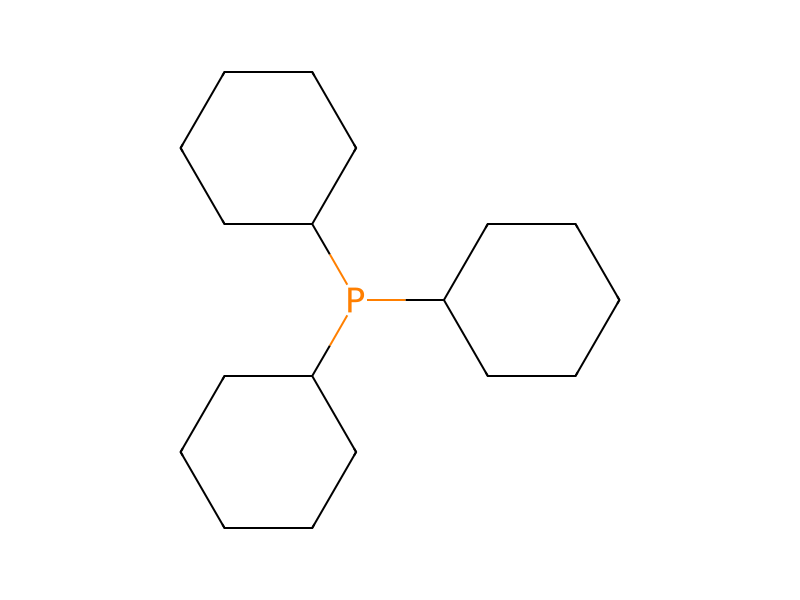
Br[C:2]1[C:3]([F:12])=[C:4]([CH:6]=[C:7]([N+:9]([O-:11])=[O:10])[CH:8]=1)[NH2:5].B1([CH:24]2[CH2:26][CH2:25]2)OC(=O)CN(C)CC(=O)O1.P(C1CCCCC1)(C1CCCCC1)C1CCCCC1.C([O-])([O-])=O.[Cs+].[Cs+]>C1(C)C=CC=CC=1.O.CC([O-])=O.CC([O-])=O.[Pd+2]>[CH:24]1([C:2]2[C:3]([F:12])=[C:4]([CH:6]=[C:7]([N+:9]([O-:11])=[O:10])[CH:8]=2)[NH2:5])[CH2:26][CH2:25]1A mixture of 3-bromo-2-fluoro-5-nitroaniline (2.20 g, 9.36 mmol, 1 equiv), cyclopropylboronic acid MIDA ester (Aldrich; 11.07 g, 56.17 mmol, 6 equiv), Cy3P (1.05 g, 3.74 mmol, 0.4 equiv), Cs2CO3 (54.90 g, 168.50 mmol, 18 equiv) in toluene/H2O (5:1; 450 mL:90 mL) followed by Pd(OAc)2 (0.420 g, 1.87 mmol. 0.20 equiv) was de-gassed by sonicating under vacuum for 10 minutes and back-filled with N2. The mixture was then heated at 100° C. overnight. After allowing to cool to room temperature, the mixture was concentrated to dryness. The residue was taken in DCM, and silica gel was added at this stage so that the residue was absorbed directly on to silica gel. After removing the solvent under vacuum, the crude product was purified by column chromatography on silica gel using DCM to give the product 3-cyclopropyl-2-fluoro-5-nitroaniline (1.27 g, 69%) as a yellow solid.