HomeMCPWorkbenchSkills
HomeWorkbenchNotificationsMe
llms.txt · MCP GuidePrivacy Policy · Terms of Service · Supportv1.8.3
  1. Home
  2. /Reaction

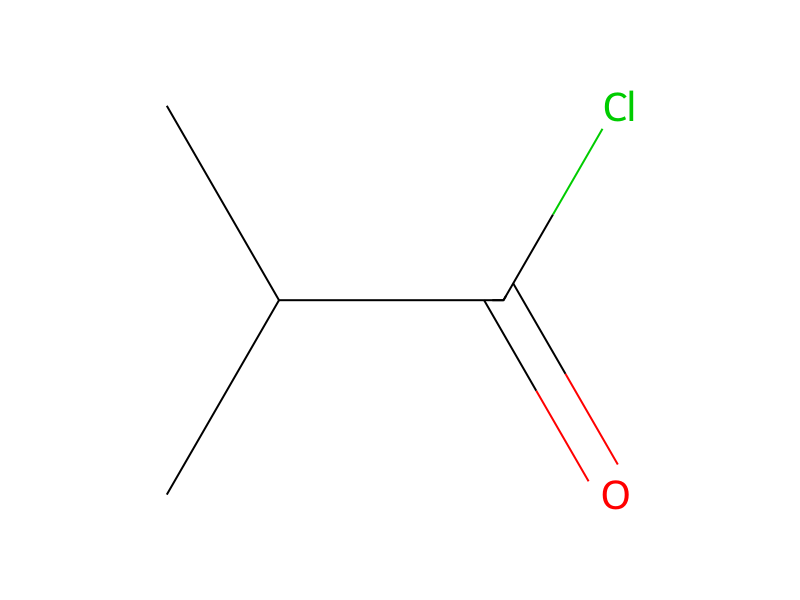
Isobutyryl chloride → 1-(2-(4-(2,4-difluorobenzyl)piperazin-1-yl)-3-(isopropylamino)-7,8-dihydropyrido[3,4-b]pyrazin-6(5H)-yl)-2-methylpropan-1-one

HRID 713372
Print

Reaction equation

HRID 713372 reaction equation
[F:1][C:2]1[CH:28]=[C:27]([F:29])[CH:26]=[CH:25][C:3]=1[CH2:4][N:5]1[CH2:10][CH2:9][N:8]([C:11]2[N:12]=[C:13]3[CH2:24][CH2:23][NH:22][CH2:21][C:14]3=[N:15][C:16]=2[NH:17][CH:18]([CH3:20])[CH3:19])[CH2:7][CH2:6]1.CCN(C(C)C)C(C)C.[C:39](Cl)(=[O:43])[CH:40]([CH3:42])[CH3:41]>C(Cl)Cl>[F:1][C:2]1[CH:28]=[C:27]([F:29])[CH:26]=[CH:25][C:3]=1[CH2:4][N:5]1[CH2:10][CH2:9][N:8]([C:11]2[N:12]=[C:13]3[CH2:24][CH2:23][N:22]([C:39](=[O:43])[CH:40]([CH3:42])[CH3:41])[CH2:21][C:14]3=[N:15][C:16]=2[NH:17][CH:18]([CH3:20])[CH3:19])[CH2:7][CH2:6]1
ParticipantsConditionsProcedureWorkupSources & evidenceReaction notes

Participants

5

Reactant 3

HCID 62325Isobutyryl chlorideHCID 81531DiisopropylethylamineHCID 1181594012-(4-(2,4-difluorobenzyl)piperazin-1-yl)-N-isopropyl-5,6,7,8-tetrahydropyrido[3,4-b]pyrazin-3-amine

Product 1

HCID 1181592291-(2-(4-(2,4-difluorobenzyl)piperazin-1-yl)-3-(isopropylamino)-7,8-dihydropyrido[3,4-b]pyrazin-6(5H)-yl)-2-methylpropan-1-oneYield 67.1%

Reagents, catalysts & solvents 1

HCID 6344DichloromethaneSolvent

Conditions

Temperature
0 °C

Procedure

To a solution of 2-(4-(2,4-difluorobenzyl)piperazin-1-yl)-N-isopropyl-5,6,7,8-tetrahydropyrido[3,4-b]pyrazin-3-amine (50 mg, 0.124 mmol) and DIPEA (0.032 mL, 0.186 mmol) in DCM (1 mL) was added isobutyryl chloride (0.013 mL, 0.124 mmol) at 0° C. The reaction mixture was stirred at 0° C. for 1 h, warmed to 23° C. and stirred for an additional 15.5 h. The reaction mixture was concentrated via rotary evaporation and partitioned between EtOAc (4 mL) and NH4Cl (2 mL). The layers were separated and the organic phase was washed with brine (2 mL), dried over Na2SO4, filtered, rinsed with EtOAc, and concentrated via rotary evaporation. The crude material was dissolved in EtOAc and MeOH, adsorbed on silica gel (0.25 g), and purified via medium pressure chromatography using a 50% to 100% gradient of EtOAc in heptane on a 4 g silica gel column (Single Step™) to give the title compound (39.3 mg, 66.9%) as a yellow foam. 1H NMR (500 MHz, DMSO-d6, mixture of rotamers) δ ppm 0.99 (d, J=6.8 Hz, 2.7H), 1.03 (d, J=6.8 Hz, 3H), 1.11-1.22 (m, 6H), 2.58 (br s, 3.8H), 2.69 (t, J=5.4 Hz, 1.2H), 2.88-3.13 (m, 5H), 3.58 (s, 2H), 3.75 (dt, J=10.9, 5.6 Hz, 2H), 4.05-4.17 (m, 1H), 4.41 (s, 1.1H), 4.49 (s, 0.9H), 5.29-5.42 (m, 1H), 7.08 (td, J=8.5, 2.4 Hz, 1H), 7.21 (td, J=9.9, 2.7 Hz, 1H), 7.44-7.52 (m, 1H); ESI-MS m/z [M+F]+ 473.0.

Workup

  1. temperaturewarmed to 23° C.
  2. stirringstirred for an additional 15.5 h
  3. concentrationThe reaction mixture was concentrated via rotary evaporation
  4. custompartitioned between EtOAc (4 mL) and NH4Cl (2 mL)
  5. customThe layers were separated
  6. washthe organic phase was washed with brine (2 mL)
  7. dry with materialdried over Na2SO4
  8. filtrationfiltered
  9. washrinsed with EtOAc
  10. concentrationconcentrated via rotary evaporation
  11. dissolutionThe crude material was dissolved in EtOAc
  12. custompurified via medium pressure chromatography

Sources & evidence

ORD record
ord-1ce29830ea7841458d7ff2726f03b6f1
Source dataset
uspto-grants-2015_11
DOI
10.6084/m9.figshare.5104873.v1
Patent number
US09181249B2

Reaction notes

On this pageParticipantsConditionsProcedureWorkupSources & evidenceReaction notes