HomeMCPWorkbenchSkills
HomeWorkbenchNotificationsMe
llms.txt · MCP GuidePrivacy Policy · Terms of Service · Supportv1.8.0
  1. Home
  2. /Reaction

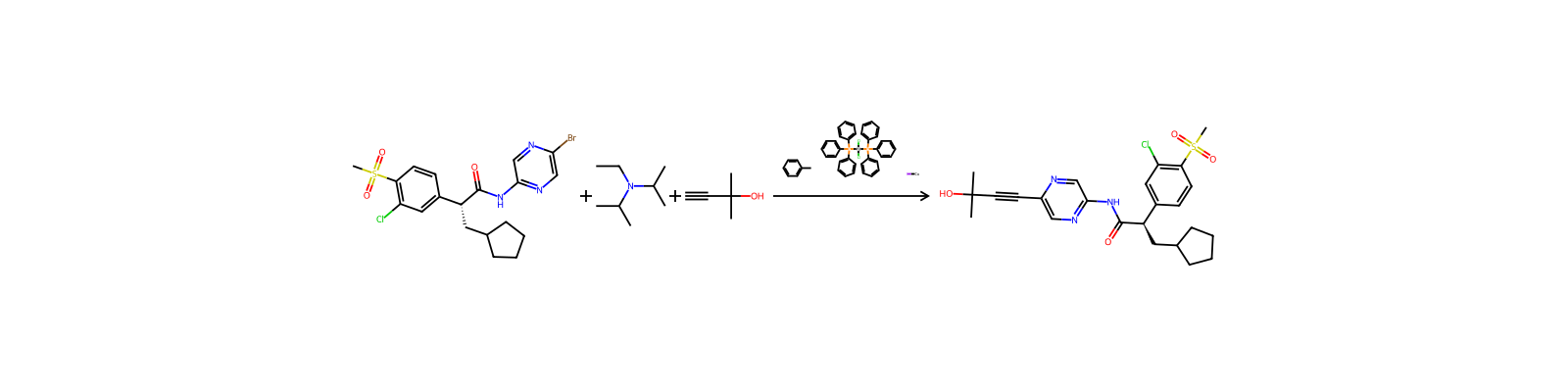
2-Methyl-3-butyn-2-ol → 2(R)-(3-chloro-4-methanesulfonyl-phenyl)-3-cyclopentyl-N-[5-(3-hydroxy-3-methyl-but-1-ynyl)-pyrazin-2-yl]-propionamide

HRID 719952
Notes
Print preview

Reaction equation

HRID 719952 reaction equation
Br[C:2]1[N:3]=[CH:4][C:5]([NH:8][C:9](=[O:28])[C@@H:10]([C:17]2[CH:22]=[CH:21][C:20]([S:23]([CH3:26])(=[O:25])=[O:24])=[C:19]([Cl:27])[CH:18]=2)[CH2:11][CH:12]2[CH2:16][CH2:15][CH2:14][CH2:13]2)=[N:6][CH:7]=1.C(N(CC)C(C)C)(C)C.[OH:38][C:39]([CH3:43])([CH3:42])[C:40]#[CH:41]>C1(C)C=CC=CC=1.Cl[Pd](Cl)([P](C1C=CC=CC=1)(C1C=CC=CC=1)C1C=CC=CC=1)[P](C1C=CC=CC=1)(C1C=CC=CC=1)C1C=CC=CC=1.[Cu]I>[Cl:27][C:19]1[CH:18]=[C:17]([C@@H:10]([CH2:11][CH:12]2[CH2:16][CH2:15][CH2:14][CH2:13]2)[C:9]([NH:8][C:5]2[CH:4]=[N:3][C:2]([C:41]#[C:40][C:39]([OH:38])([CH3:43])[CH3:42])=[CH:7][N:6]=2)=[O:28])[CH:22]=[CH:21][C:20]=1[S:23]([CH3:26])(=[O:25])=[O:24]
ParticipantsConditionsProcedureWorkupSources & evidenceReaction notes

Participants

7

Reactant 3

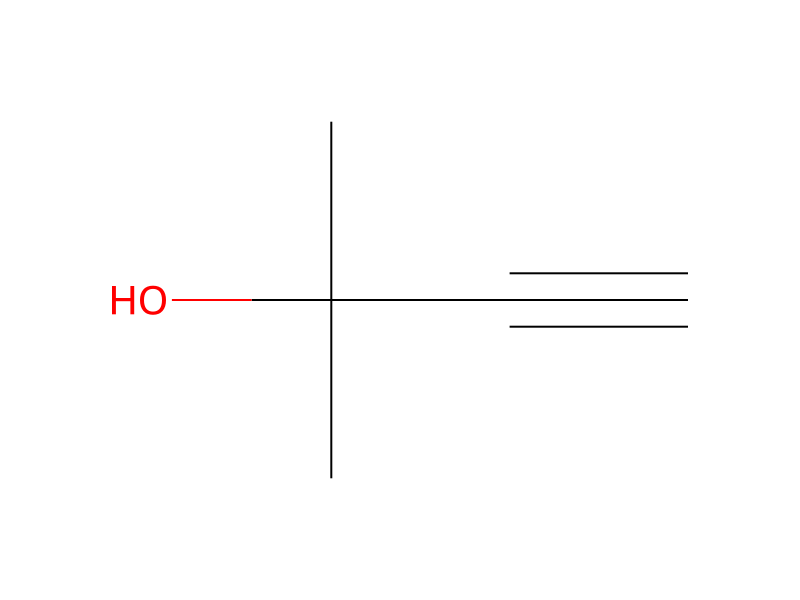
HCID 82582-Methyl-3-butyn-2-olHCID 81531DiisopropylethylamineHCID 86593779N-(5-bromo-pyrazin-2-yl)-2(R)-(3-chloro-4-methanesulfonyl-phenyl)-3-cyclopentyl-propionamide

Product 1

HCID 99830242(R)-(3-chloro-4-methanesulfonyl-phenyl)-3-cyclopentyl-N-[5-(3-hydroxy-3-methyl-but-1-ynyl)-pyrazin-2-yl]-propionamideYield 84.1%

Reagents, catalysts & solvents 3

HCID 24350
Copper(1+) iodide; Copper(I) iodide; Cuprous iodide; Cuprous iodide (CuI)
Catalyst
HCID 178418476HCID 178418476, compoundCatalyst
HCID 1140TolueneSolvent

Conditions

Temperature
25 °C

Procedure

A suspension of N-(5-bromo-pyrazin-2-yl)-2(R)-(3-chloro-4-methanesulfonyl-phenyl)-3-cyclopentyl-propionamide (prepared as in Example 6, 486 mg, 1.0 mmol) in toluene (8 mL) was treated with N,N-diisopropylethylamine (2 mL), 3-hydroxy-3-methylbutyne (168 mg, 2.0 mmol), dichlorobis(triphenylphosphine)palladium(II) (40 mg), and copper(I) iodide (20 mg). The mixture was stirred at 25° C. overnight, and an oily black precipitate was obtained. The top clear solution was decanted, and the oily precipitate was rinsed first with toluene (5 mL) and then with hexanes (5 mL). The residue was dissolved in methylene chloride and extracted with methylene chloride and a 0.2N aqueous hydrochloric acid solution. The organic layer was washed with a saturated aqueous sodium chloride solution, dried over sodium sulfate, filtered, and concentrated in vacuo. Flash chromatography (Merck Silica gel 60, 230–400 mesh, elution with 1/1 ethyl acetate/hexanes) afforded 2(R)-(3-chloro-4-methanesulfonyl-phenyl)-3-cyclopentyl-N-[5-(3-hydroxy-3-methyl-but-1-ynyl)-pyrazin-2-yl]-propionamide (412 mg, 84%) as a fluffy solid: (ES)+-HRMS m/e calcd for C24H28ClN3O4S (M+H)+ 490.1562, found 490.1553.

Workup

  1. customan oily black precipitate was obtained
  2. customThe top clear solution was decanted
  3. washthe oily precipitate was rinsed first with toluene (5 mL)
  4. dissolutionThe residue was dissolved in methylene chloride
  5. extractionextracted with methylene chloride
  6. washThe organic layer was washed with a saturated aqueous sodium chloride solution
  7. dry with materialdried over sodium sulfate
  8. filtrationfiltered
  9. concentrationconcentrated in vacuo
  10. washFlash chromatography (Merck Silica gel 60, 230–400 mesh, elution with 1/1 ethyl acetate/hexanes)

Sources & evidence

ORD record
ord-3eba0c06980042fbad574c8695fa58b6
Source dataset
uspto-grants-2006_11
DOI
10.6084/m9.figshare.5104873.v1
Patent number
US07132425B2

Reaction notes

Loading…

On this pageParticipantsConditionsProcedureWorkupSources & evidenceReaction notes