HomeMCPWorkbenchSkills
HomeWorkbenchNotificationsMe
llms.txt · MCP GuidePrivacy Policy · Terms of Service · Supportv1.8.0
  1. Home
  2. /Reaction

Ammonium Chloride → 6-(7-Hydroxy-6,7-dihydro-5H-pyrrolo[1,2-c]imidazole-7-yl)-2-naphthoic acid

HRID 72076
Notes
Print preview

Reaction equation

HRID 72076 reaction equation
Br[C:2]1[CH:3]=[C:4]2[C:9](=[CH:10][CH:11]=1)[CH:8]=[C:7]([C:12]([OH:14])=[O:13])[CH:6]=[CH:5]2.C([Li])CCC.[CH:20]1[N:24]=[CH:23][N:22]2[CH2:25][CH2:26][C:27](=[O:28])[C:21]=12.[Cl-].[NH4+]>C1COCC1.CCCCCC.C(OCC)(=O)C>[OH:28][C:27]1([C:2]2[CH:3]=[C:4]3[C:9](=[CH:10][CH:11]=2)[CH:8]=[C:7]([C:12]([OH:14])=[O:13])[CH:6]=[CH:5]3)[C:21]2[N:22]([CH:23]=[N:24][CH:20]=2)[CH2:25][CH2:26]1
ParticipantsConditionsProcedureWorkupSources & evidenceReaction notes

Participants

8

Reactant 4

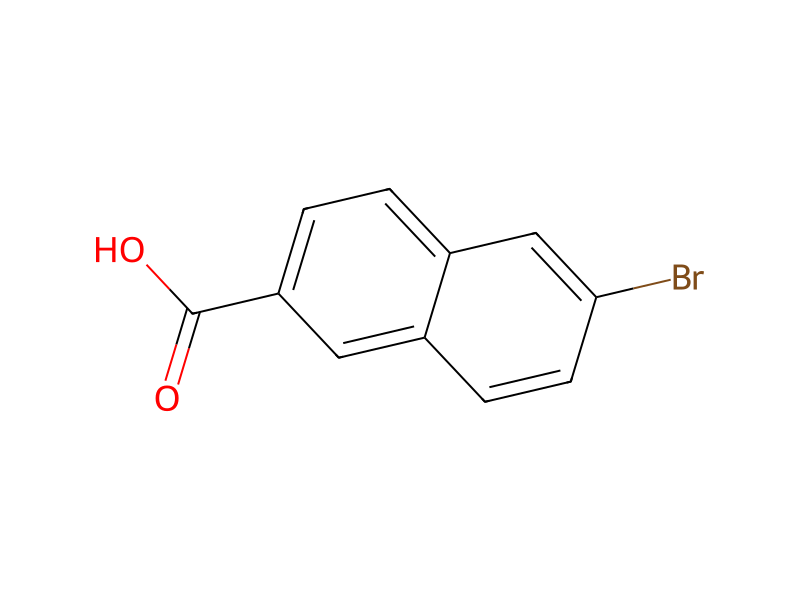
HCID 25517Ammonium ChlorideHCID 45498526-Bromo-2-naphthalenecarboxylic acidHCID 111709605,6-Dihydropyrrolo[1,2-c]imidazol-7-oneHCID 178418339Butyllithium

Product 1

HCID 218796156-(7-Hydroxy-6,7-dihydro-5H-pyrrolo[1,2-c]imidazole-7-yl)-2-naphthoic acidYield 12.2%

Reagents, catalysts & solvents 3

HCID 8028TetrahydrofuranSolvent2×
HCID 8058HexaneSolvent
HCID 8857Ethyl AcetateSolvent

Conditions

Temperature
-100 °C

Procedure

6-Bromo-2-naphthoic acid (1.51 g) was dissolved in dry THF (50 ml), and cooled to −100° C. in a liquid nitrogen/diethyl ether bath. Under stirring a solution (1.6M; 7.88 ml) of n-butyllithium in hexane was added dropwise at −95° C. or below over 5 min. After stirring at −100° C. for 30 min and at −80° C. for 10 min, the mixture was cooled to −100° C. again. A solution of 5,6-dihydro-7H-pyrrolo[1,2-c]imidazol-7-one (0.61 g) in dry THF (11 ml) was added dropwise at −90° C. or below over 5 min. After stirring at the same temperature for 30 min, the temperature was raised to −70° C. over 30 min, and saturated aqueous ammonium chloride solution (25 ml) was added to quench the reaction. After stirring for 10 min, ethyl acetate (50 ml) was added to partition the solution. The organic layer was removed and the aqueous layer was concentrated to dryness. The obtained residue was purified by flash column chromatography, and the object fraction was dissolved in methanol. This solution was concentrated, ether was added to the precipitated powder and the powder was collected by filtration and dried. The title compound (180 mg) was obtained as a colorless powder. The mother liquor was concentrated to give a residue (449 mg) containing the title compound.


Workup

  1. additionwas added dropwise at −95° C. or below over 5 min
  2. temperaturethe mixture was cooled to −100° C. again
  3. stirringAfter stirring at the same temperature for 30 min
  4. temperaturethe temperature was raised to −70° C. over 30 min
  5. customto quench
  6. customthe reaction
  7. stirringAfter stirring for 10 min
  8. customto partition the solution
  9. customThe organic layer was removed
  10. concentrationthe aqueous layer was concentrated to dryness
  11. customThe obtained residue was purified by flash column chromatography
  12. dissolutionthe object fraction was dissolved in methanol
  13. concentrationThis solution was concentrated
  14. additionether was added to the precipitated powder
  15. filtrationthe powder was collected by filtration
  16. customdried

Sources & evidence

ORD record
ord-eee504e596d047aa96630c28e07c86e5
Source dataset
uspto-grants-2014_09
DOI
10.6084/m9.figshare.5104873.v1
Patent number
US08828429B2

Reaction notes

Loading…

On this pageParticipantsConditionsProcedureWorkupSources & evidenceReaction notes