Reaction equation

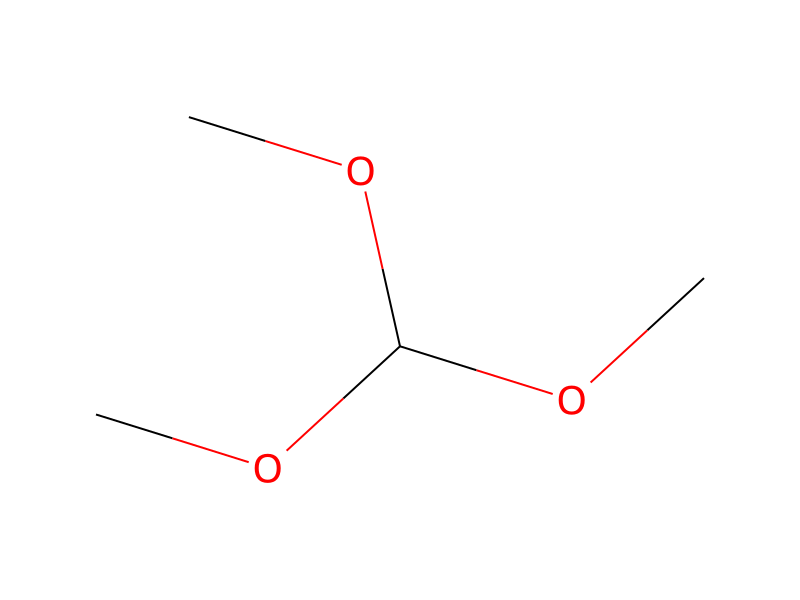
[Br:1][CH2:2][CH2:3][CH2:4][CH2:5][CH2:6][CH2:7][CH2:8][CH2:9]C=O.[CH3:12][O:13][CH:14](OC)[O:15][CH3:16].Cl>O1CCOCC1.C(=O)(O)[O-].[Na+].CO>[Br:1][CH2:2][CH2:3][CH2:4][CH2:5][CH2:6][CH2:7][CH2:8][CH2:9][CH:14]([O:15][CH3:16])[O:13][CH3:12]Participants






Procedure
To a 100 mL round-bottomed flask was added 9-bromononanal (7.2 g, 32.5 mmol), methanol (30 mL) and trimethylorthoformate (4 mL, 36.5 mmol). A solution of 4 N hydrochloric acid in dioxane (0.2 mL, 0.8 mmol) was added and the resulting mixture was refluxed for 3 h. The reaction mixture was then cooled to room temperature and solid sodium bicarbonate (100 mg, 1.2 mmol) was added. The resulting mixture was concentrated to one-fourth its original volume under reduced pressure and then ethyl acetate (50 mL) was added. The organic layer was washed with water (2×40 mL), dried (MgSO4), filtered and concentrated under reduced pressure to afford the title intermediate (8.44 g, (97% yield)) as a liquid, which as used in the next step without further purification.
Workup
- temperaturethe resulting mixture was refluxed for 3 h
- concentrationThe resulting mixture was concentrated to one-fourth its original volume under reduced pressure
- additionethyl acetate (50 mL) was added
- washThe organic layer was washed with water (2×40 mL)
- dry with materialdried (MgSO4)
- filtrationfiltered
- concentrationconcentrated under reduced pressure
Sources & evidence
- ORD record
- ord-44ac2e2617f24e7e816d83531a632205
- Source dataset
- uspto-grants-2006_11
- Patent number
- US07141671B2
Linked notes
Loading…