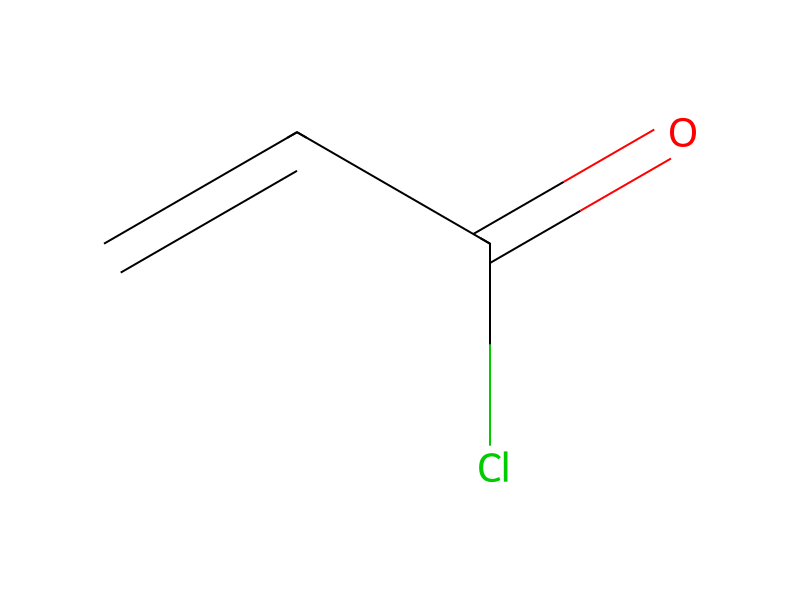
[F:1][C:2]1[C:7]([F:8])=[CH:6][CH:5]=[CH:4][C:3]=1[C@H:9]1[CH2:14][CH2:13][C@H:12]([CH2:15][CH2:16][CH2:17][CH2:18][CH2:19][OH:20])[CH2:11][CH2:10]1.C(N(CC)CC)C.[O:28]1C[CH2:31][CH2:30][CH2:29]1.C(Cl)(=O)C=C>O>[F:1][C:2]1[C:7]([F:8])=[CH:6][CH:5]=[CH:4][C:3]=1[C@H:9]1[CH2:10][CH2:11][C@H:12]([CH2:15][CH2:16][CH2:17][CH2:18][CH2:19][O:20][C:29](=[O:28])[CH:30]=[CH2:31])[CH2:13][CH2:14]1First, 4.77 g of 2,3-difluoro-1-[trans-4-(5-hydroxypentyl)cyclohexyl]benzene, 1.9 g of triethylamine, and 60 ml of dry tetrahydrofuran were placed in a 100 ml flask. Then, 1.7 g of acryloyl chloride was added dropwise to the reaction mixture under ice water cooling, and the mixture was stirred at the same temperature for 4 hours. Water was added to the reaction mixture, and an organic layer was extracted with ether. The ether layer was washed with water and dried over anhydrous sodium sulfate. Thereafter, the solvent was distilled away. The residue was purified by silica gel column chromatography (eluent: benzene/hexane=1/1) and recrystallized from hexane to obtain 3 g of 2,3-difluoro-1-[trans-4-(5-propenoyloxypentyl)cyclohexyl]benzene (Y: 52.9%). The compound thus obtained had a purity of 99.8% by GC, 99.2% by HPLC, and 1 spot by TLC. Furthermore, the compound had an m.p. of 29.6° C. to 30.7° C.