Reaction equation

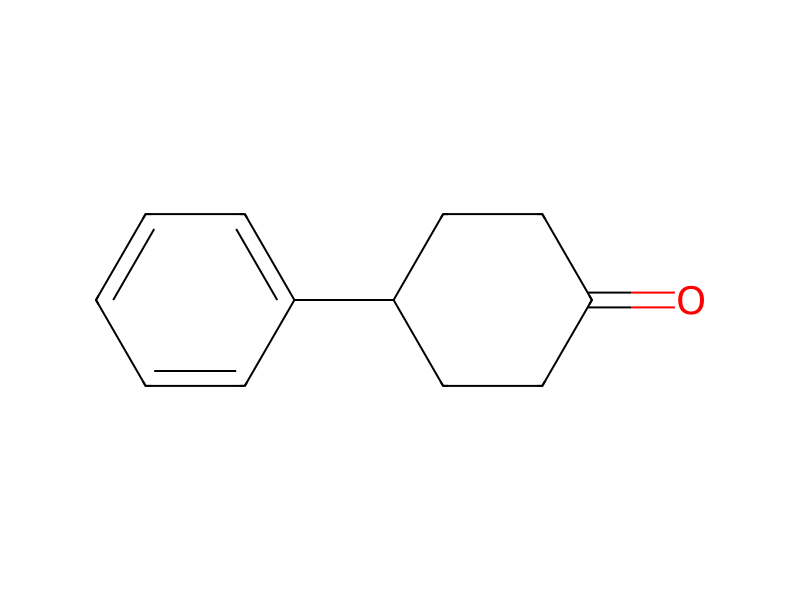
[H-].[Al+3].[Li+].[H-].[H-].[H-].Cl.[C:8]1([CH:14]2[CH2:19][CH2:18][C:17](=[O:20])[CH2:16][CH2:15]2)[CH:13]=[CH:12][CH:11]=[CH:10][CH:9]=1>O1CCCC1>[C:8]1([C@H:14]2[CH2:15][CH2:16][C@H:17]([OH:20])[CH2:18][CH2:19]2)[CH:13]=[CH:12][CH:11]=[CH:10][CH:9]=1Participants
5
Reactant 3


Product 1

Reagents, catalysts & solvents 1

Procedure
First, 2 g of lithium aluminium hydride and 20 ml of tetrahydrofuran were placed in a 300 ml flask. Then, a solution in which 25 g of 4-phenylcyclohexanone was dissolved in 200 ml of tetrahydrofuran was added dropwise to the mixture at room temperature. The mixture was stirred under reflux for 1 hour. Diluted hydrochloric acid was added to the reaction mixture, and an organic layer was extracted with ether. The ether layer was washed with water and dried over anhydrous sodium sulfate. Thereafter, the solvent was distilled away. The residue was recrystallized from acetone to obtain 18 g of trans-4-phenylcyclohexanol (Y: 71.5%). The compound thus obtained had a purity of 98.4% by GC and an m.p. of 117° C. to 119° C.
Workup
- additionwas added dropwise to the mixture at room temperature
- temperatureunder reflux for 1 hour
- extractionan organic layer was extracted with ether
- washThe ether layer was washed with water
- dry with materialdried over anhydrous sodium sulfate
- distillationThereafter, the solvent was distilled away
- customThe residue was recrystallized from acetone
Sources & evidence
- ORD record
- ord-eacfe205f6bc4d86bbadbf8687206cc1
- Source dataset
- uspto-grants-1998_01
- Patent number
- US05709911
Linked notes
Loading…