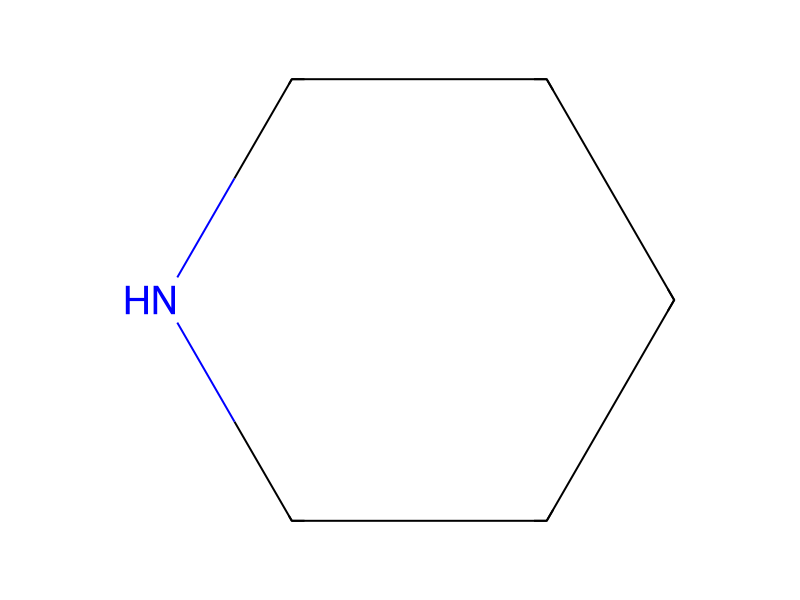
[CH2:1]([NH:3][C:4]1[O:5][C:6]2[CH:12]=[C:11]([CH2:13][CH2:14][C:15]3[O:16][CH:17]=[CH:18][CH:19]=3)[CH:10]=[CH:9][C:7]=2[N:8]=1)[CH3:2].[CH2:20]=O.Cl.[NH:23]1[CH2:28][CH2:27][CH2:26][CH2:25][CH2:24]1>C(O)(=O)C>[CH2:1]([NH:3][C:4]1[O:5][C:6]2[CH:12]=[C:11]([CH2:13][CH2:14][C:15]3[O:16][C:17]([CH2:20][N:23]4[CH2:28][CH2:27][CH2:26][CH2:25][CH2:24]4)=[CH:18][CH:19]=3)[CH:10]=[CH:9][C:7]=2[N:8]=1)[CH3:2]A mixture of 2-ethylamino-6-[2-(2-furyl)ethyl]benzoxazole (0.93 g), 37% formalin (0.30 ml), concentrated hydrochloric acid (0.35 ml) and piperidine (0.34 g) in acetic acid (10 ml) was stirred at 70° C. for 2 hours. After the solvent was evaporated in vacuo, saturated aqueous sodium bicarbonate was added to the residue and the mixture was extracted with ethyl acetate. The extract was washed with water, dried over magnesium sulfate and evaporated in vacuo. The residue was chromatographed on silica gel by eluting with ethyl acetate-toluene (2:8, V/V). The free base was converted to the maleate in a usual way and recrystallized from a mixture of ethanol and diethyl ether to give 2-ethylamino-6-[2-(5-piperidinomethylfuran-2-yl)ethyl]benzoxazole 5/4 maleate (0.45 g).