HomeMCPWorkbenchSkills
HomeWorkbenchNotificationsMe
llms.txt · MCP GuidePrivacy Policy · Terms of Service · Supportv1.8.0
  1. Home
  2. /Reaction

1,1-Dibromoethane → Methyl 3-octyl-tridecanoate

HRID 749292
Notes
Print preview

Reaction equation

HRID 749292 reaction equation
[Mg].BrC(Br)C.[CH2:6]([CH:14]([CH2:17][CH2:18][CH2:19][CH2:20][CH2:21][CH2:22][CH2:23][CH2:24][CH2:25][CH3:26])[CH2:15]Br)[CH2:7][CH2:8][CH2:9][CH2:10][CH2:11][CH2:12][CH3:13].[C:27](=O)([O:30]C)[O:28][CH3:29]>O1CCCC1>[CH2:6]([CH:14]([CH2:17][CH2:18][CH2:19][CH2:20][CH2:21][CH2:22][CH2:23][CH2:24][CH2:25][CH3:26])[CH2:15][C:27]([O:28][CH3:29])=[O:30])[CH2:7][CH2:8][CH2:9][CH2:10][CH2:11][CH2:12][CH3:13]
ParticipantsProcedureWorkupSources & evidenceReaction notes

Participants

6

Reactant 4

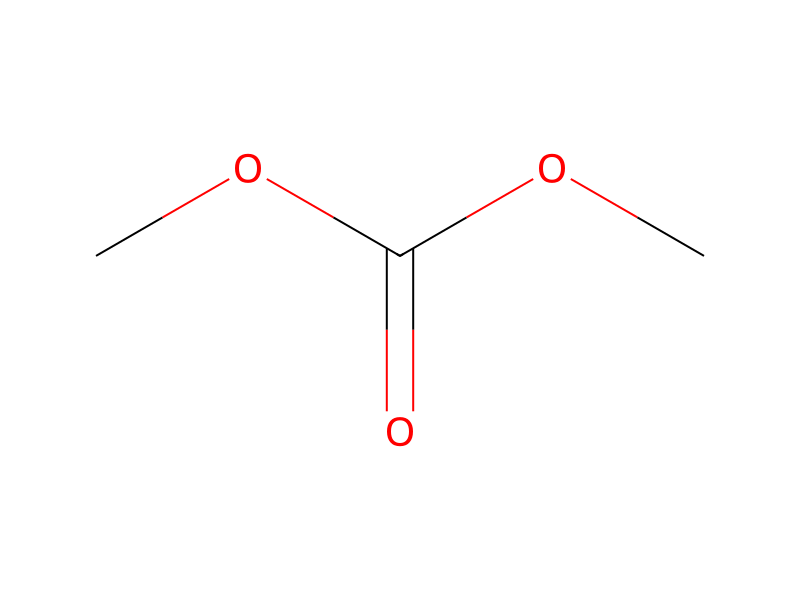
HCID 112011,1-DibromoethaneHCID 12021Dimethyl CarbonateHCID 5462224Magnesium2×HCID 231487459-(Bromomethyl)nonadecane

Product 1

HCID 23148762Methyl 3-octyl-tridecanoateYield 66.5%

Reagents, catalysts & solvents 1

HCID 8028
Tetrahydrofuran
Solvent
2×

Procedure

3 g (123.3 mmol) of magnesium was suspended in 30 ml of a dehydrated tetrahydrofuran solution under nitrogen atmosphere to activate the magnesium with dibromoethane. 120 ml of a dehydrated tetrahydrofuran solution comprising 8.0 g (22.1 mmol) of the synthesized 2-octyl-1-bromododecane was added to this solution by dropping. After dropping, the solution was stirred for two hours. The reaction mixture was cooled with ice, 2.0 ml (23.7 mmol) of dimethyl carbonate was added, and the mixture was stirred overnight at room temperature (25° C.). After filtering the reaction solution, adding diluted hydrochloric acid to the filtrate, and extracting using hexane, the solvent was evaporated under reduced pressure. The residue was distilled under the conditions of 0.15 mmHg and an oil bath temperature of 180 to 190° C. to obtain 5.0 g (14.7 mmol) of methyl 3-octyl-tridecanoate as a colorless oil. The fluidity of this compound did not decrease even when cooled to −20° C.

Workup

  1. additionwas added
  2. stirringthe mixture was stirred overnight at room temperature (25° C.)
  3. filtrationAfter filtering the reaction solution
  4. additionadding diluted hydrochloric acid to the filtrate
  5. extractionextracting
  6. customthe solvent was evaporated under reduced pressure
  7. distillationThe residue was distilled under the conditions of 0.15 mmHg and an oil bath temperature of 180 to 190° C.

Sources & evidence

ORD record
ord-f37f32b680034cc5b079a642b4b79311
Source dataset
uspto-grants-2008_07
DOI
10.6084/m9.figshare.5104873.v1
Patent number
US07402610B2

Reaction notes

Loading…

On this pageParticipantsProcedureWorkupSources & evidenceReaction notes