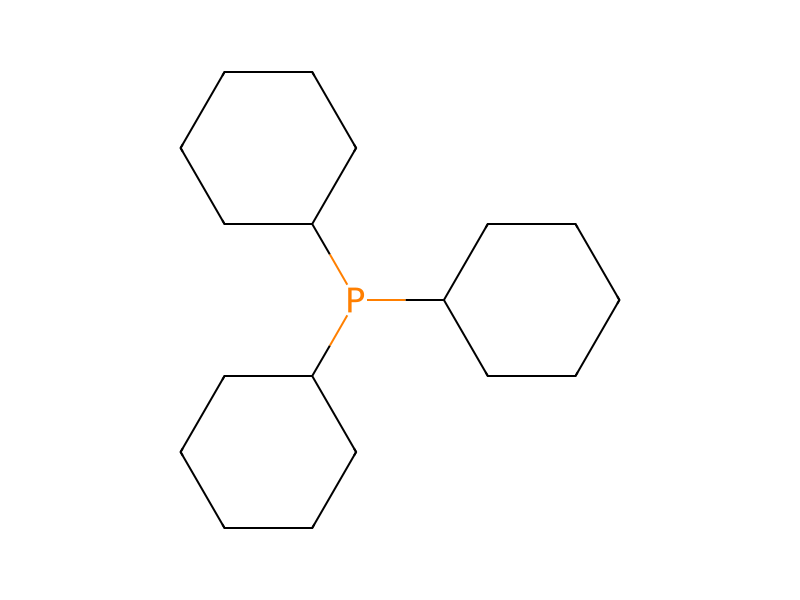
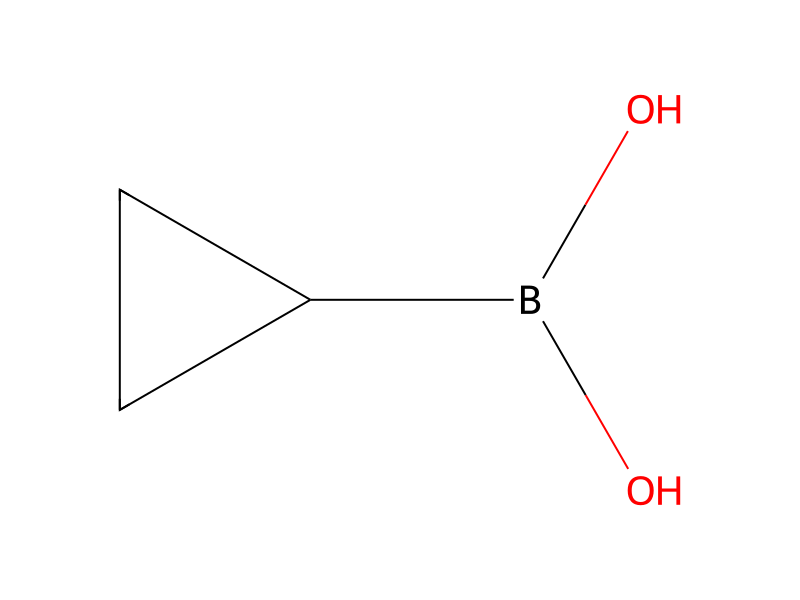
Br[C:2]1[C:10]2[C:5](=[CH:6][CH:7]=[CH:8][C:9]=2[N+:11]([O-:13])=[O:12])[N:4]([CH2:14][C:15]2[CH:19]=[CH:18][N:17]([CH:20]([CH3:22])[CH3:21])[N:16]=2)[N:3]=1.[CH:23]1(B(O)O)[CH2:25][CH2:24]1.P([O-])([O-])([O-])=O.[K+].[K+].[K+].C1(P(C2CCCCC2)C2CCCCC2)CCCCC1>C1(C)C=CC=CC=1.O>[CH:23]1([C:2]2[C:10]3[C:5](=[CH:6][CH:7]=[CH:8][C:9]=3[N+:11]([O-:13])=[O:12])[N:4]([CH2:14][C:15]3[CH:19]=[CH:18][N:17]([CH:20]([CH3:22])[CH3:21])[N:16]=3)[N:3]=2)[CH2:25][CH2:24]1A flask was charged with 3-bromo-1-((1-isopropyl-1H-pyrazol-3-yl)methyl)-4-nitro-1H-indazole (1.8 g, 4.94 mmol), cyclopropylboronic acid (0.849 g, 9.88 mmol), potassium phosphate (3.15 g, 14.8 mmol) and 20:1 toluene/water (10.5 mL). The mixture was degassed for 30 minutes with an argon filled balloon. Palladium acetate was added (55.5 mg, 0.247 mmol) followed by tricyclohexyl phosphine (0.139 g, 0.494 mmol). The mixture was further degassed with argon and heated at 100-110° C. for 16 hours. The mixture was filtered through GF/F paper, rinsing with EtOAc, concentrated under vacuum and the residue was purified by silica gel chromatography (1-20% EtOAc in hexanes) to provide 3-cyclopropyl-1-((1-isopropyl-1H-pyrazol-3-yl)methyl)-4-nitro-1H-indazole (1.08 g, 67% yield) as a yellow solid.