Reaction equation

[NH2:1][C:2]1[CH:3]=[CH:4][C:5]([N:9]2[CH:13]=[CH:12][N:11]=[C:10]2[CH3:14])=[C:6]([F:8])[CH:7]=1.N1C=CC=CC=1.Cl[C:22]([O:24][CH2:25][C:26]1[CH:31]=[CH:30][CH:29]=[CH:28][CH:27]=1)=[O:23].C(=O)(O)[O-].[Na+]>ClCCl>[CH2:25]([O:24][C:22]([NH:1][C:2]1[CH:3]=[CH:4][C:5]([N:9]2[CH:13]=[CH:12][N:11]=[C:10]2[CH3:14])=[C:6]([F:8])[CH:7]=1)=[O:23])[C:26]1[CH:31]=[CH:30][CH:29]=[CH:28][CH:27]=1Participants
6
Reactant 4

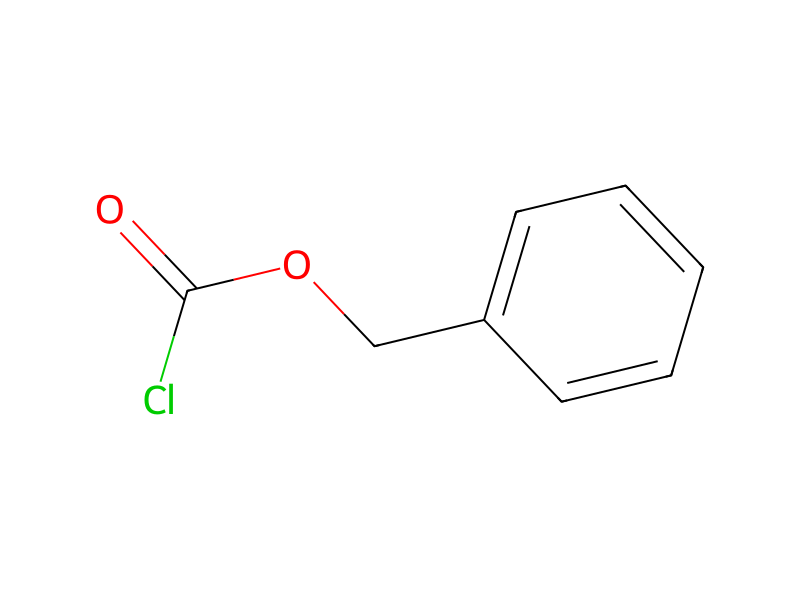


Product 1

Reagents, catalysts & solvents 1

Procedure
5-Amino-2-(2-methylimidazol-1-yl)fluorobenzene (34.25 g, 0.179 M) was dissolved in dry dichloromethane (600 ml) under nitrogen, and cooled to −5°. Pyridine (17.7 g, 0.224 M) was added, followed by benzyl chloroformate (33.7 g, 0.197 M) over 20 minutes. The mixture was stirred and the temperature allowed to rise to ambient over 16 hours. Aqueous sodium bicarbonate (5%, 250 ml) was added, the organic layer separated, the aqueous layer re-extracted with dichloromethane (2×300 ml), and combined extracts dried (magnesium sulfate). After filtration and evaporation, the residue was recrystallised from toluene (400 ml) to give title product (54.5 g).
Workup
- temperaturecooled to −5°
- customthe organic layer separated
- extractionthe aqueous layer re-extracted with dichloromethane (2×300 ml)
- dry with materialdried (magnesium sulfate)
- filtrationAfter filtration and evaporation
- customthe residue was recrystallised from toluene (400 ml)
Sources & evidence
- ORD record
- ord-d9bb5586c23743ebb695b08c565f0db1
- Source dataset
- uspto-grants-2006_08
- Patent number
- US07087629B2
Linked notes
Loading…