Reaction equation

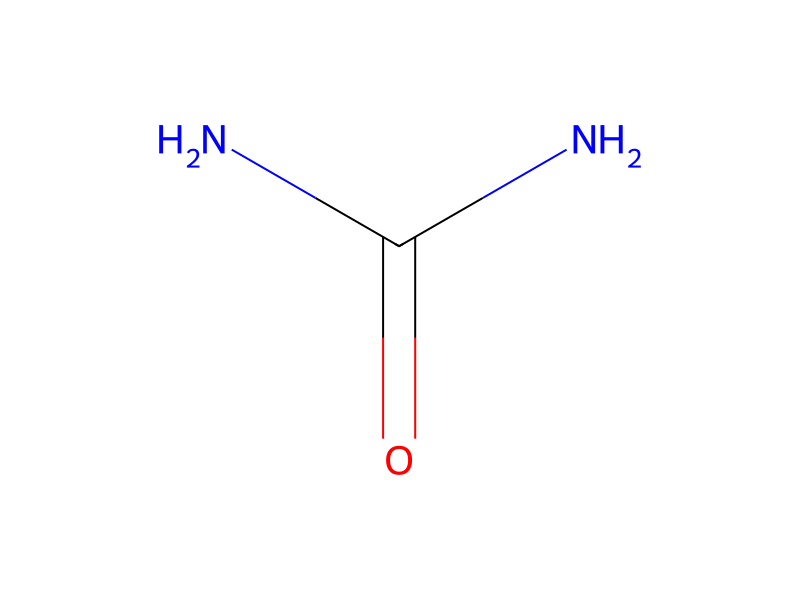
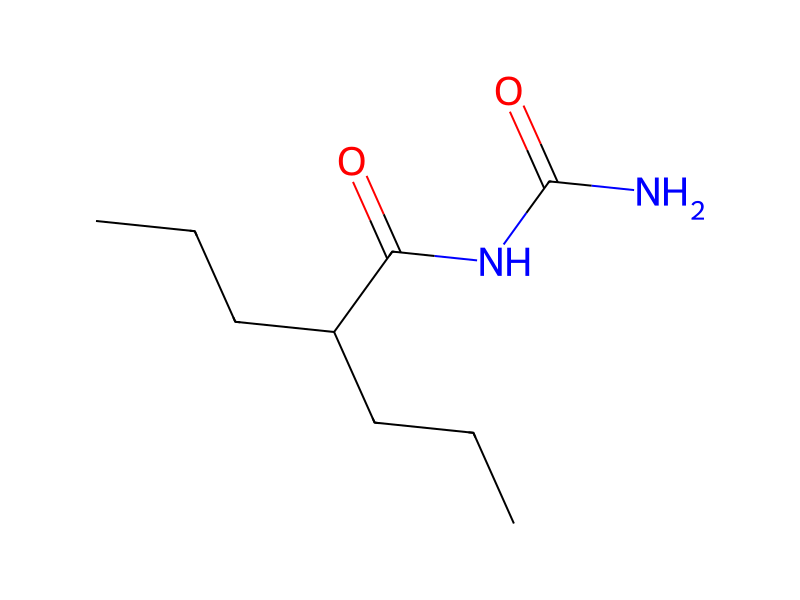
[C:1](Cl)(=[O:9])[CH:2]([CH2:6][CH2:7][CH3:8])[CH2:3][CH2:4][CH3:5].S(Cl)(Cl)=O.C(O)(=O)C(CCC)CCC.[NH2:25][C:26]([NH2:28])=[O:27]>C(#N)C>[CH2:3]([CH:2]([CH2:6][CH2:7][CH3:8])[C:1]([NH:25][C:26]([NH2:28])=[O:27])=[O:9])[CH2:4][CH3:5]Participants
6
Reactant 4



Product 1
Reagents, catalysts & solvents 1

Procedure
Valproyl chloride (0.057 mol), prepared by coupling of thionylchloride and valproic acid according to a published method [24], was dissolved in dry acetonitrile (50 ml), and the resulting solution was slowly added to a boiling solution of urea (0.14 mole) in dry acetonitrile (100 ml) and allowed to reflux for 2 hours. Thereafter the organic solvent was evaporated under reduced pressure and the product was dissolved in ethyl acetate (100 ml) and washed three times with 20 ml of distilled water. The organic fraction was dried over MgSO4, filtered and evaporated under reduced pressure. The products were purified by crystallization from ethyl acetate.
Workup
- temperatureto reflux for 2 hours
- customThereafter the organic solvent was evaporated under reduced pressure
- dissolutionthe product was dissolved in ethyl acetate (100 ml)
- washwashed three times with 20 ml of distilled water
- dry with materialThe organic fraction was dried over MgSO4
- filtrationfiltered
- customevaporated under reduced pressure
- customThe products were purified by crystallization from ethyl acetate
Sources & evidence
- ORD record
- ord-b43ccd2aa5be4a4bb1e813a1bc026e6d
- Source dataset
- uspto-grants-2014_09
- Patent number
- US08846903B2
Linked notes
Loading…