HomeMCPWorkbenchSkills
HomeWorkbenchNotificationsMe
llms.txt · MCP GuidePrivacy Policy · Terms of Service · Supportv1.8.0
  1. Home
  2. /Reaction

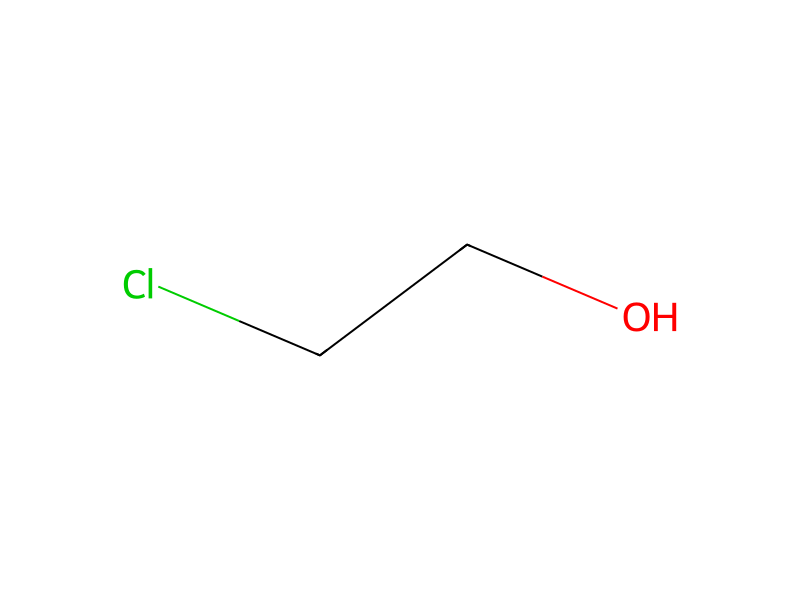
2-Chloroethanol → 4-bromo-1-(2-chloroethyl)-1H-pyrazole

HRID 84368
Notes
Print preview

Reaction equation

HRID 84368 reaction equation
[Br:1][C:2]1[CH:3]=[N:4][NH:5][CH:6]=1.[Cl:7][CH2:8][CH2:9]O.C1C=CC(P(C2C=CC=CC=2)C2C=CC=CC=2)=CC=1.CCOC(/N=N/C(OCC)=O)=O>C1COCC1>[Br:1][C:2]1[CH:3]=[N:4][N:5]([CH2:9][CH2:8][Cl:7])[CH:6]=1
ParticipantsProcedureWorkupSources & evidenceReaction notes

Participants

6

Reactant 4

HCID 342-ChloroethanolHCID 11776TriphenylphosphineHCID 163754-BromopyrazoleHCID 5462977Diethyl azodicarboxylate

Product 1

HCID 518920744-bromo-1-(2-chloroethyl)-1H-pyrazole

Reagents, catalysts & solvents 1

HCID 8028TetrahydrofuranSolvent
On this pageParticipantsProcedureWorkupSources & evidenceReaction notes

Procedure

To a solution of 4-bromo-1H-pyrazole (5 g, 34.02 mmol), 2-chloroethanol (2.7 mL, 40.82 mmol) and PPh3 (10.71 g, 40.82 mmol) and in THF (68 mL) at 0° C. was added DEAD (6.4 mL, 40.8 mmol). The mixture was allowed to warm-up to room temperature and stirred overnight. It was then concentrated under reduced pressure, the residue was treated with ether and the resultant suspension was filtered. The filtrate was collected and concentrated under reduced pressure to afford the title compound 75 which was used in the next step without further purification. MS (m/z): 209.0 (M+H).

Workup

  1. concentrationIt was then concentrated under reduced pressure
  2. additionthe residue was treated with ether
  3. filtrationthe resultant suspension was filtered
  4. customThe filtrate was collected
  5. concentrationconcentrated under reduced pressure

Sources & evidence

ORD record
ord-64b58d274e2e4aa28813d026de0dee4f
Source dataset
uspto-grants-2014_09
DOI
10.6084/m9.figshare.5104873.v1
Patent number
US08846927B2

Reaction notes

Loading…


