Reaction equation

[OH-].[K+].[C:3]1([SH:9])[CH:8]=[CH:7][CH:6]=[CH:5][CH:4]=1.Br[C:11]1[C:12]2[C:17]([C:18](Br)=[C:19]3[C:24]=1[CH:23]=[CH:22][CH:21]=[CH:20]3)=[CH:16][CH:15]=[CH:14][CH:13]=2>CC(N(C)C)=O>[S:9]([C:11]1[C:12]2[C:17]([C:18]([S:9][C:3]3[CH:8]=[CH:7][CH:6]=[CH:5][CH:4]=3)=[C:19]3[C:24]=1[CH:23]=[CH:22][CH:21]=[CH:20]3)=[CH:16][CH:15]=[CH:14][CH:13]=2)[C:3]1[CH:8]=[CH:7][CH:6]=[CH:5][CH:4]=1Participants
5
Reactant 3


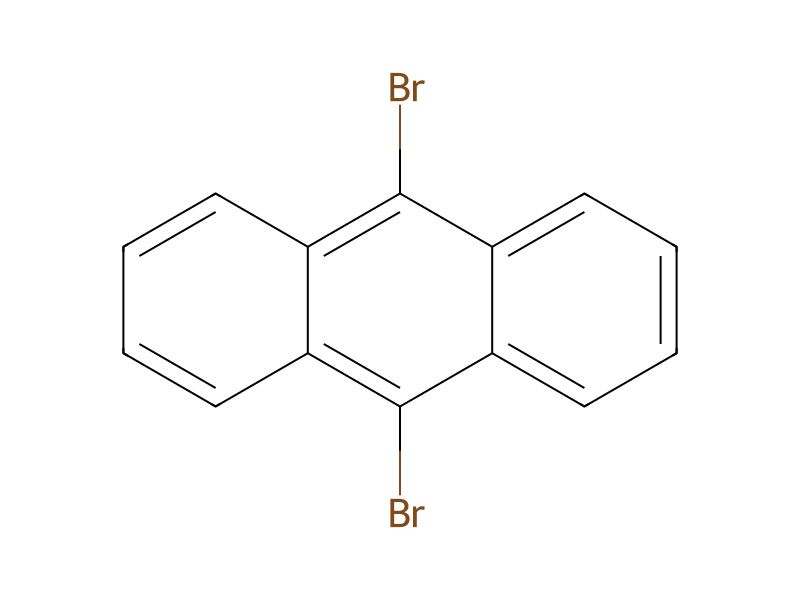
Product 1

Reagents, catalysts & solvents 1

Conditions
- Temperature
- 170 °C
Procedure
Potassium hydroxide (19.6 g) and thiophenol (35.5 ml) were heated at 170 degrees C. in dimethylacetamide for two hours. 9,10-dibromoanthracene (37.5 g) was added and the mixture heated at 170 degrees C. an additional two hours. (The corresponding dichloro compound has also been used successfully.) The mixture was quenched with water and the precipitate recrystallized from chloroform/ethanol to give DTPA.
Workup
- customan additional two hours
- custom) The mixture was quenched with water
- customthe precipitate recrystallized from chloroform/ethanol
Sources & evidence
- ORD record
- ord-c2e99d649db145909237e9c8f6db187f
- Source dataset
- uspto-grants-1988_07
- Patent number
- US04760013
Linked notes
Loading…