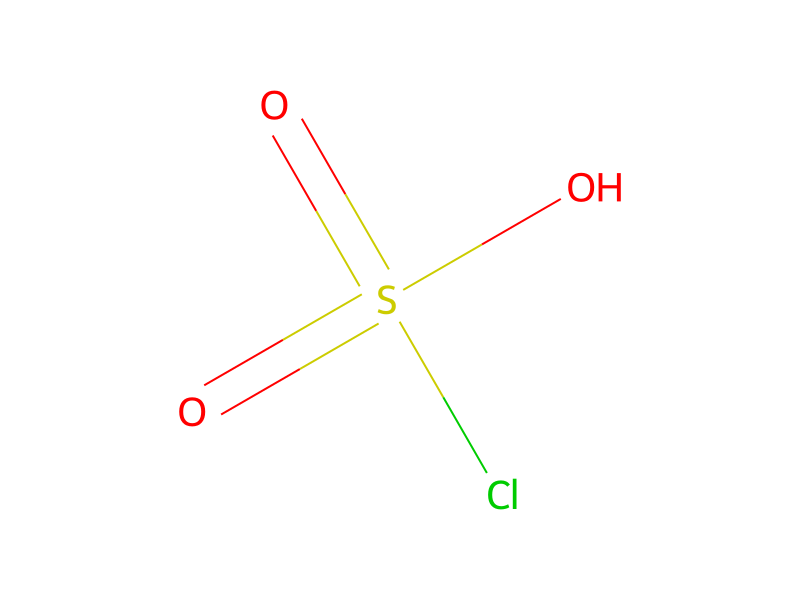
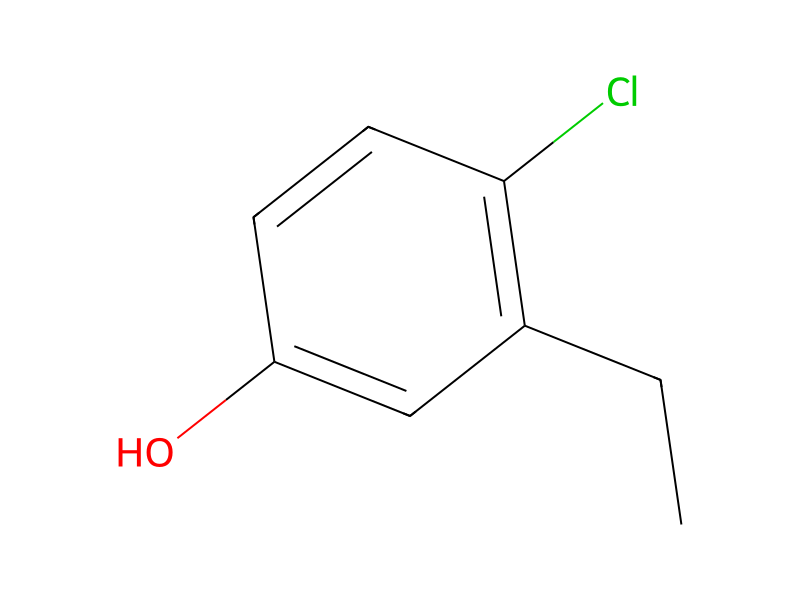
In a 1-liter four-necked glass flask is prepared a solution mixture of 100 g of 4-chloro-3-ethylphenol and 350 g of dichloroethane. While the mixture is maintained at a temperature of 35°-45° C., 80 g of chlorosulfonic acid is added dropwise and the mixture is maintained at a temperature of 40°-45° C. for 1 hour. Next, 326 g of a 14.3% hydrochloric acid solution is added, and 68 g of a 35% aqueous hydrogen peroxide solution is added dropwise while maintaining the temperature at 40°-45° C. After the mixture is maintained at the same temperature for 8 hours, it is cooled to 20° C. After the oily layer is separated, the aqueous layer obtained is charged in a 1-liter four-necked glass flask, and 172 g of a 70% nitric acid solution is added dropwise to the aqueous a temperature of 30°-40° C. The liquid becomes turbid and turns yellowish white. The temperature is raised about 15° C. After the addition, the reaction mixture is maintained at the same temperature for 1 hour. The reaction mixture is cooled to 5° C. and filtered. The product is washed with water and dried to give 2,4-dichloro-3-ethyl-6-nitrophenol.