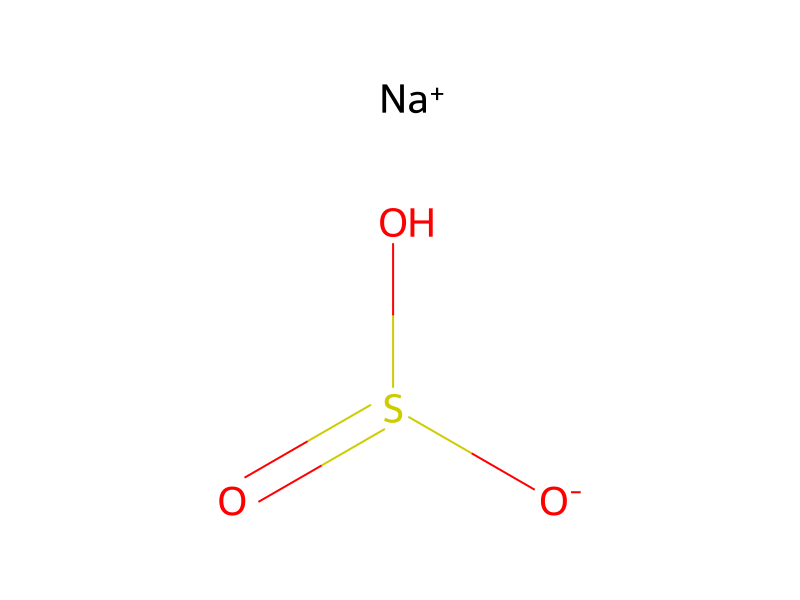
[Br:1]Br.[Cl:3][C:4]1[C:5]([C:12]2[CH:17]=[CH:16][CH:15]=[CH:14][CH:13]=2)=[C:6]([S:10][CH3:11])[CH:7]=[CH:8][CH:9]=1.S(=O)(O)[O-].[Na+]>ClCCCl>[Cl:3][C:4]1[C:5]([C:12]2[CH:13]=[CH:14][CH:15]=[CH:16][CH:17]=2)=[C:6]([S:10][CH3:11])[CH:7]=[CH:8][C:9]=1[Br:1]A solution of 3.3 g (20 mmol) of bromine dissolved in 10 mL of 1,2-dichloroethane was added dropwise with stirring to a solution of 4.0 g (17 mmol) of 3-chloro-2-phenyl(methylthio)benzene in 50 mL of 1,2-dichloroethane containing 3.1 g (19 mmol) of ferric chloride. The resulting mixture was allowed to react for another 1.5 hour and then another about 1 g of bromine was added. After 15 min, aqueous sodium bisulfite was added and the mixture was allowed to stand overnight. The organic phase was recovered, washed with water and with saturated aqueous sodium chloride solution, dried over sodium sulfate, and concentrated by evaporation under reduced pressure. The residue was chromatographed on silica eluting with a 5:1 mixture of hexane and dichloromethane to obtain 2.7 g (51 percent of theory) of the title compound as a colorless liquid.