Reaction equation

Br[C:2]1[CH:11]=[CH:10][C:5]([C:6]([O:8][CH3:9])=[O:7])=[CH:4][C:3]=1[C:12]([O:14][CH3:15])=[O:13].[C:16](#[N:19])[CH:17]=[CH2:18].C1(CNCC2CCCCC2)CCCCC1.C(P(C(C)(C)C)C(C)(C)C)(C)(C)C>C(OCC)(=O)C.C1C=CC(/C=C/C(/C=C/C2C=CC=CC=2)=O)=CC=1.C1C=CC(/C=C/C(/C=C/C2C=CC=CC=2)=O)=CC=1.C1C=CC(/C=C/C(/C=C/C2C=CC=CC=2)=O)=CC=1.[Pd].[Pd].C(OCC)(=O)C.CCCCCC.O1CCOCC1>[C:16]([CH:17]=[CH:18][C:2]1[CH:11]=[CH:10][C:5]([C:6]([O:8][CH3:9])=[O:7])=[CH:4][C:3]=1[C:12]([O:14][CH3:15])=[O:13])#[N:19]Participants
Reactant 4



Product 1

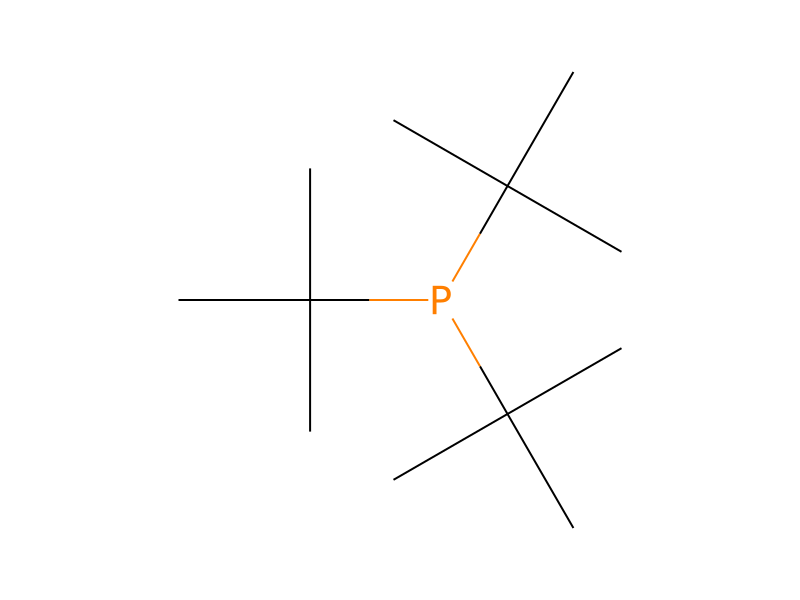
Reagents, catalysts & solvents 4




Conditions
- Temperature
- 80 °C
Procedure
A microwave vial was charged with dimethyl 4-bromoisophthalate (Example 88A, 500 mg, 1.83 mmol), acrylonitrile (117 mg, 2.20 mmol), N,N-dicyclohexylmethylamine (429 mg, 2.20 mmol), tri-tert-butylphosphine (0.11 mL, 0.11 mmol, 1.0 M in toluene), tris(dibenzylideneacetone)dipalladium(0) (50.3 mg, 0.055 mmol), and 1,4-dioxane (1.4 mL) under nitrogen. The reaction mixture was heated to 80° C. in an oil bath for 4 hours. Reaction was complete as indicated by thin layer chromatography (40% ethyl acetate/hexane). The reaction mixture was cooled to room temperature and diluted with ethyl acetate. Filtration removed HBr salts. The filtrate was concentrated. The residue was triturated with ethyl acetate/hexane (1:6) to provide dimethyl 4-(2-cyanovinyl)isophthalate as a mixture of trans and cis isomers (ratio 5.5:1) which was used in next step without further purification.
Workup
- customReaction
- temperatureThe reaction mixture was cooled to room temperature
- filtrationFiltration
- customremoved HBr salts
- concentrationThe filtrate was concentrated
- customThe residue was triturated with ethyl acetate/hexane (1:6)
Sources & evidence
- ORD record
- ord-5175e568045044d38ff59fe65a9dba81
- Source dataset
- uspto-grants-2014_09
- Patent number
- US08846951B2
Linked notes
Loading…