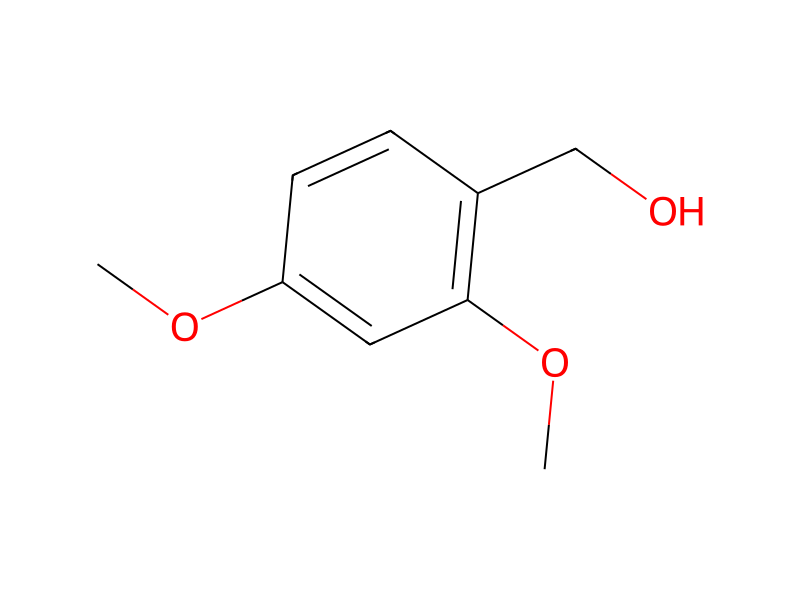
To 2,4-dimethoxybenzyl-alcohol (4.3 g, 25.6 mmol) and pyrrolidine-2,5-dione (succinimide, 1.2 g, 12.2 mmol) dissolved in tetrahydrofuran (25 ml) and dichloromethane (25 ml) was added triphenyphosphine (6.4 g, 24.4 mmol). After cooling to 0° C., diethylazidodicarboxylate (DEAD, 4.25 g, 24.4 mmol) was added dropwise to the reaction mixture. The reaction mixture was then allowed to warm to room temperature and kept at room temperature with stirring overnight. Following concentration in vacuo, 100 ml of a (1:1)hexane/ether solution was added and this mixture was stored at 0° C. overnight. The resulting solid precipitate was filtered off and the filtrate was concentrated in vacuo. The resulting residue was purified by silica gel chromatography (3/1—ethyl acetate/hexane) to afford 1-(2,4-dimethoxy-benzyl)-pyrrolidine-2,5-dione 299 (1.4 g, 5.6 mmol, 46%). 1H NMR (CDCl3) δ 7.07 (d, 1H), 6.38 (m, 2H), 4.60 (s, 2H), 3.76 (s, 3H), 2.62 (s, 4H).