HomeMCPWorkbenchSkills
HomeWorkbenchNotificationsMe
llms.txt · MCP GuidePrivacy Policy · Terms of Service · Supportv1.8.3
  1. Home
  2. /Reaction

Triphenylphosphine → 1,4-dimethyl-5-(2,2-difluoroethoxy)-3-trifluoromethyl-1H-pyrazole

HRID 854135
Print

Reaction equation

HRID 854135 reaction equation
[CH3:1][N:2]1[C:6]([OH:7])=[C:5]([CH3:8])[C:4]([C:9]([F:12])([F:11])[F:10])=[N:3]1.C1(P(C2C=CC=CC=2)C2C=CC=CC=2)C=CC=CC=1.[F:32][CH:33]([F:36])[CH2:34]O.N(C(OC(C)C)=O)=NC(OC(C)C)=O>O1CCCC1.O>[CH3:1][N:2]1[C:6]([O:7][CH2:34][CH:33]([F:36])[F:32])=[C:5]([CH3:8])[C:4]([C:9]([F:11])([F:10])[F:12])=[N:3]1
ParticipantsProcedureWorkupSources & evidenceReaction notes

Participants

7

Reactant 4

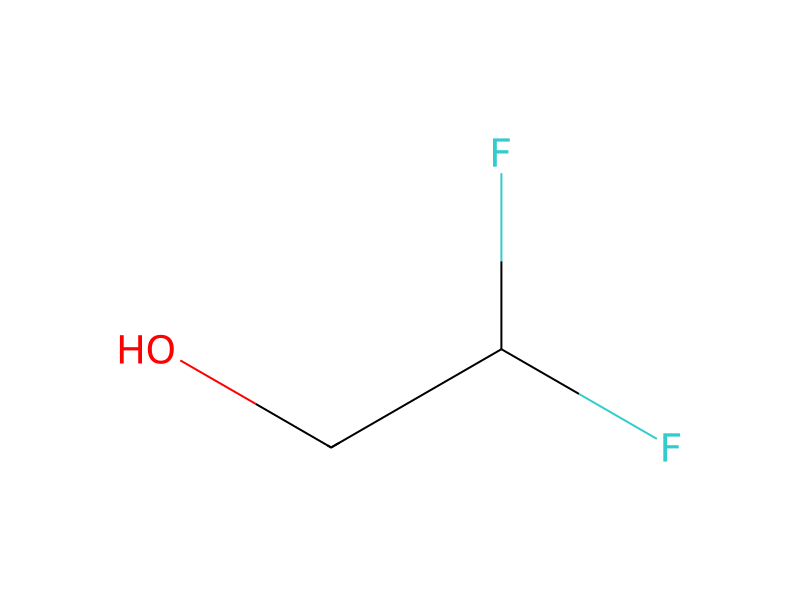
HCID 11776TriphenylphosphineHCID 75555Diisopropyl diazene-1,2-dicarboxylateHCID 1361872,2-Difluoroethan-1-olHCID 178427872HCID 178427872, compound

Product 1

HCID 230756851,4-dimethyl-5-(2,2-difluoroethoxy)-3-trifluoromethyl-1H-pyrazoleYield 55.7%

Reagents, catalysts & solvents 2

HCID 962WaterSolvent
HCID 8028TetrahydrofuranSolvent

Procedure

To a solution of 9.0 g (50.0 mmol) of 1,4-dimethyl-5-hydroxy-3-trifluoromethyl-1H-pyrazole in 50 ml of tetrahydrofuran were added 14.4 g (55.0 mmol) of triphenylphosphine and 4.5 g (55.0 mmol) of 2,2-difluoroethanol at room temperature, followed by stirring. Furthermore, 12.3 g (60.0 mmol) of diisopropyl azodicarboxylate was added thereto under ice-cooling, followed by stirring at room temperature overnight. After the completion of the reaction was confirmed, the reaction solution was poured into water and extracted with ethyl acetate. The resulting organic layer was washed with water and saline, successively, and then dried over anhydrous magnesium sulfate. The solvent was removed by evaporation under reduced pressure and the residue was purified by silica gel column chromatography to obtain 6.8 g (yield: 55.7%) of 1,4-dimethyl-5-(2,2-difluoroethoxy)-3-trifluoromethyl-1H-pyrazole as a pale yellow liquid.


Workup

  1. temperatureunder ice-cooling
  2. stirringby stirring at room temperature overnight
  3. extractionextracted with ethyl acetate
  4. washThe resulting organic layer was washed with water and saline
  5. dry with materialsuccessively, and then dried over anhydrous magnesium sulfate
  6. customThe solvent was removed by evaporation under reduced pressure
  7. customthe residue was purified by silica gel column chromatography

Sources & evidence

ORD record
ord-5b91c0310cd047e187a2e112e5e14e56
Source dataset
uspto-grants-2007_08
DOI
10.6084/m9.figshare.5104873.v1
Patent number
US07256298B2

Reaction notes

On this pageParticipantsProcedureWorkupSources & evidenceReaction notes