HomeMCPWorkbenchSkills
HomeWorkbenchNotificationsMe
llms.txt · MCP GuidePrivacy Policy · Terms of Service · Supportv1.8.0
  1. Home
  2. /Reaction

p-Toluenesulfonic acid monohydrate → Methyl 3-(aminomethyl)-2,3-dihydro-1H-indene-1-carboxylate

HRID 857065
Notes
Print preview

Reaction equation

HRID 857065 reaction equation
[CH3:1][O:2][C:3]([CH:5]1[C:13]2[C:8](=[CH:9][CH:10]=[CH:11][CH:12]=2)[C:7]([C:19]#[N:20])(O[Si](C)(C)C)[CH2:6]1)=[O:4].O.C1(C)C=CC(S(O)(=O)=O)=CC=1.[H][H]>CO.[OH-].[OH-].[Pd+2]>[CH3:1][O:2][C:3]([CH:5]1[C:13]2[C:8](=[CH:9][CH:10]=[CH:11][CH:12]=2)[CH:7]([CH2:19][NH2:20])[CH2:6]1)=[O:4]
ParticipantsProcedureWorkupSources & evidenceReaction notes

Participants

6

Reactant 3

HCID 521998p-Toluenesulfonic acid monohydrateHCID 114491283-Cyano-3-trimethylsilanyloxy-indan-1-carboxylic acid methyl esterHCID 178418361HCID 178418361, compound

Product 1

HCID 11206516Methyl 3-(aminomethyl)-2,3-dihydro-1H-indene-1-carboxylateYield 89%

Reagents, catalysts & solvents 2

HCID 9942167
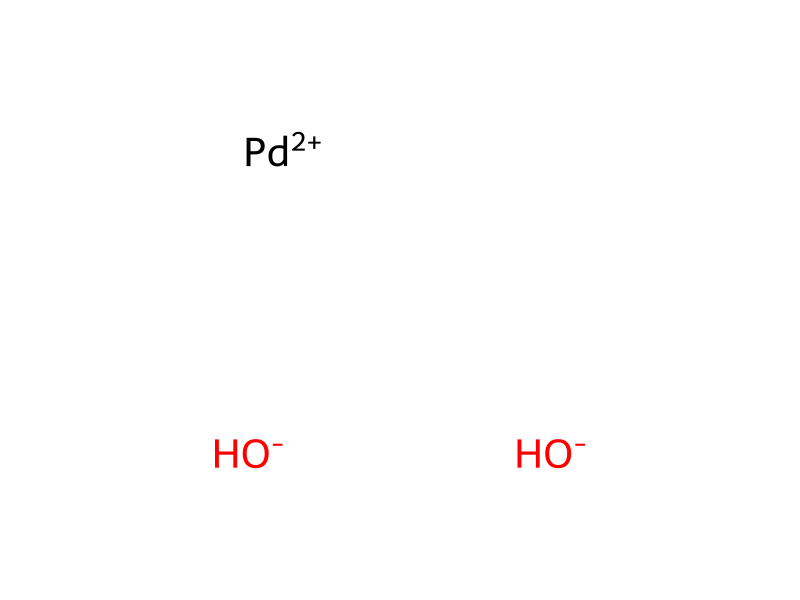
Palladium hydroxide
Catalyst
HCID 887MethanolSolvent

Procedure

To a solution of 5.79 g of 3-cyano-3-trimethylsilanyloxy-indan-1-carboxylic acid methyl ester (20.0 mmol, 1.0 equivalent) in 25 mL of methanol was added 5.71 g of p-toluenesulfonic acid monohydrate (30.0 mmol, 1.5 equivalent). The solution was stirred for 15 minutes and then 4.21 g of 20% palladium hydroxide on carbon, 50% wet by weight, (3.00 mmol, 0.15 equivalent) was added. The reaction mixture was subjected to hydrogenolysis at 50 psi of hydrogen over 24 hours. After this time, the reaction mixture was filtered through Celite and typically used filtrate in the next step (Example 60D). The isolation of the title compound was conducted as follows: the filtrate was concentrated in vacuo; the residue was partitioned between 30 mL of methylene chloride and 20 mL of a saturated aqueous solution of sodium carbonate; the aqueous layer was extracted with 15 mL of methylene chloride; the combined aqueous layers were washed with 40 mL of a saturated aqueous solution of sodium chloride; the organic solution was dried over anhydrous sodium sulfate and concentrated to afford the title compound as an oil (3.65 g, 89%) with approximately a 10:1 ratio of diastereomers; (major diastereomer) 1H NMR (400 MHz, CDCl3): δ 7.43 (dd, J=6.9, 1.6 Hz, 1H), 7.29–7.25 (m, 3H), 4.09 (t, J=8.1 Hz, 1H), 3.80 (s, 3H), 3.31–3.24 (m, 1H), 3.14 (dd, J=12.8, 4.7 Hz, 1H), 2.98 (dd, J=12.8, 7.3 Hz, 1H), 2.62–2.52 (m, 1H), 2.31–2.42 (m, 1H), 1.3 (bs, 2H).

Workup

  1. filtrationAfter this time, the reaction mixture was filtered through Celite and typically used filtrate in the next step (Example 60D)
  2. concentrationthe filtrate was concentrated in vacuo
  3. customthe residue was partitioned between 30 mL of methylene chloride and 20 mL of a saturated aqueous solution of sodium carbonate
  4. extractionthe aqueous layer was extracted with 15 mL of methylene chloride
  5. washthe combined aqueous layers were washed with 40 mL of a saturated aqueous solution of sodium chloride
  6. dry with materialthe organic solution was dried over anhydrous sodium sulfate
  7. concentrationconcentrated

Sources & evidence

ORD record
ord-6185d736ef874a89b249d4034136f70b
Source dataset
uspto-grants-2006_12
DOI
10.6084/m9.figshare.5104873.v1
Patent number
US07144882B2

Reaction notes

Loading…

On this pageParticipantsProcedureWorkupSources & evidenceReaction notes