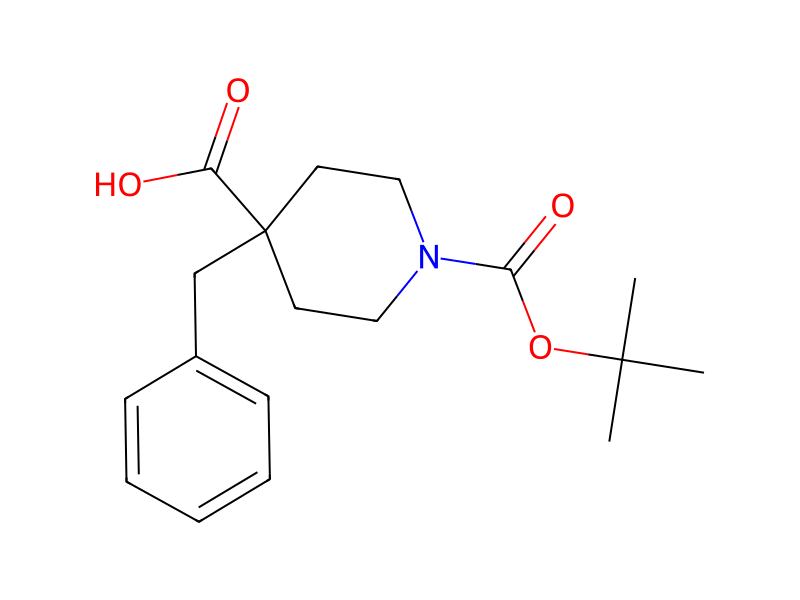
C([O:3][C:4]([C:6]1([CH2:19][C:20]2[CH:25]=[CH:24][CH:23]=[CH:22][CH:21]=2)[CH2:11][CH2:10][N:9]([C:12]([O:14][C:15]([CH3:18])([CH3:17])[CH3:16])=[O:13])[CH2:8][CH2:7]1)=[O:5])C.[OH-].[Na+].C(O)(=O)C>C(O)(C)C.C1COCC1.O>[C:15]([O:14][C:12]([N:9]1[CH2:10][CH2:11][C:6]([CH2:19][C:20]2[CH:21]=[CH:22][CH:23]=[CH:24][CH:25]=2)([C:4]([OH:5])=[O:3])[CH2:7][CH2:8]1)=[O:13])([CH3:18])([CH3:16])[CH3:17]To a stirring solution of 4-benzylpiperidine-1,4-dicarboxylic acid tert-butyl ester ethyl ester (31.6 mmol, 11.01 g) in isopropyl alcohol (50 mL) and THF (50 mL) was added 3N NaOH (63.4 mmol, 21.1 mL) and the biphasic solution was heated to reflux. The reaction was heated for 8 h. and then left stirring at room temperature overnight. The reaction was then diluted with water (200 mL) and acidified to pH=4 with glacial acetic acid. The aqueous mixture was then extracted with ethyl acetate (2×500 mL). The organic layers were combined, washed with brine, dried over anhydrous sodium sulfate, and evaporated under reduced pressure. The resulting solid was triturated with diethyl ether to give 6.7 g of a white solid.