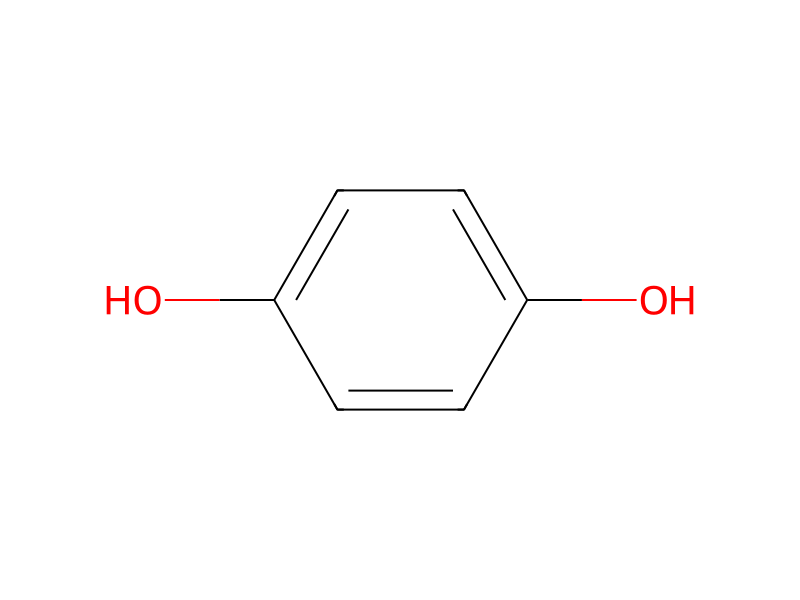
[OH:1][C:2]1[CH:7]=[CH:6][C:5]([OH:8])=[CH:4][CH:3]=1.C(=O)([O-])[O-].[K+].[K+].Cl[C:16]1[C:21]([Cl:22])=[CH:20][C:19]([C:23]([F:26])([F:25])[F:24])=[CH:18][N:17]=1>CC(=O)CC>[Cl:22][C:21]1[C:16]([O:1][C:2]2[CH:7]=[CH:6][C:5]([OH:8])=[CH:4][CH:3]=2)=[N:17][CH:18]=[C:19]([C:23]([F:25])([F:24])[F:26])[CH:20]=1p-dihydroxybenzene 12.1 g (0.11 mol), anhydrous potassium carbonate 15.2 g (0.11 mol) were added to 500 mL of three-necked flask with 2-butanone (200 mL) in sequence, the reaction mixture was then heated to reflux, forming milky white turbid liquid, a solution of 2,3-dichloro-5-(trifluoromethyl)pyridine 21.6 g (0.1 mol) in 2-butanone (50 mL) was added dropwise to the above solution, after completion of addition for 15 min, then the mixture was refluxed for another 3 h. The reaction was monitored by thin-layer chromatography (TLC). After the reaction was completed, the reaction mixture was cooled to room temperature, filtered, concentrated under reduced pressure and the residue was purified via silica gel column chromatography (Fluent: ethyl acetate/petroleum ether-1:8) to give the product (24.9 g) as a white solid in 86% yield.