HomeMCPWorkbenchSkills
HomeWorkbenchNotificationsMe
llms.txt · MCP GuidePrivacy Policy · Terms of Service · Supportv1.8.3
  1. Home
  2. /Reaction

Imidazole → (2-Iodoethyl)cyclohexane

HRID 870482
Print

Reaction equation

HRID 870482 reaction equation
[CH:1]1([CH2:7][CH2:8]O)[CH2:6][CH2:5][CH2:4][CH2:3][CH2:2]1.N1C=CN=C1.C1C=CC(P(C2C=CC=CC=2)C2C=CC=CC=2)=CC=1.[I:34]I>O1CCCC1>[I:34][CH2:8][CH2:7][CH:1]1[CH2:6][CH2:5][CH2:4][CH2:3][CH2:2]1
ParticipantsProcedureWorkupSources & evidenceReaction notes

Participants

6

Reactant 4

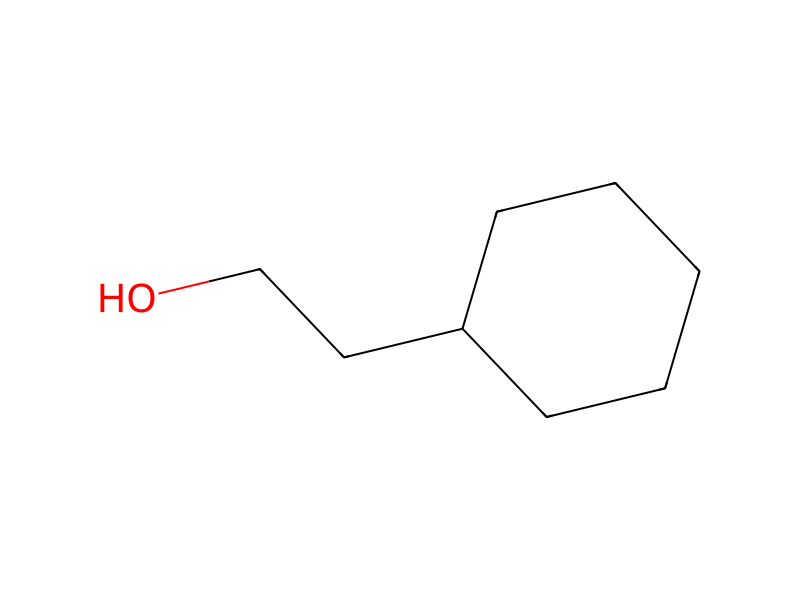
HCID 795ImidazoleHCID 807IodineHCID 11776TriphenylphosphineHCID 205082-Cyclohexylethanol

Product 1

HCID 12923931(2-Iodoethyl)cyclohexaneYield 79%

Reagents, catalysts & solvents 1

HCID 8028Tetrahydrofuran
Solvent

Procedure

Into a 250-mL 3-necked round-bottom flask was placed 2-cyclohexylethan-1-ol (3 g, 23.40 mmol, 1.00 equiv), imidazole (2 g, 29.41 mmol, 1.26 equiv), PPh3 (8 g, 30.50 mmol, 1.30 equiv), tetrahydrofuran (60 mL) and I2 (7.7 g, 30.31 mmol, 1.30 equiv). The resulting solution was stirred for 4 h at room temperature. The reaction was then quenched by the addition of 100 mL of sodium bicarbonate (sat.). The resulting solution was extracted with 2×100 mL of ethyl acetate and the organic layers combined and concentrated under vacuum. The residue was applied onto a silica gel column with petroleum ether. Purification afforded 4.4 g (79%) of (2-iodoethyl)cyclohexane as a colorless oil.


Workup

  1. customInto a 250-mL 3-necked round-bottom flask was placed
  2. customThe reaction was then quenched by the addition of 100 mL of sodium bicarbonate (sat.)
  3. extractionThe resulting solution was extracted with 2×100 mL of ethyl acetate
  4. concentrationconcentrated under vacuum
  5. customPurification

Sources & evidence

ORD record
ord-3c76c23b5a6e4de5bc93c1a98a6e1ddb
Source dataset
uspto-grants-2015_03
DOI
10.6084/m9.figshare.5104873.v1
Patent number
US08969557B2

Reaction notes

On this pageParticipantsProcedureWorkupSources & evidenceReaction notes