Reaction equation

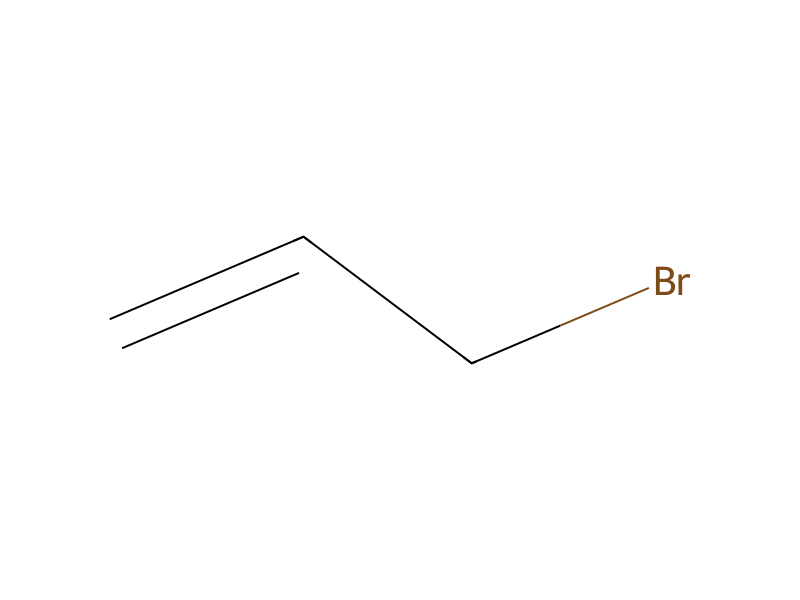
[In].[NH2:2][C:3]1[N:8]=[C:7]([Cl:9])[C:6]([CH:10]=[O:11])=[C:5]([Cl:12])[N:4]=1.[I-].[Na+].[CH2:15](Br)[CH:16]=[CH2:17]>[Zn].CN(C)C=O>[NH2:2][C:3]1[N:4]=[C:5]([Cl:12])[C:6]([CH:10]([OH:11])[CH2:17][CH:16]=[CH2:15])=[C:7]([Cl:9])[N:8]=1Participants





Procedure
Indium powder (0.23 g) and zinc powder (1.31 g) were added to a mixture composed of commercially available 2-amino-4,6-dichloropyrimidine-5-carboaldehyde (1.92 g) and N,N-dimethylformamide (20 ml). Thereafter, sodium iodide (0.15 g) and allyl bromide (1.73 ml) were added to the mixture at room temperature. The resulting mixture was stirred for 3 hours. Thereafter, the reaction mixture was filtered through celite, and ethyl acetate was then added to the filtrate. The resulting mixture was successively washed with 1 N hydrochloric acid and a saturated saline in this order. The organic layer was dried over anhydrous sodium sulfate, and was then concentrated. Thereafter, hexane was added to the residue, and a precipitate was then collected by filtration, so as to obtain the above title compound (1.75 g) as a solid.
Workup
- filtrationThereafter, the reaction mixture was filtered through celite, and ethyl acetate
- additionwas then added to the filtrate
- washThe resulting mixture was successively washed with 1 N hydrochloric acid
- dry with materialThe organic layer was dried over anhydrous sodium sulfate
- concentrationwas then concentrated
- additionThereafter, hexane was added to the residue
- filtrationa precipitate was then collected by filtration
Sources & evidence
- ORD record
- ord-8a2e9076b13c4b17a33388d5e1205058
- Source dataset
- uspto-grants-2012_08
- Patent number
- US08236813B2
Linked notes
Loading…