HomeMCPWorkbenchSkills
HomeWorkbenchNotificationsMe
llms.txt · MCP GuidePrivacy Policy · Terms of Service · Supportv1.8.3
  1. Home
  2. /Reaction

Urea → HCID 9958085, compound

HRID 895368
Print

Reaction equation

HRID 895368 reaction equation
C([O:3][C:4]([C:6]1([C:36](OCC)=[O:37])[CH2:10][CH2:9][CH2:8][N:7]1[C:11]1[CH:12]=[N:13][C:14]([O:17][C:18]2[CH:23]=[CH:22][C:21]([C:24]3[O:25][CH:26]=[C:27]([C:29]4[CH:34]=[CH:33][C:32]([F:35])=[CH:31][CH:30]=4)[N:28]=3)=[CH:20][CH:19]=2)=[CH:15][CH:16]=1)=O)C.[NH2:41][C:42]([NH2:44])=[O:43].[H-].[Na+]>CS(C)=O>[F:35][C:32]1[CH:31]=[CH:30][C:29]([C:27]2[N:28]=[C:24]([C:21]3[CH:20]=[CH:19][C:18]([O:17][C:14]4[N:13]=[CH:12][C:11]([N:7]5[C:6]6([C:4](=[O:3])[NH:44][C:42](=[O:43])[NH:41][C:36]6=[O:37])[CH2:10][CH2:9][CH2:8]5)=[CH:16][CH:15]=4)=[CH:23][CH:22]=3)[O:25][CH:26]=2)=[CH:34][CH:33]=1
ParticipantsProcedureWorkupSources & evidenceReaction notes

Participants

5

Reactant 3

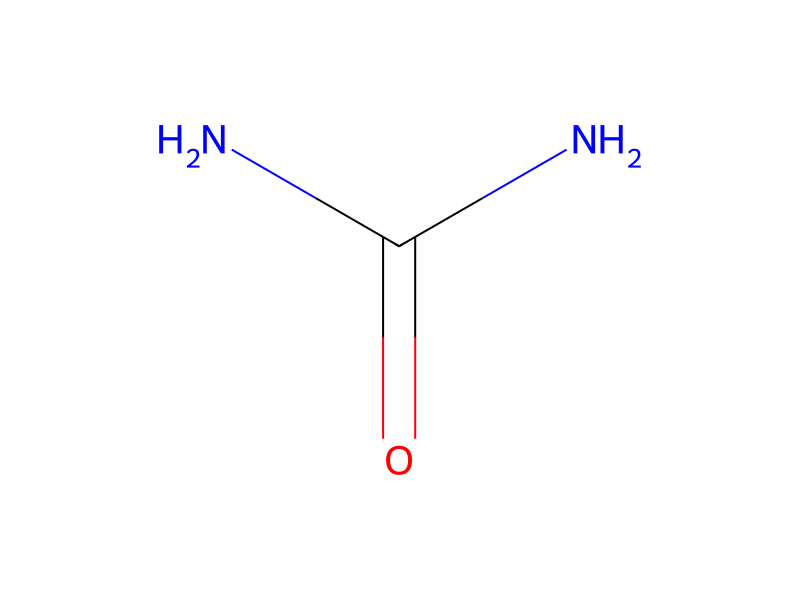
HCID 1176UreaHCID 24758Sodium hydrideHCID 697018301-(6-{4-[4-(4-Fluoro-phenyl)-oxazol-2-yl]-phenoxy}-pyridin-3-yl)-pyrrolidine-2,2-dicarboxylic acid diethyl ester

Product 1

HCID 9958085HCID 9958085, compoundYield 73.1%

Reagents, catalysts & solvents 1

HCID 679Dimethyl Sulfoxide
Solvent

Procedure

1-(6-{4-[4-(4-Fluoro-phenyl)-oxazol-2-yl]-phenoxy}-pyridin-3-yl)-pyrrolidine-2,2-dicarboxylic acid diethyl ester (5.0 grams, 9.16 mmol) and recrystallized urea (2.75 grams, 45.82 mmol) were dissolved in anhydrous dimethylsulfoxide (110 mL), and the solution was placed in a cold water bath. Sodium hydride (770 mg of a 60% dispersion in mineral oil, 19.23 mmol) was added in two portions. The cold water bath was removed after an addition of the second portion, and the resulting solution was stirred for 1 hour at room temperature. The reaction was then poured into 550 mL water and stirred for 20 minutes until cool. The aqueous layer was extracted three times with diethyl ether, and the combined organic layers were set aside. The pH of the aqueous layer was adjusted to 5 with 1 M hydrochloric acid, and the aqueous layer was extracted three times with ethyl acetate. The combined ethyl acetate layers were washed with water and a solution of saturated sodium chloride, dried over sodium sulfate, and concentrated to give 4.8 grams of crude product as a white foam. This material was chromatographed on silica gel (ISCO MPLC purification, 50 minutes, 0-100% ethyl acetate gradient, Biotage flash 40 m column) to provide 3.44 grams (73%) of the title compound as a white solid. MS m/z: ESI+ 514.0 (M+H)+; ESI− 512.1 (M−H)−.

Workup

  1. customthe solution was placed in a cold water bath
  2. customThe cold water bath was removed
  3. additionafter an addition of the second portion
  4. additionThe reaction was then poured into 550 mL water
  5. stirringstirred for 20 minutes
  6. temperatureuntil cool
  7. extractionThe aqueous layer was extracted three times with diethyl ether
  8. extractionthe aqueous layer was extracted three times with ethyl acetate
  9. washThe combined ethyl acetate layers were washed with water
  10. dry with materiala solution of saturated sodium chloride, dried over sodium sulfate
  11. concentrationconcentrated
  12. customto give 4.8 grams of crude product as a white foam
  13. customThis material was chromatographed on silica gel (ISCO MPLC purification, 50 minutes, 0-100% ethyl acetate gradient, Biotage flash 40 m column)

Sources & evidence

ORD record
ord-68ea593ba00141b987c5a726b8d7c42d
Source dataset
uspto-grants-2005_07
DOI
10.6084/m9.figshare.5104873.v1
Patent number
US06916807B2

Reaction notes

On this pageParticipantsProcedureWorkupSources & evidenceReaction notes